What specialized pigment-containing cells drive the ontogenetic color change in Stegostoma fasciatum?
Answer
Chromatophores
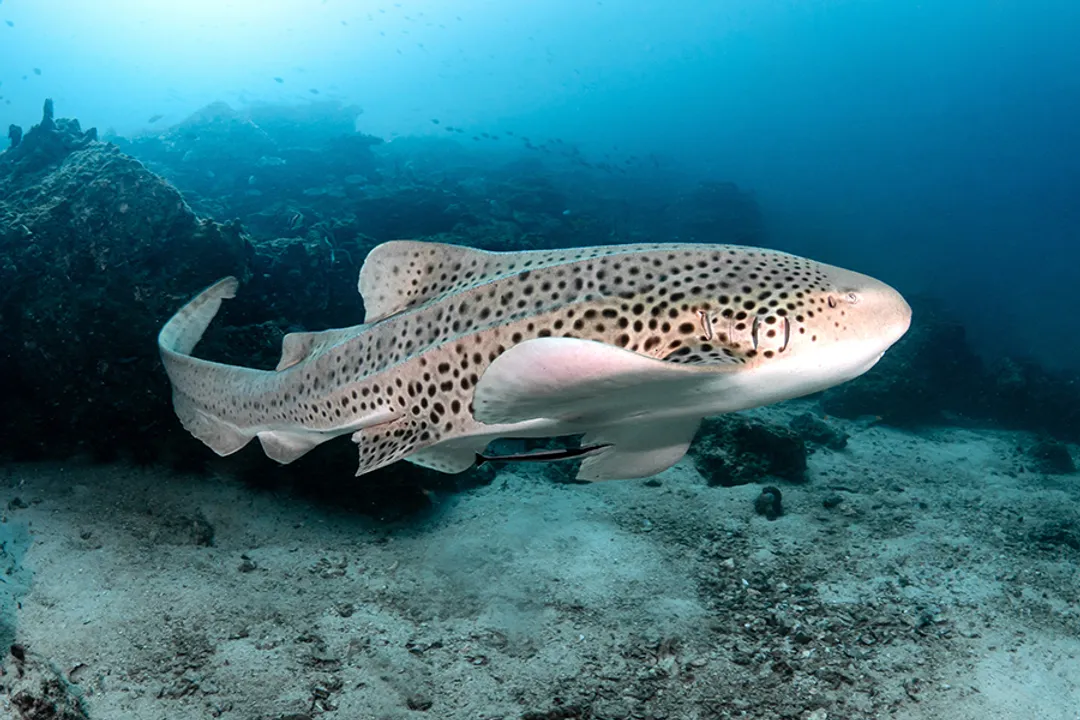
The biological mechanism responsible for the dramatic transformation from striped juvenile to spotted adult relies on specialized cells within the shark's skin known as chromatophores. These cells are pigment-containing structures whose distribution or concentration changes significantly as the shark matures. This process allows the shark to overhaul its visual appearance, an adaptive camouflage strategy ensuring it maintains effective concealment even as its physical scale and behavioral patterns evolve throughout its life cycle.
Related Questions
Why is the zebra shark commonly named for a zebra in its juvenile stage?What pattern replaces the juvenile stripes on a mature Stegostoma tigrinum?To which taxonomic order does the zebra shark belong, alongside carpet sharks?What is the maximum recorded length the zebra shark can reach?What specialized pigment-containing cells drive the ontogenetic color change in Stegostoma fasciatum?What term describes the zebra shark's method of reproduction involving large, leathery eggs?What is the global conservation status assigned to the zebra shark by the IUCN Red List?What proportion of the zebra shark's total length is characterized by its long tail?What is the generally preferred depth range limit for the bottom-dwelling zebra shark?What historical issue arose from the distinct juvenile and adult appearances of Stegostoma species?