What specialized environment were *Xenacanthus* fossils often found in, relating to its body plan?
Answer
Shallow, freshwater environments
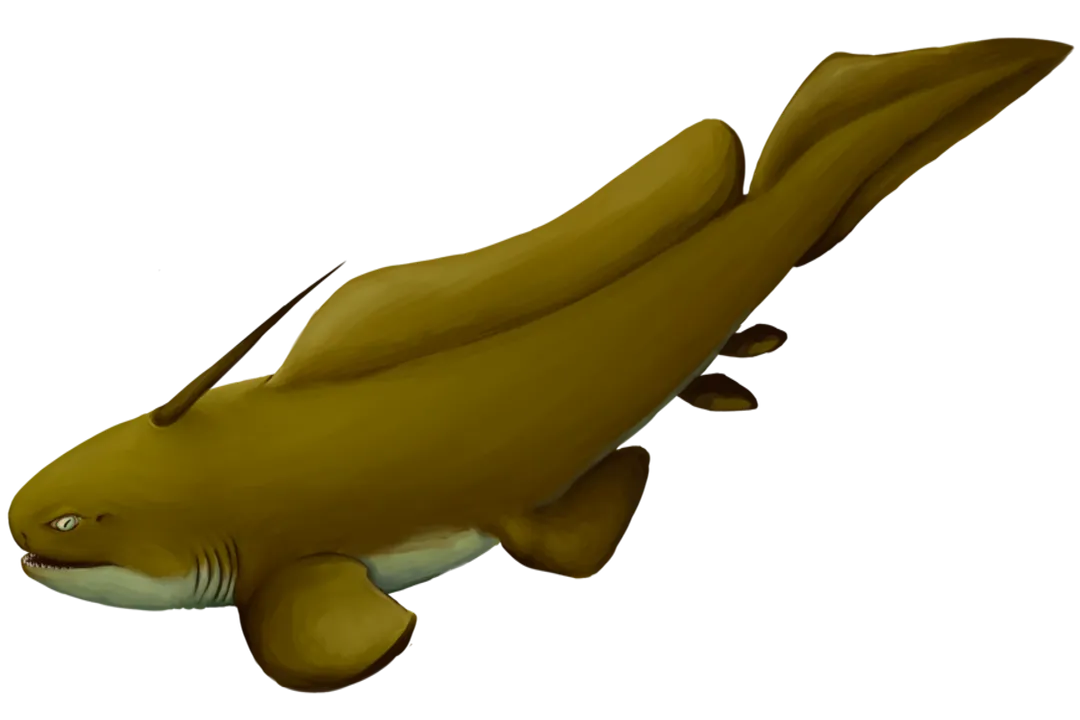
Fossil evidence, particularly the context in which *Xenacanthus* remains are preserved, suggests a strong specialization for shallow, freshwater habitats. This conclusion is supported by its general body configuration, which is described as long and eel-like or snake-like, an adaptation suited for maneuvering in restricted or shallow areas rather than the open ocean. Furthermore, its asymmetrical caudal fins indicate that the creature was not built for the sustained, high-speed pursuits characteristic of many modern pelagic sharks, fitting better into a slower, perhaps ambush-based, ecological niche in ancient streambeds or freshwater systems.
Related Questions
To which Class does the ancient shark genus *Xenacanthus* belong based on its skeleton?What distinctive anatomical feature defines the Order Xenacanthiformes?What is the approximate translation of the genus name *Xenacanthus*?What Phylum links *Xenacanthus* to other vertebrates possessing a notochord?What specialized environment were *Xenacanthus* fossils often found in, relating to its body plan?During which geological periods did the extinct Order Xenacanthiformes thrive?Which Family sits immediately above the genus *Xenacanthus* in the taxonomic hierarchy?Which alternative genus name has been used for reclassified Australian *Xenacanthus* specimens?What critical method confirms the placement of modern fish classes versus *Xenacanthus* classifications?What Kingdom classification is shared by *Xenacanthus* and nearly all recognizable animal life?What function is plausibly suggested for the cranial spine given *Xenacanthus*'s eel-like locomotion?