What Phylum links *Xenacanthus* to other vertebrates possessing a notochord?
Answer
Chordata
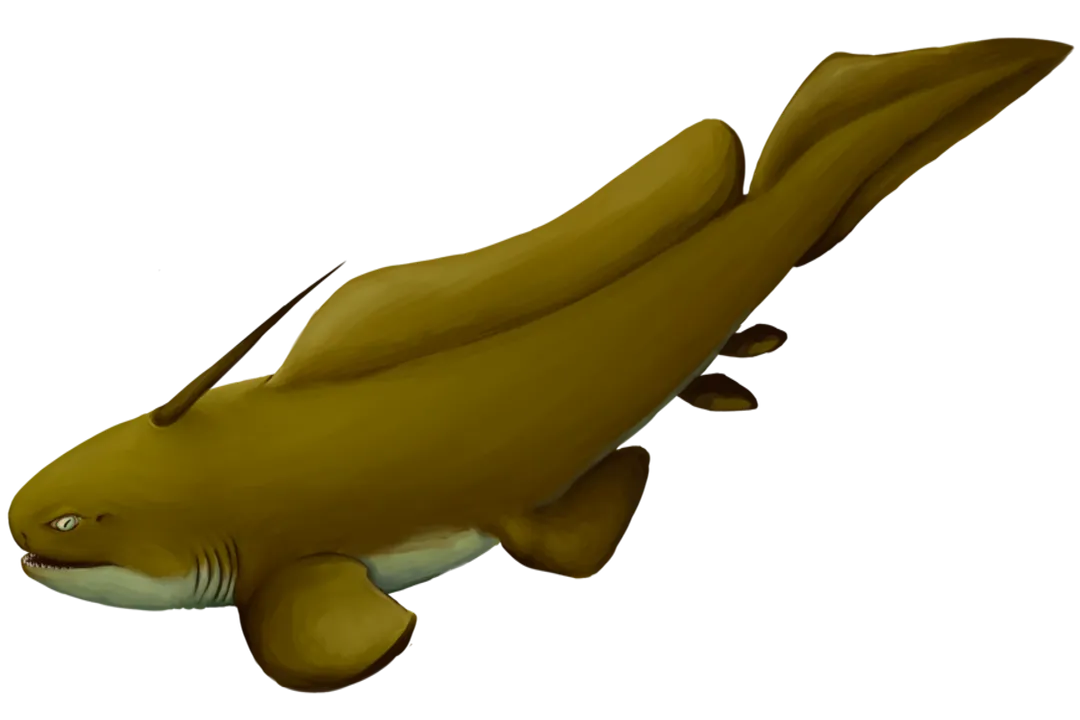
The assignment to the Phylum Chordata places *Xenacanthus* within the broader vertebrate grouping. This classification is based on the presence, at some developmental stage of the organism, of several key characteristics. These foundational chordate features include the existence of a notochord, which provides skeletal support; a dorsal hollow nerve cord running along the back; pharyngeal slits, typically associated with respiration or feeding; and a post-anal tail that extends past the anus. These shared traits firmly establish *Xenacanthus* within the evolutionary tree that leads to all modern vertebrates.
Related Questions
To which Class does the ancient shark genus *Xenacanthus* belong based on its skeleton?What distinctive anatomical feature defines the Order Xenacanthiformes?What is the approximate translation of the genus name *Xenacanthus*?What Phylum links *Xenacanthus* to other vertebrates possessing a notochord?What specialized environment were *Xenacanthus* fossils often found in, relating to its body plan?During which geological periods did the extinct Order Xenacanthiformes thrive?Which Family sits immediately above the genus *Xenacanthus* in the taxonomic hierarchy?Which alternative genus name has been used for reclassified Australian *Xenacanthus* specimens?What critical method confirms the placement of modern fish classes versus *Xenacanthus* classifications?What Kingdom classification is shared by *Xenacanthus* and nearly all recognizable animal life?What function is plausibly suggested for the cranial spine given *Xenacanthus*'s eel-like locomotion?