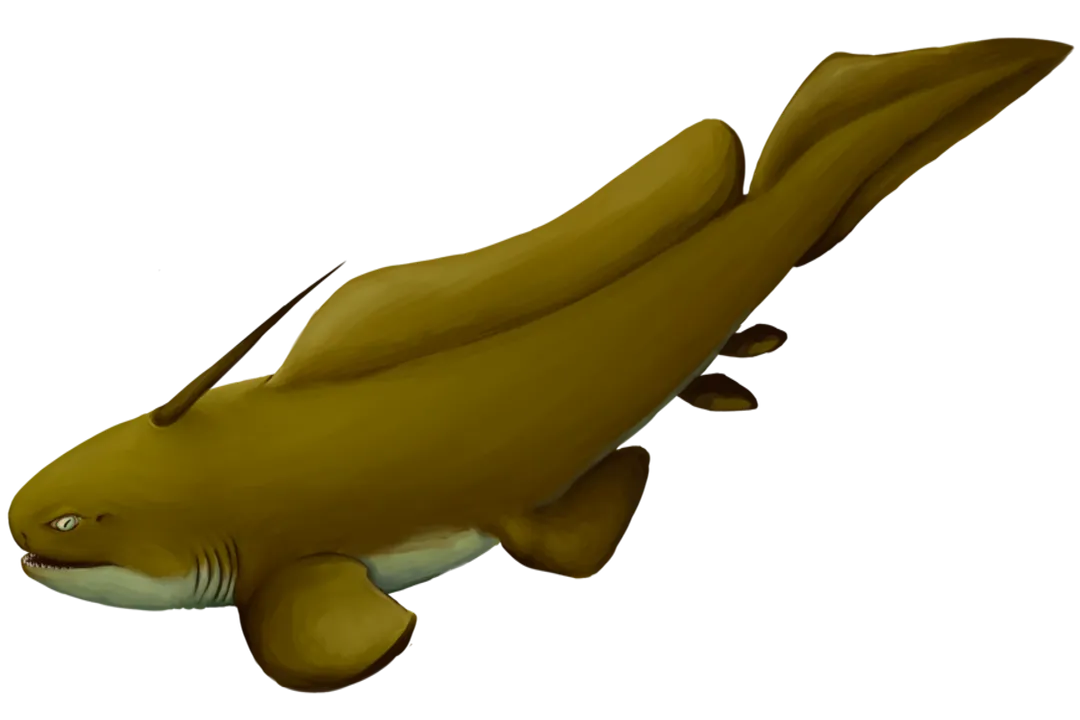
What function is plausibly suggested for the cranial spine given *Xenacanthus*'s eel-like locomotion?
Defense or intraspecific signaling
Considering the relatively sluggish, eel-like locomotion often attributed to *Xenacanthus*, the functional purpose of its prominent cranial spine is likely not related to aggressive, high-speed hunting maneuvers. Instead, its positioning—projecting sharply backward from the head—suggests a role optimized for defense or communication within its species. In the context of ancient Permian streambeds, this sharp projection would present a significant hazard to any predator attempting a sudden ambush attack from above or behind while swimming close to the shark. Therefore, the spine is theorized to be a defensive mechanism finely tuned to its niche in murky, shallow water ecosystems, or possibly used for signaling between members of the same species.