What sensory information do the facial pits of the rattlesnake gather to detect warm-blooded prey?
Answer
Infrared radiation
The specialized facial pits sense infrared radiation, allowing the snake to detect and accurately strike warm-blooded prey, even when light conditions are low.
#Videos
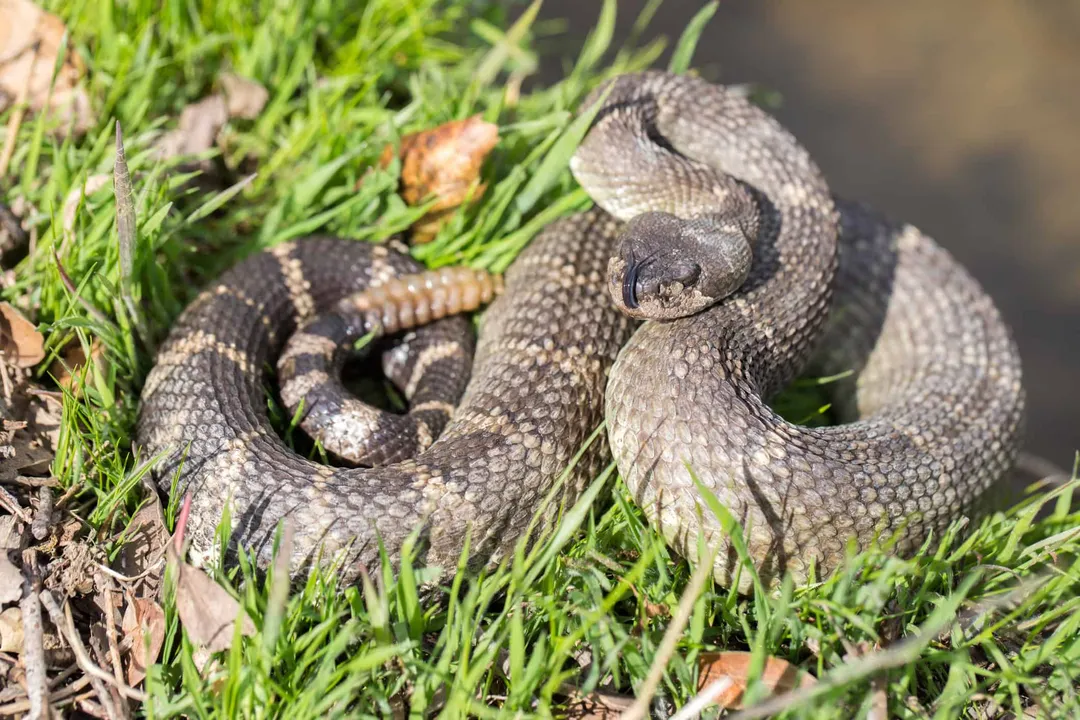
Species spotlight: Northern Pacific Rattlesnake (Crotalus oreganus)
Related Questions
What method of reproduction characterizes the Northern Pacific Rattlesnake?What is the defining characteristic regarding the subcaudal scales immediately posterior to the vent in *C. oreganus*?Which of the following environments is the Northern Pacific Rattlesnake generally absent from?Why might a defensive bite from *Crotalus oreganus* result in no venom being injected?What quality defines the snake's use of its rattle when sufficiently alarmed?Which physical characteristic is described as the most notoriously inconsistent trait among individuals of this species complex?Which prey item is frequently targeted by adult Northern Pacific Rattlesnakes but is less common in the diet of juveniles?What sensory information do the facial pits of the rattlesnake gather to detect warm-blooded prey?At approximately what age range does the Northern Pacific Rattlesnake typically attain sexual maturity?What is the common effect of the hemotoxic venom injected into a victim?