What are unique characteristics of the Northern Potoo?
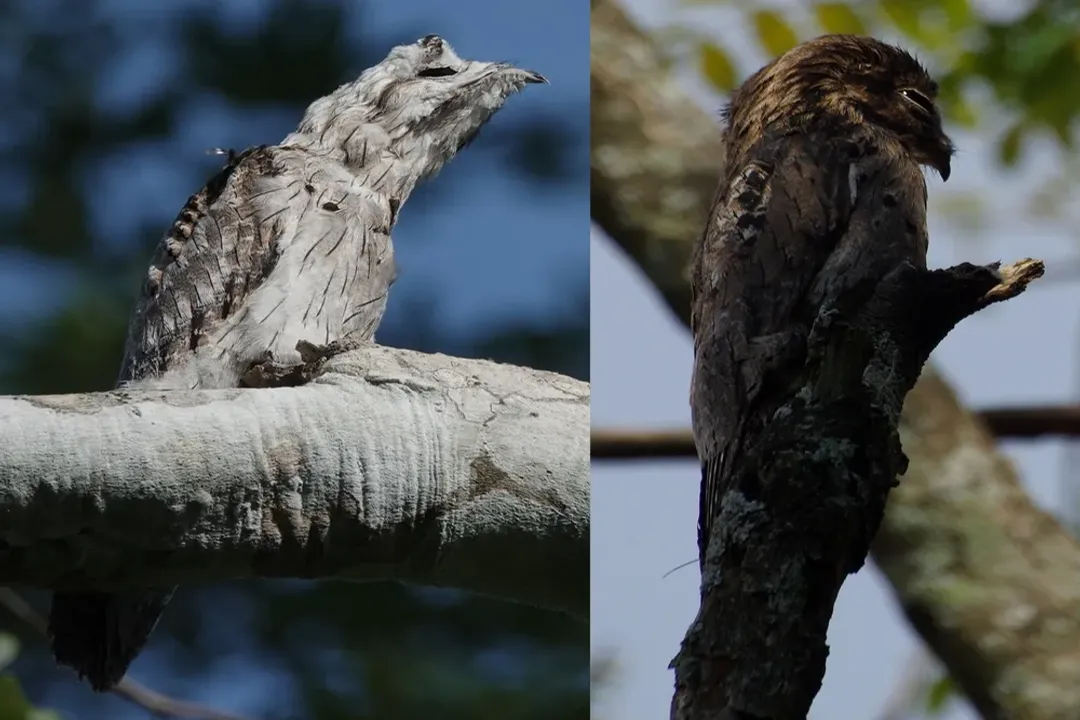
The Northern Potoo is perhaps one of nature's most accomplished illusionists, a bird so dedicated to blending in that spotting one often requires more luck than skill. This creature, scientifically known as Nyctibius jamaicensis, embodies the concept of hiding in plain sight, utilizing its entire physical structure to mimic a broken branch or a weathered snag. [6][9] Its uniqueness isn't just found in its appearance, but in the entire suite of adaptations it employs to survive as a strictly nocturnal insectivore across its wide range. [1][6]
# Physical Traits
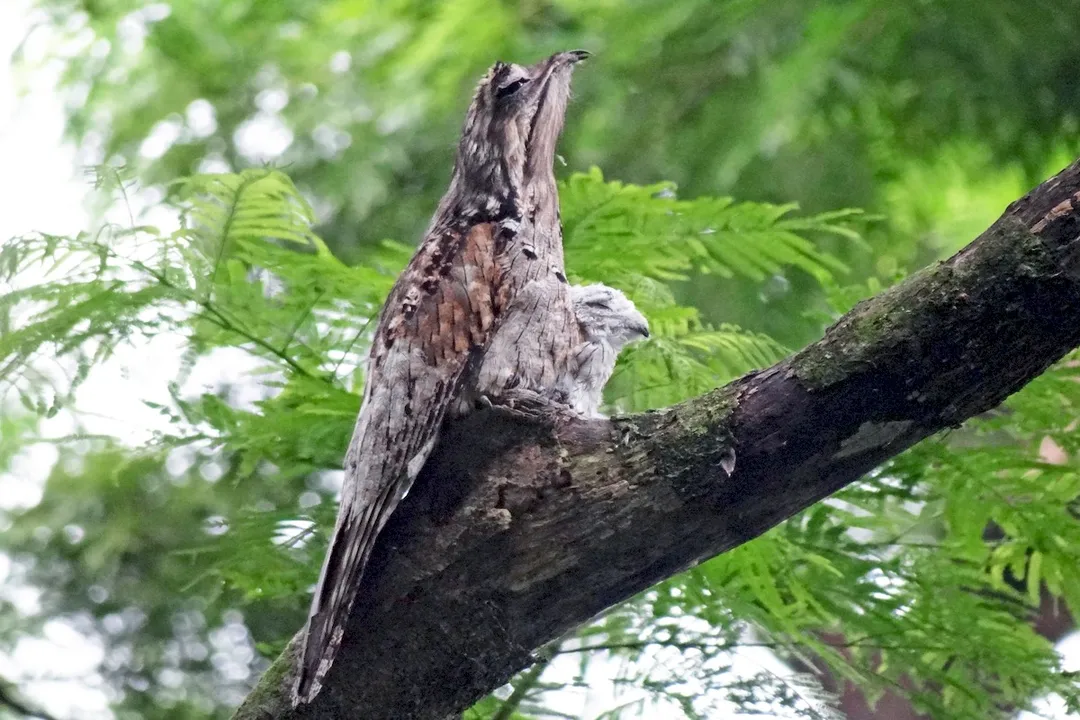
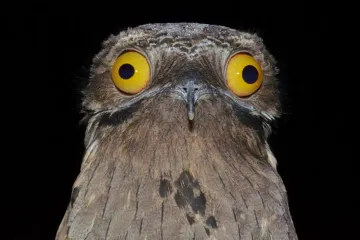
A mature Northern Potoo generally measures between 38 and 48 centimeters in length and weighs approximately 1.5 pounds. [1][3] At a glance, the plumage appears mottled or streaked in shades of grayish-brown, black, and white, creating a perfect disruptive pattern against tree bark. [4][9] This coloration is essential, as the bird spends its daylight hours entirely motionless. Interestingly, the male and female birds share a very similar appearance, making visual identification of sex in the field quite difficult without behavioral context. [1][9] While its body is slender, its head is disproportionately large, dominated by enormous, dark eyes—an adaptation necessary for navigating and hunting in near-total darkness. [4]
The bill itself is remarkably short, appearing almost vestigial when closed. [4] However, this initial appearance is misleading. When opened in flight to capture prey, the gape—the width of the mouth opening—is surprisingly large, giving it the necessary capacity to snatch aerial insects mid-flight. [4][6]
# Cryptic Stance
What sets the Northern Potoo apart from many other cryptic birds, like the American Nighthawk or various nightjars, is the precision of its roosting posture. It doesn't simply hide on a horizontal limb; it selects a vertical snag or the broken top of a stub branch. [1] It then adopts a stiff, upright, elongated posture, aligning its body perfectly with the line of the wood. [5][6] This position stretches the bird's outline, eliminating any telltale curves that might betray its avian identity. The large eyes, usually wide open in low light, narrow significantly to mere slits when the bird is actively trying to be inconspicuous during the day, further enhancing the illusion of inanimate wood. [6]
The dedication to this camouflage is absolute; observers often report seeing hundreds of birds on a foraging flight and then scanning the surrounding trees only to realize the bird they were watching was perched just feet away, appearing as nothing more than weathered wood. [6] While many birds rely on mottled colors to hide amongst foliage, the Potoo relies on structural mimicry against a specific background—the vertical silhouette of a snag. This suggests that its primary daytime threat detection system is geared toward visual predators that scan for recognizable bird shapes rather than just mottled colors against a busy background. [5] If a potential predator, such as a hawk, approaches, the Potoo might shift slightly, opening its eyes wide in a disconcerting stare, a final resort before taking flight. [6]
# Night Hunter
As strictly nocturnal creatures, Northern Potoos remain completely inactive during the day, relying entirely on their camouflage. [6] As twilight fades, they become active, beginning their aerial insect-catching spree. [6] They typically launch themselves from a prominent, exposed perch, soaring out to snag moths, beetles, and other flying insects that are active after dark. [1][6] This feeding method classifies them as aerial insectivores. [1]
Unlike birds that might follow swarms of insects or perch-and-wait for ground prey, the Potoo seems to operate like a highly specialized aerial net. The sheer volume of insects required to sustain a bird this size suggests that their hunting forays are both frequent and highly efficient during the few dark hours they have available. Their large gape is the key piece of mechanical engineering that makes this efficient foraging possible. [4]
# Vocal Sound
The bird’s English name, Potoo, is a direct derivation of its distinctive call. [6] While it is largely silent during the day, once the sun sets, the air fills with its haunting vocalizations. [1] The call is described as a loud, wavering, almost mournful note that seems to hang in the humid evening air. [6][9] It is often rendered as a series of notes, frequently transcribed as "p-t-o-o-o-o-o" or similar variations, often repeated intermittently. [6]
This distinctive sound serves as a crucial marker for birders, often being the first indication that a Potoo is nearby, even when the bird is perfectly concealed. [6] Hearing this call near an open area at dusk is often the most reliable way to pinpoint a potential roosting or hunting spot for the following day.
# Habitat Spread
The Northern Potoo has an extensive distribution, covering much of Central America, parts of the Caribbean islands, and extending down into northern South America. [1] Within these broad regions, they show a preference for areas that offer a balance of open space for hunting and sufficient vertical deadwood for roosting. [1][9] They are adaptable to various drier environments, including open woodlands, savannas, and scrublands. [1] For instance, in Cuba, they are known to inhabit areas with scattered trees, suggesting they do not require dense, closed-canopy forest to thrive. [8] This adaptability to semi-open and somewhat arid environments likely supports their success across the varied landscapes they occupy. [9]
Considering their reliance on dead, vertical snags for camouflage, a subtle but critical element for their long-term presence in any locale is the presence of suitable snag mortality. A healthy, diverse ecosystem must not only support living trees but also allow for the natural aging and death of trees that leave behind those perfect, broken perches—a point often overlooked when assessing conservation needs for birds that depend on structural habitat features rather than just foliage density. [5] Their ability to thrive in landscapes that include human-modified areas, provided there are still suitable perches, hints at a level of resilience, although the specific threats related to habitat change are complex.
Related Questions
#Citations
Northern potoo - Wikipedia
Northern Potoo – Nyctibius jamaicensis - Holistic Birding
Northern Potoo nocturnal bird characteristics - Facebook
Northern Potoo Facts & Photos | Wowzerful
Northern potoo : r/PicsOfUnusualBirds - Reddit
Potoos: Bizarre Nocturnal Birds Hiding in Plain Sight
Field Identification - Northern Potoo - Nyctibius jamaicensis
Northern Potoo in Cuba
Northern potoo - Facts, Diet, Habitat & Pictures on Animalia.bio