What principle relates woodrat body size variation in response to ambient temperature across geological time?
Answer
Bergmann’s rule
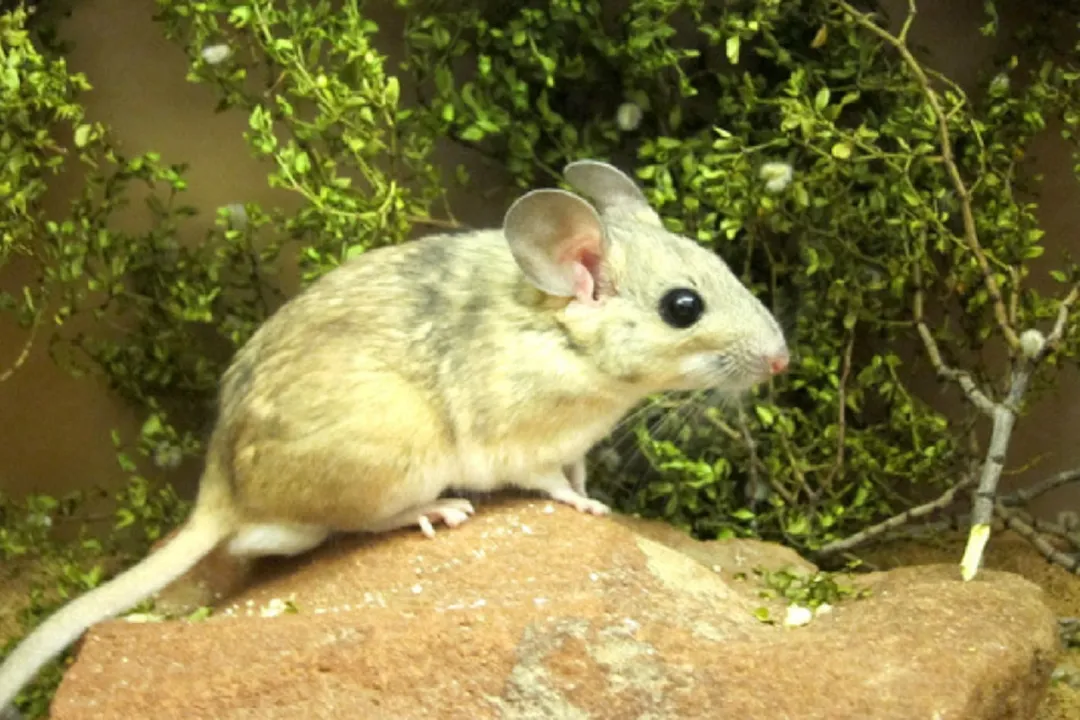
Woodrats are presented as primary examples illustrating Bergmann’s rule. This ecological principle predicts that within a given species distributed across varying thermal environments, individuals in colder regions will evolve larger body sizes compared to those in warmer regions. The fossil evidence from paleomiddens in Death Valley confirms this, showing that as the climate warmed during the Holocene, body sizes for *N. cinerea* and *N. lepida* significantly decreased, favoring smaller body mass in warmer conditions likely due to improved heat dissipation or lower energetic demands.
#Videos
Desert woodrats: How gut bacteria rewrites the story of inheritance
Related Questions
What time frame is estimated for the split establishing ancestors of major western *Neotoma* lineages?What specific gene family underpins the woodrat's remarkable resistance to rattlesnake venom?Which geographical feature is identified as a persistent barrier causing deep divergence within *N. fuscipes*?What principle relates woodrat body size variation in response to ambient temperature across geological time?What specific mitonuclear mismatch pattern is observed between *N. bryanti* and *N. lepida* in the southern Sierra Nevada?How many copies of the *SERPINA3* gene have some woodrat species evolved via tandem duplication?What is the range of temperature amelioration provided by dens built by *N. lepida* in Death Valley environments?How long ago did *Neotoma fuscipes* and *N. macrotis* diverge into separate sister species?Which mountain systems are suggested to have acted as a crucible for the initial divergence of the *N. fuscipes/macrotis* and *N. bryanti/lepida* clades?At what approximate external ambient temperature do modern desert woodrats generally initiate activity based on logger data?