Woodrat Evolution
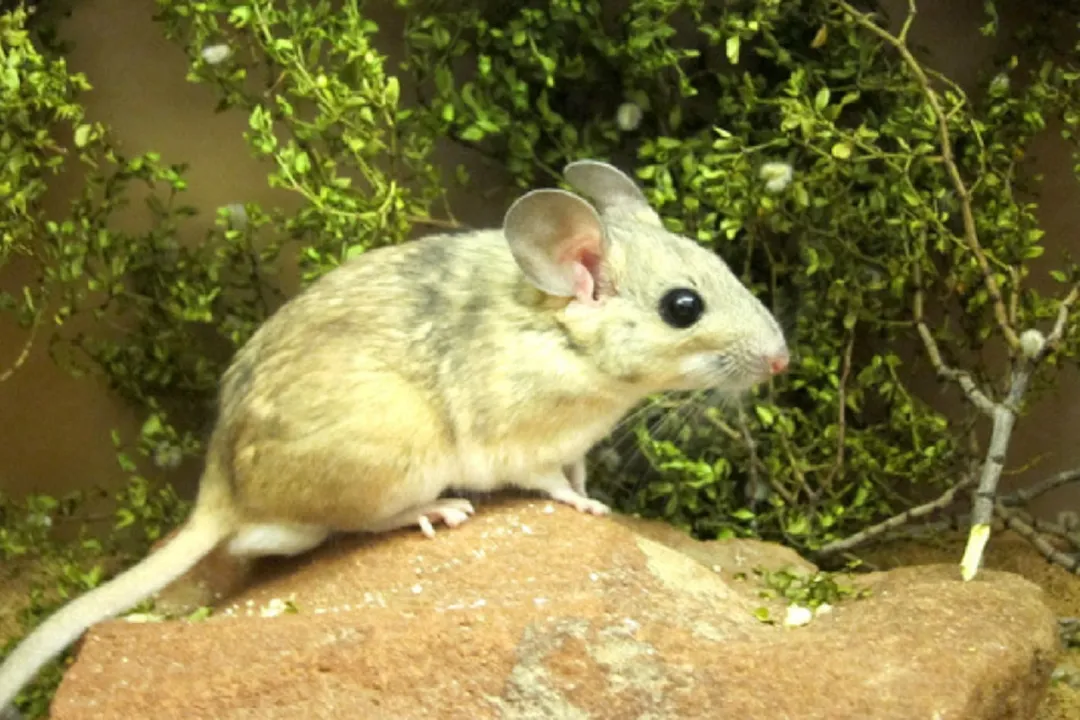
The story of the woodrat, or packrat (Neotoma), is far more dramatic than its humble reputation might suggest. These small rodents, often found meticulously building towering stick houses, serve as remarkable subjects for tracing evolutionary history, revealing how deep geological time, persistent climatic pressures, and immediate ecological threats shape an entire lineage. Research employing modern genomic tools alongside the historical records preserved in their ancient debris piles—known as middens—paints a vivid picture of diversification across the dynamic landscapes of western North America. Understanding woodrat evolution means tracing divergences that span millions of years while simultaneously observing physiological traits shifting in response to the current season's weather.
# Deep Time Divergence
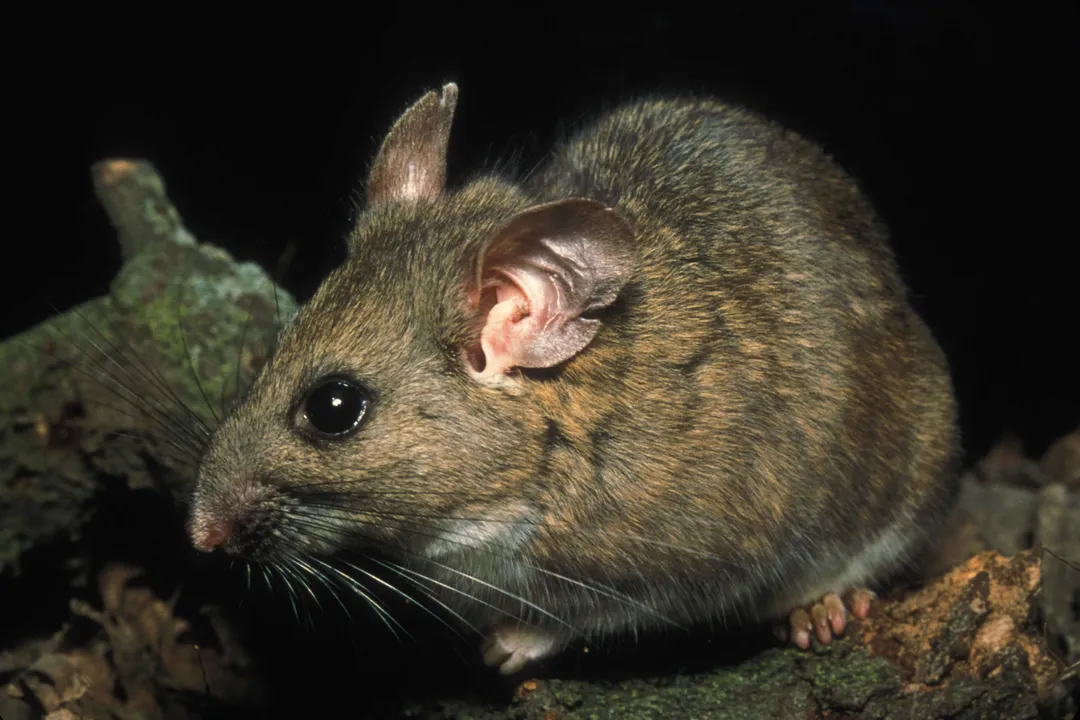
The genus Neotoma encompasses several species whose evolutionary relationships have been pieced together through molecular evidence, especially within the geographically complex California Floristic Province, a global biodiversity hotspot. Genomic analyses using whole mitochondrial and nuclear datasets have provided a hierarchical view of diversification. The split that established the ancestors of the major western lineages—N. fuscipes, N. macrotis, N. bryanti, and N. lepida—is estimated to have occurred around 3.5 million years ago during the Pliocene.
Following this foundational split, the lineages continued to separate based on regional geography. The sister species pair, Neotoma fuscipes (Dusky-footed woodrat) and N. macrotis (Big-eared woodrat), are thought to have parted ways approximately 2.23 million years ago. Similarly, N. bryanti and N. lepida diverged later, around 1.63 million years ago. The unique, cold-tolerant species, N. cinerea (Bushy-tailed woodrat), presents a more complicated picture; while its mitochondrial lineage suggests it sits outside the main western clade, nuclear data often place it nested within the group, perhaps due to high rates of mitochondrial evolution in cold environments or ancient genetic exchange.
The topography of western North America has been the primary sculptor of these divisions. For N. fuscipes, the San Francisco Bay-Delta region has served as a persistent barrier. Genome-wide data indicate a deep divergence within this single species, dating back roughly 1.7 million years ago, separating northern and southern nuclear groups across this area. Further south, the geologically active Transverse Range and Tehachapi Mountains appear to have acted as a crucible, potentially hosting the initial divergence event for the ancestors of the N. fuscipes/macrotis and N. bryanti/lepida clades, as fluctuating Pliocene climates forced distributional shifts.
# Ancient Exchange
The simple branching pattern of evolution is often insufficient to describe life history, especially when closely related species overlap geographically. Woodrats, it seems, have a historical affinity for interbreeding. While modern examples of hybridization are being actively studied—such as ongoing contact between N. fuscipes and N. macrotis along the Nacimiento River—genomic network analyses suggest that genetic mixing occurred much deeper in time.
One striking finding is the evidence of ancient introgression, where phylogenetic networks show a better fit when allowing for an exchange of genetic material between the ancestors of the N. fuscipes-N. macrotis group and the ancestors of the N. lepida-N. bryanti group. This detection of ancient reticulation underscores a biological reality: for the Neotoma genus, species boundaries might be better described as persistent ecological or behavioral associations rather than strictly clean genetic separation at the deepest nodes. The tendency to interbreed, which is evident today through reproductive skirmishes and differential mating success between species differing in size, suggests that maintaining distinct species identity in the face of frequent contact requires strong pre- or post-zygotic barriers.
Perhaps the most famous example of genetic capture involves N. bryanti and N. lepida. In populations across the southern Sierra Nevada and Tehachapi Mountains, N. bryanti has inherited a mitochondrial genome characteristic of N. lepida. This mitonuclear mismatch is a profound evolutionary signature, likely resulting from a relatively recent hybridization event during a northward range expansion where N. lepida-like mitochondria were successfully passed into the N. bryanti nuclear background. The persistence of this captured genome suggests that the N. lepida mtDNA may confer some form of selective advantage in that environment, perhaps linked to physiology or thermal performance.

# Temperature Trade-offs
While genomics reveals ancient history, paleoecology highlights evolutionary responses to climate change across the Pleistocene and Holocene, particularly evident in woodrat remains preserved in arid regions. Woodrats are poster children for Bergmann’s rule, which posits that within a species, body size increases with decreasing ambient temperature.
In the hyperarid environment of Death Valley, where temperatures regularly exceed today, the fossilized fecal pellets in paleomiddens provide a high-resolution thermal record spanning over 30,000 years. During the cooler, wetter Late Pleistocene, the bushy-tailed woodrat (N. cinerea), which is now absent from the valley floor and only found at high elevations on the west side, was abundant and built middens suggesting massive body sizes. As the climate warmed through the Holocene, body size estimates for both N. cinerea and the desert woodrat (N. lepida) decreased significantly, precisely tracking the rise in global and regional temperatures. This illustrates a long-term, predictable evolutionary adjustment where smaller body mass is favored in warmer conditions, likely because smaller animals have lower upper lethal temperatures and can dissipate heat more effectively relative to their mass, or perhaps because smaller size is associated with lower energetic needs when resources are scarce.
The contrasting thermal tolerances dictated species turnover in these extreme habitats. N. cinerea could persist in the Pleistocene cold but could not cope when summer temperatures surpassed approximately . N. lepida, originating from milder coastal areas, was able to colonize the valley floor as conditions moderated and N. cinerea retreated upslope, demonstrating range contraction, expansion, and local extirpation—the full spectrum of potential responses to climate change—observed entirely within one canyon system in Death Valley.
# Genetic Defense Mechanisms
The evolutionary pressures in woodrat history are not solely climatic; immediate threats demand rapid genetic solutions. Woodrats, as a primary food source for rattlesnakes, have evolved remarkable resistance to venom, surviving doses 500 to 1,000 times greater than a standard mouse. This defense is not merely physiological plasticity but has a clear genetic underpinning involving the SERPIN family of genes.
Humans typically possess one copy of the SERPINA3 gene, but some woodrat species have evolved twelve copies through tandem duplication. These duplicate genes produce a suite of slightly different proteins, many of which effectively bind to and neutralize key toxic components within rattlesnake venom, which contains both hemotoxins and neurotoxins. This evolutionary mechanism allows the rodent to maintain its core function while the new copies adapt to counteract specific toxins, showcasing an active, ongoing coevolutionary arms race.
It is fascinating to compare the pace of these adaptations. The genetic duplication events underpinning venom resistance appear to be a form of rapid, positive selection facilitating immediate survival against a strong, extant predator threat. This stands in contrast to the body size changes tracking Quaternary climate shifts over thousands of years, which represent a more classic example of clinal adaptation or balancing selection driven by ambient temperature thresholds. The woodrat lineage demonstrates an ability to deploy fundamentally different evolutionary mechanisms—genome restructuring for toxin neutralization versus gradual morphological scaling for thermoregulation—concurrently to navigate multiple environmental challenges.
# Modern Constraint and Plasticity
The trade-offs required to survive in high-temperature environments are evident even in the daily lives of modern desert woodrats like N. lepida. Their survival hinges on the construction of complex dens, often within the massive root structures of desert trees like honey mesquite (Prosopis glandulosa), which access deep water reserves. These dens provide a critical thermal refuge, ameliorating ambient temperatures by as much as to in places like Death Valley, a buffering capacity far greater than previously observed in other habitats.
However, woodrats cannot remain sheltered indefinitely; they require night-time foraging for water-laden vegetation and for mating. Research using miniature temperature loggers inside dens shows that activity does not begin until the external ambient temperature drops below the animal's lethal limit, often around . As summer heat intensifies, the time available for essential activities like foraging declines drastically, sometimes by nearly half compared to cooler periods. Furthermore, venom resistance itself is not static; serum samples from woodrats acclimated to cool environments were significantly less effective at inhibiting venom compared to those from warm-acclimated rats. This suggests a physiological trade-off: energy diverted to thermoregulation or digesting a toxic diet (like creosote resin) may come at the expense of producing venom-neutralizing proteins. This highlights that woodrat evolution involves not just long-term genetic changes but also remarkable phenotypic plasticity that allows immediate survival adjustments based on current weather and diet.
The dynamic interplay between deep genetic structuring, ancient admixture, rapid gene duplication for defense, and fine-scale behavioral plasticity in response to temperature provides a rich model for evolutionary biology. The genomic data collected from these diverse western lineages offer an unprecedented baseline for future studies, allowing researchers to pinpoint precisely which parts of the genome facilitate adaptation to dynamic climates and which underpin survival against specialized predators.
#Videos
Desert woodrats: How gut bacteria rewrites the story of inheritance
Related Questions
#Citations
This genetic trick gives woodrats an evolutionary advantage against ...
Woodrats' immunity to snake venom changes with the weather
Genome-wide genetic variation coupled with demographic and ...
Desert woodrats: How gut bacteria rewrites the story of inheritance
The woodrats of California: evolution across a dynamic landscape
The Evolutionary History and a Systematic Revision of Woodrats of ...
Life in an extreme environment: a historical perspective on the ...