What physical indicators confirm the non-venomous nature of the Western Rat Snake?
Answer
Absence of loreal pits and the presence of round pupils.
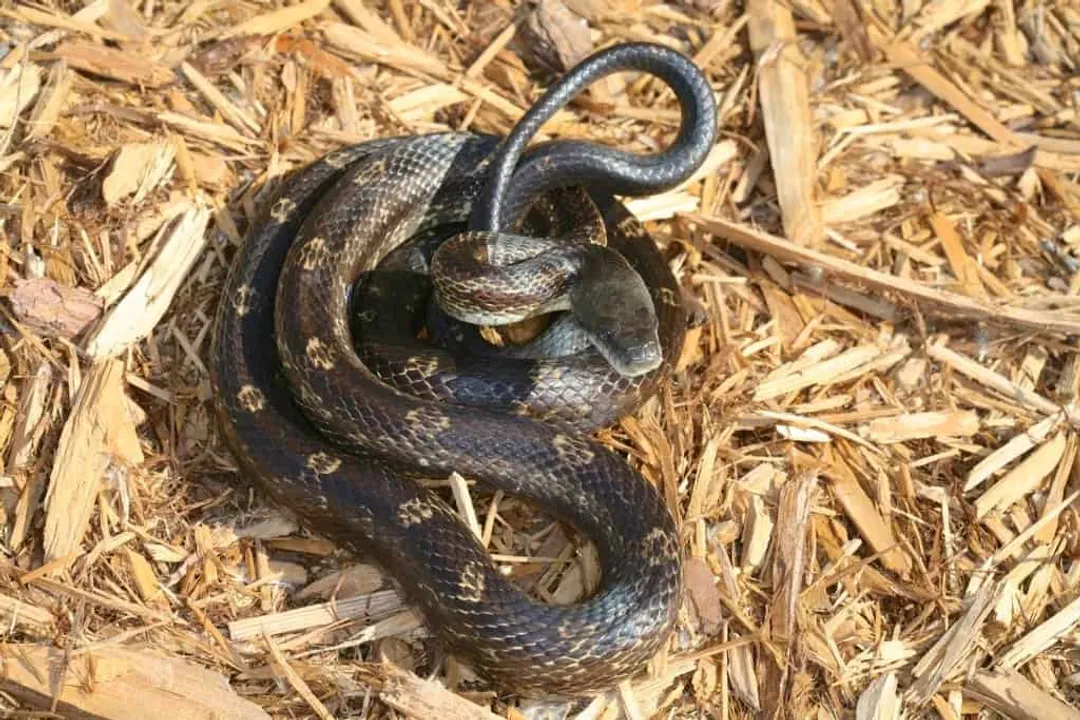
To differentiate the non-venomous Western Rat Snake from potentially dangerous pit vipers, observers look for specific facial and head traits. A primary method involves checking for loreal pits, which are heat-sensing organs found in pit vipers; the Western Rat Snake, being a member of the Colubridae family, lacks these pits entirely. Furthermore, the snake possesses round pupils, which contrasts sharply with the elliptical or vertical pupils characteristic of pit vipers. These two factors combined—no pits and round pupils—are vital visual clues confirming its non-venomous status.
Related Questions
What texture characterizes the dorsal scales of Pantherophis obsoletus along the back?What is the typical total length range for adult Western Rat Snakes?What is the primary difference in coloration between juvenile and adult Western Rat Snakes?What is the starting length of Western Rat Snakes after hatching?How do the ventral scales of *Pantherophis obsoletus* contrast with its dorsal scales?What physical indicators confirm the non-venomous nature of the Western Rat Snake?What functional advantage does the dark, nearly uniform adult coloration provide?Which specific head features contribute to the alert appearance noted by observers?What colors might compose the background hue of a juvenile Western Rat Snake's pattern?What structural feature is noted as the most consistent tactile identifier for this species?