What functional advantage does the dark, nearly uniform adult coloration provide?
Answer
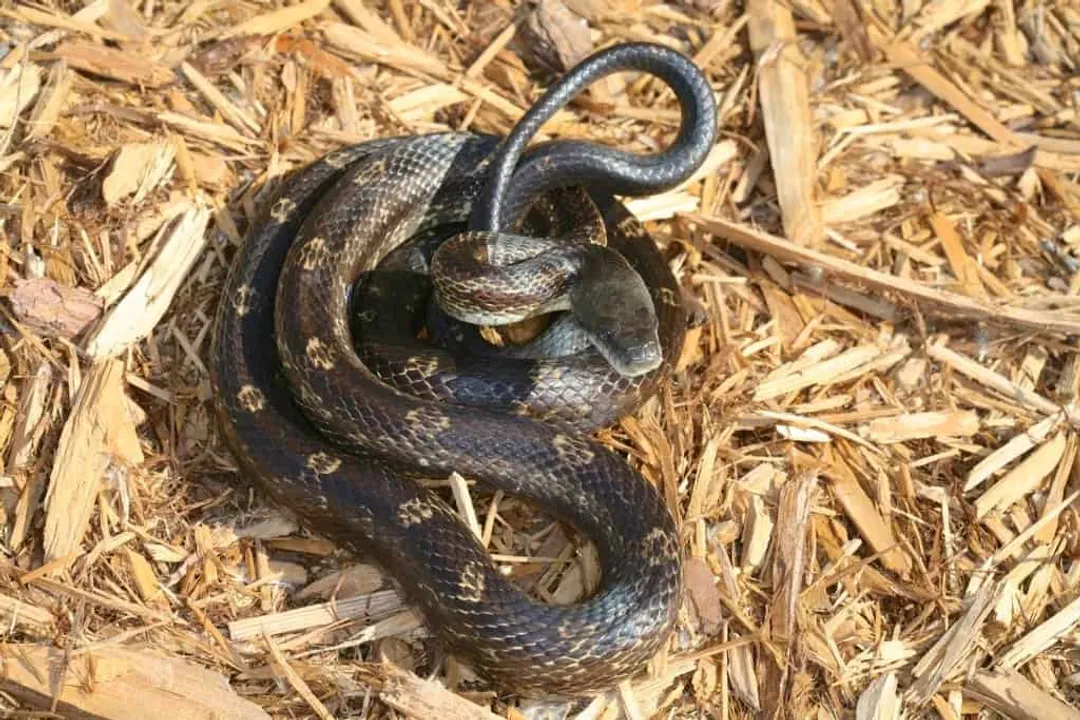
It aids in camouflage against tree bark and shadows in vertical habitats.
The progression from a complex juvenile pattern to a predominantly dark adult coloration is linked to shifts in preferred habitat use as the snake grows larger. Once the snake has achieved a size where ground predators are less of a threat, it frequently moves into vertical environments, such as climbing trees or structures. In these areas, an almost entirely black phenotype provides superior camouflage by blending seamlessly with shadows and the texture of rough bark. This reduced visibility benefits both hunting success and avoiding detection by aerial predators.
Related Questions
What texture characterizes the dorsal scales of Pantherophis obsoletus along the back?What is the typical total length range for adult Western Rat Snakes?What is the primary difference in coloration between juvenile and adult Western Rat Snakes?What is the starting length of Western Rat Snakes after hatching?How do the ventral scales of *Pantherophis obsoletus* contrast with its dorsal scales?What physical indicators confirm the non-venomous nature of the Western Rat Snake?What functional advantage does the dark, nearly uniform adult coloration provide?Which specific head features contribute to the alert appearance noted by observers?What colors might compose the background hue of a juvenile Western Rat Snake's pattern?What structural feature is noted as the most consistent tactile identifier for this species?