What phenomenon describes the independent evolution of similar forms in unrelated bird groups due to shared ecological pressures?
Answer
Convergent evolution
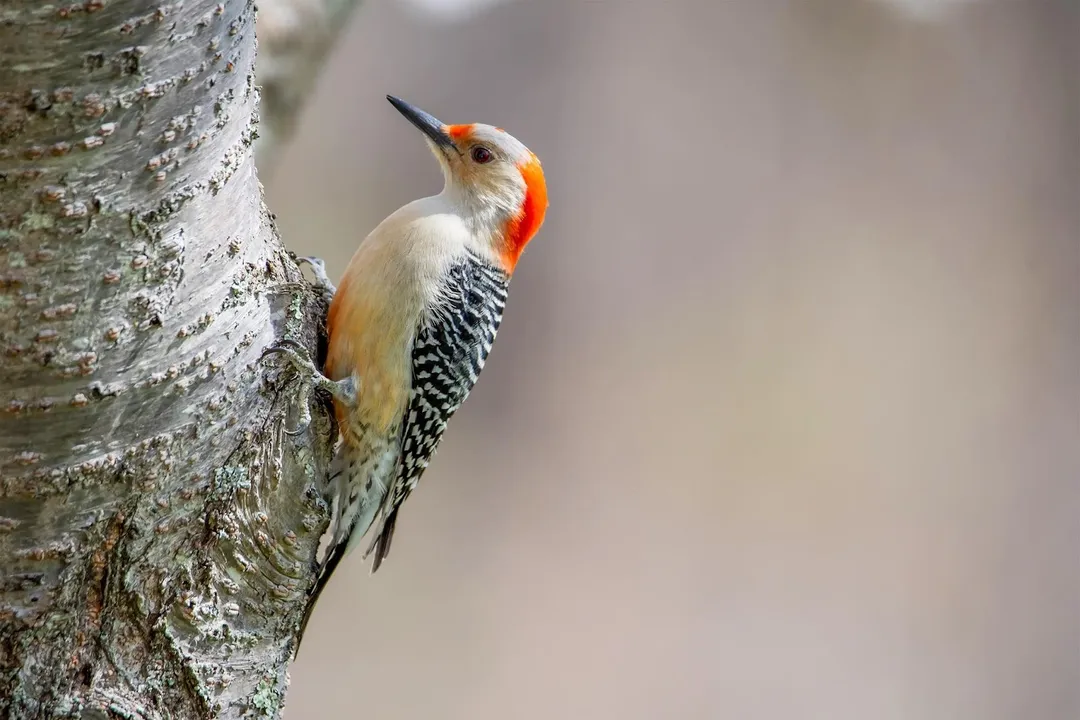
Convergent evolution is the process wherein distantly related species independently evolve similar traits or morphologies because they face similar environmental challenges or occupy comparable ecological niches. In the context of woodpeckers, this means that if two genetically distinct lineages encounter environments characterized by very hard wood and similar insect prey, they may both evolve similar body shapes or plumage patterns because those physical solutions maximize foraging efficiency under those identical constraints, even if their last common ancestor was very different.
#Videos
Woodpecker Defies Evolution - YouTube
Related Questions
To which order do woodpeckers (Picidae) belong along with toucans and barbets?What specialized anatomical feature in a woodpecker's skull acts as a natural shock absorber?What specific anatomical term describes the woodpecker foot configuration possessing two toes pointing forward and two pointing backward?Where is the hyoid bone, which supports the tongue, often anchored in many woodpecker species?What critical function does the woodpecker's stiff, pointed tail feathers perform while the bird is foraging?What notable foraging behavior distinguishes the Northern Flicker from many other woodpecker species?What phenomenon describes the independent evolution of similar forms in unrelated bird groups due to shared ecological pressures?What G-force level can a woodpecker's head experience momentarily when performing high-speed drumming strikes?Which structure is one of the three recognized subfamilies within the formal woodpecker family, Picidae, alongside Picinae and Jynginae?What is the primary hypothesized function of the high-G-force drumming observed in woodpeckers during the spring months?What does the proportion of the woodpecker brain relative to its skull size help facilitate in terms of protection?