What is the primary hypothesized function of the high-G-force drumming observed in woodpeckers during the spring months?
Answer
Communication, such as securing a mate or defending a high-value nesting site
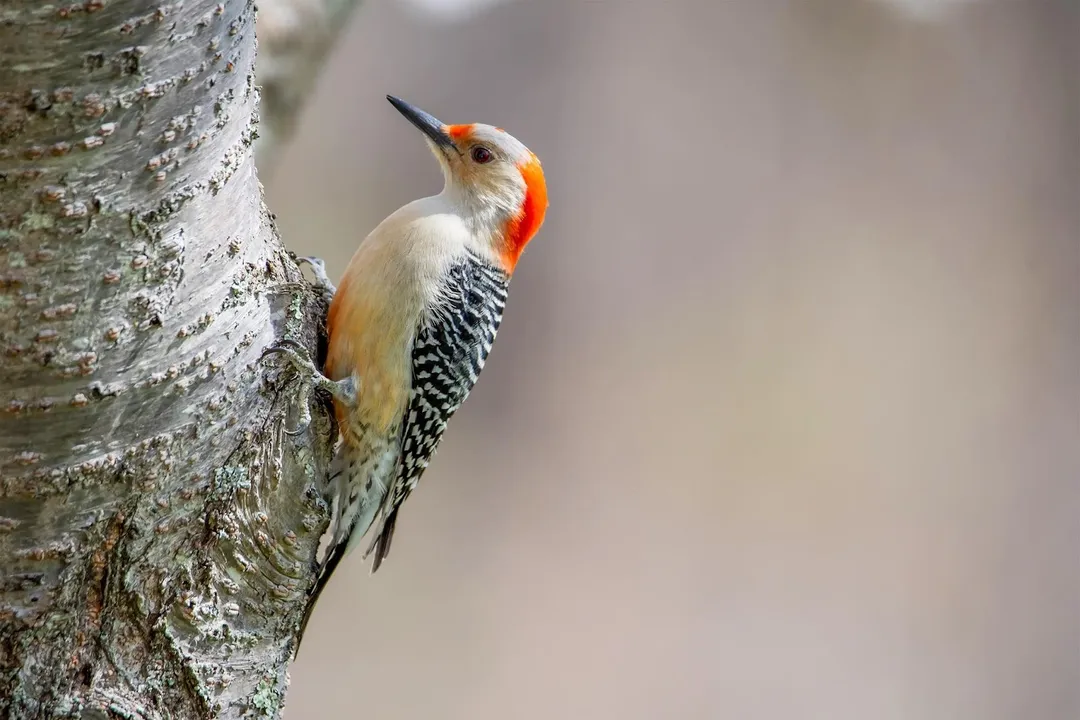
While the specialized anatomy allows for powerful drumming, not all tapping serves a direct foraging purpose. Observations suggest that loud, high-force strikes, particularly when heard during the spring, are often related to social signaling. This intense sound production is likely employed for communication purposes, such as establishing territory, warning off rivals, or attracting and securing a potential mate. This behavior demonstrates the utility of specialized traits being transferred from natural substrates to human-made structures like utility poles.
#Videos
Woodpecker Defies Evolution - YouTube
Related Questions
To which order do woodpeckers (Picidae) belong along with toucans and barbets?What specialized anatomical feature in a woodpecker's skull acts as a natural shock absorber?What specific anatomical term describes the woodpecker foot configuration possessing two toes pointing forward and two pointing backward?Where is the hyoid bone, which supports the tongue, often anchored in many woodpecker species?What critical function does the woodpecker's stiff, pointed tail feathers perform while the bird is foraging?What notable foraging behavior distinguishes the Northern Flicker from many other woodpecker species?What phenomenon describes the independent evolution of similar forms in unrelated bird groups due to shared ecological pressures?What G-force level can a woodpecker's head experience momentarily when performing high-speed drumming strikes?Which structure is one of the three recognized subfamilies within the formal woodpecker family, Picidae, alongside Picinae and Jynginae?What is the primary hypothesized function of the high-G-force drumming observed in woodpeckers during the spring months?What does the proportion of the woodpecker brain relative to its skull size help facilitate in terms of protection?