What is the rarest woodpecker?
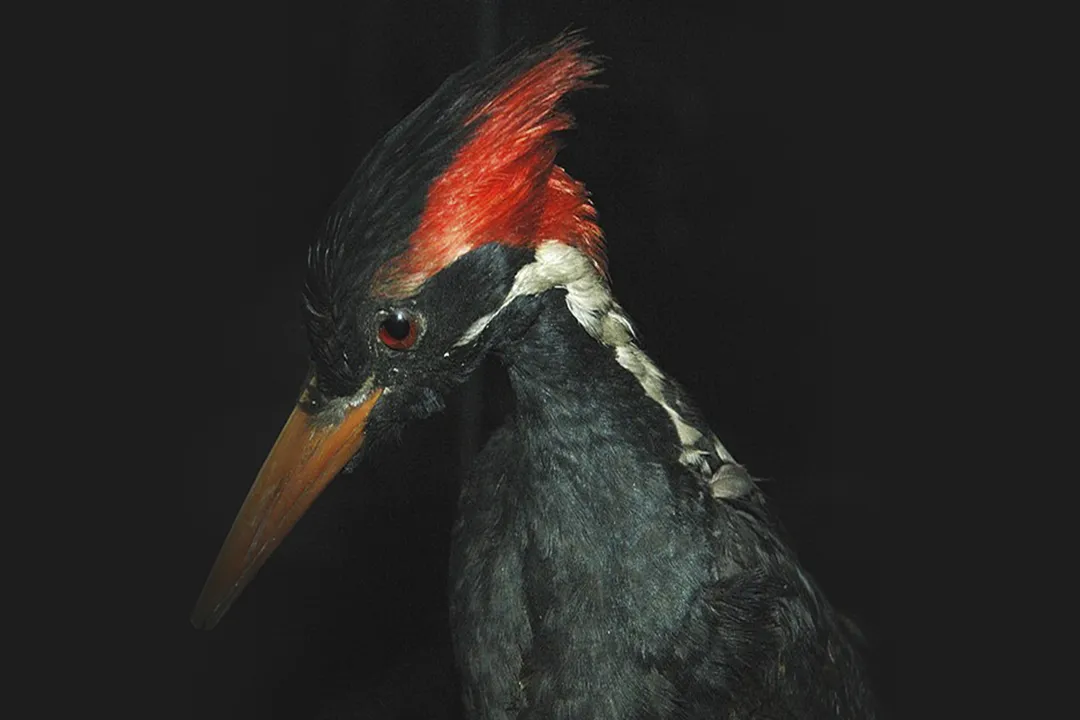
The title of the world's rarest woodpecker often falls upon a bird known more by its ghost than its presence: the Ivory-billed Woodpecker (Campephilus principalis). [1][2] This magnificent bird, once holding the crown as North America’s largest woodpecker, now exists primarily in historical records, faded photographs, and the hopes of dedicated birdwatchers. [5][6] Its status hovers precariously between critically endangered and officially extinct, making any unconfirmed sighting the subject of intense scientific and public scrutiny. [1][7]
# Physical Traits
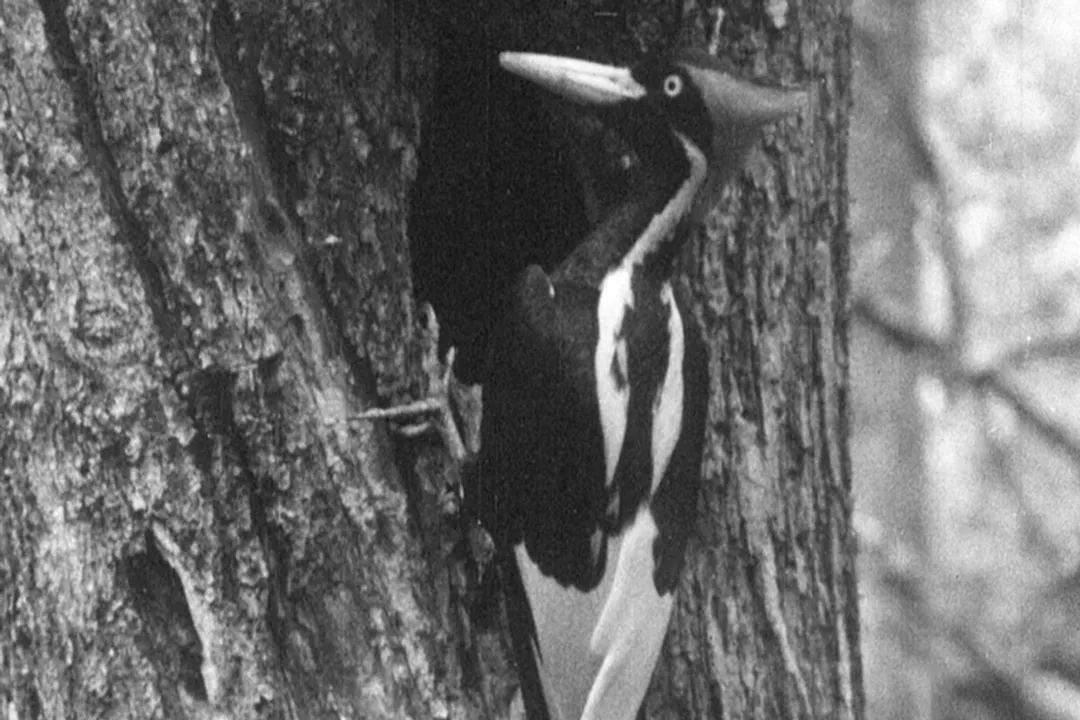
Distinguishing the Ivory-billed Woodpecker from other large woodpeckers, such as the Pileated Woodpecker, is key to understanding the significance of any sighting. [5] The Ivory-bill was substantially larger than its common cousin. While the Pileated can reach lengths around 16 to 19 inches, the Ivory-bill potentially boasted a body length nearing 20 inches, with a wingspan that could stretch up to 30 inches. [1]
Its plumage offered striking contrast. The body was predominantly black, but the most defining characteristic was the large, white patches on the wings, which were especially prominent when the bird was in flight. [2] The bill itself was pale, taking on a distinct ivory or whitish hue, which gave the species its common name. [1][2] Sexual dimorphism was apparent in the crest. Males sported a large, prominent crest that was reddish-orange, while the female’s crest was black, often accompanied by a white stripe running down the side of her neck. [2] Birders looking for evidence must distinguish these features carefully, as mistaken identity remains a frequent challenge. [8]
# Forest Home
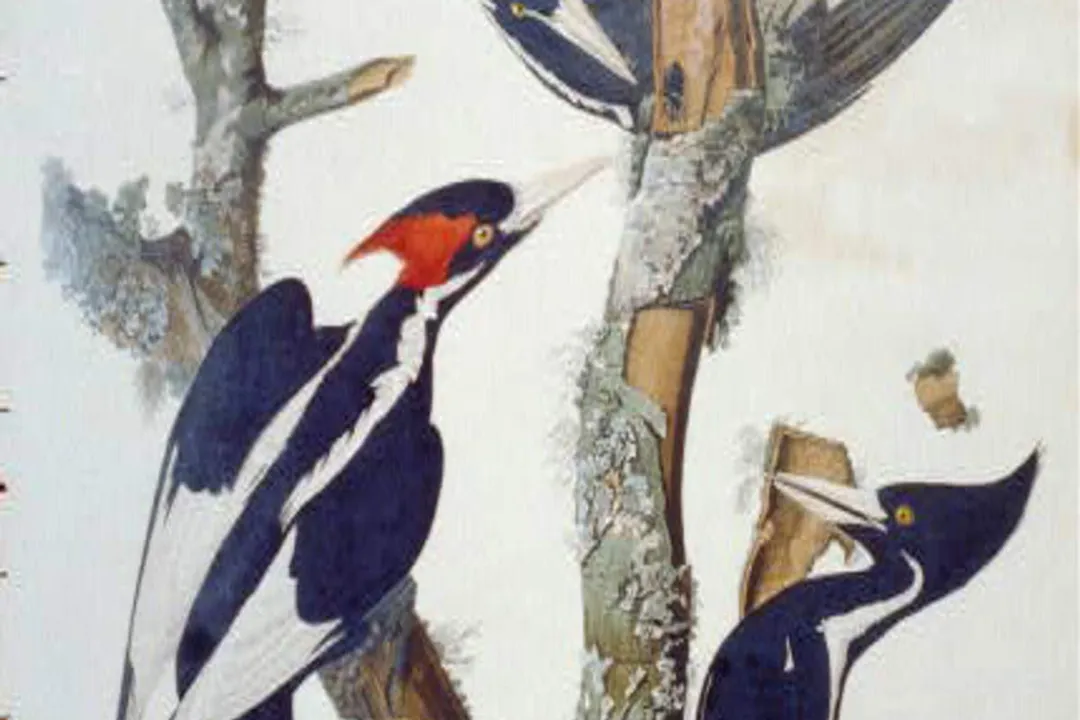
The ecological niche of the Ivory-billed Woodpecker was very specific, which likely contributed significantly to its rapid decline once its habitat began to disappear. [1][4] This species demanded large, relatively undisturbed tracts of mature, old-growth, bottomland hardwood forests. [4] They showed a strong preference for swampy woodlands. [1]
Crucially, their survival depended on a steady supply of large, dead or dying trees. [4] They specialized in foraging for beetle larvae, often excavating deep into decaying snags and trunks, leaving behind large, rectangular holes—a feeding sign that itself became a highly sought-after piece of evidence for search teams. [1] The sheer scale of the forest required to support a viable population meant that as logging practices expanded across the southeastern United States, the bird’s available habitat shrank dramatically. [1]

# Declining Numbers
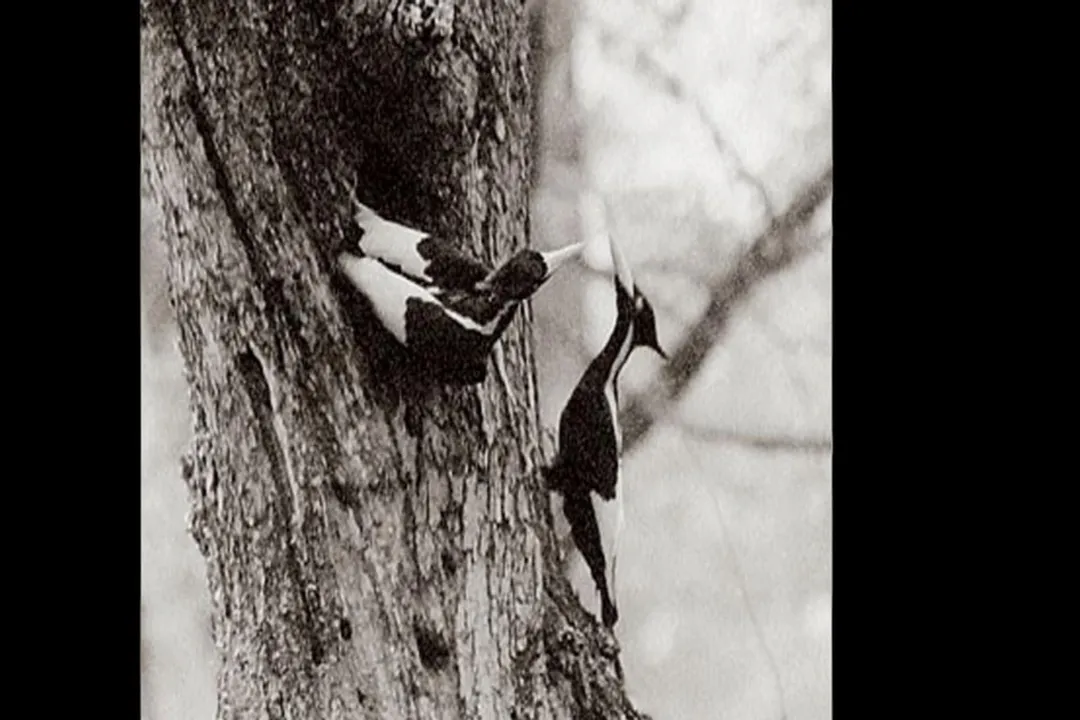
The official timeline of decline is stark. Although sightings persisted throughout the early 20th century, the last widely accepted, confirmed photograph of a living Ivory-billed Woodpecker was taken in 1935. [1] The last confirmed sighting occurred in 1944 in Marion County, Florida. [1] Since then, the narrative has shifted to one of potential extinction. In fact, the U.S. Fish and Wildlife Service (FWS) has proposed listing the Ivory-billed Woodpecker, alongside 22 other species, as extinct. [5]
Despite this grim outlook, the bird retains an almost mythical status because reports continue to trickle in. These reports, which often emerge from remote, heavily wooded areas, keep the hope of rediscovery alive. [7] However, without irrefutable evidence—such as a clear photograph, video, or physical specimen—these accounts are typically cataloged as unconfirmed sightings, leaving the bird in a state of limbo. [8]
# Unique Soundscape
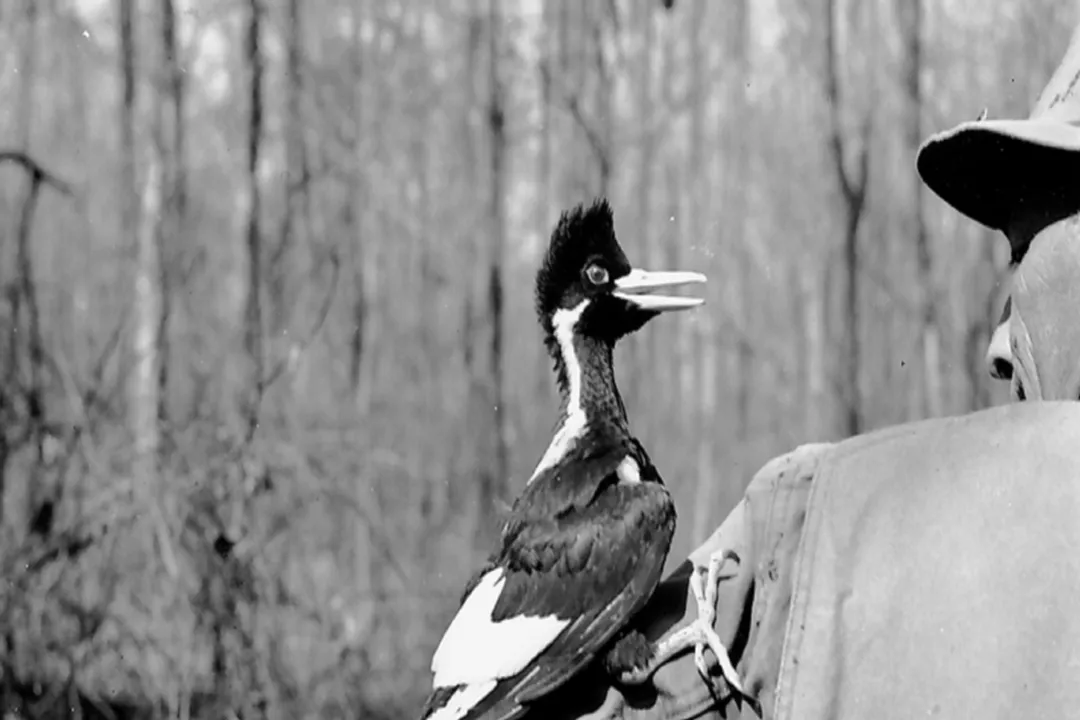
Birdwatchers rely heavily on vocalizations to identify species, and the Ivory-bill had a sound profile unlike any other North American woodpecker. [1][2] Its call, often transcribed as "kent," was described as a hesitant, tinny sound, sometimes given in a series of two or three notes. [1][2] This call is significantly different from the loud, descending "laugh" of the Pileated Woodpecker. [1]
In addition to its vocalizations, the bird engaged in a distinct drumming behavior. While many woodpeckers drum by striking a trunk rapidly and continuously, the Ivory-bill was known to produce a double-knock pattern. [1] Hearing this specific, rhythmic percussion echoing through a swamp could be as thrilling to an experienced birder as a visual confirmation.

# Comparing Giants
To truly appreciate the rarity of the Ivory-bill, one must consider its scale relative to its closest contemporary, the Pileated Woodpecker. The Pileated is often mistaken for the Ivory-bill because it is the largest woodpecker commonly seen across much of the continent today. [5] However, the difference in their feeding ecology highlights a broader conservation point. Where the Pileated can adapt its diet and range to slightly more fragmented or secondary growth forests, the Ivory-bill required the vast, unbroken maturity of old-growth swamps. [4] This specialized dependence means that even if a small population of Ivory-bills survived, the habitat requirements alone would keep their numbers extremely low, dwarfed by the more generalist Pileated populations. The potential loss of the Ivory-bill represents not just the loss of a species, but the loss of an entire ecological structure tied to pristine, unmanaged forests. [4]
# The Search Continues
The persistence of unconfirmed sightings speaks to the enduring desire to prove the Ivory-bill is still with us. [7] Dedicated searches continue, often focusing on remote river bottoms in the deep South, like the vast wilderness areas of the southeastern United States. [4] For instance, reports and searches often center around areas in the Southeast where large, continuous stretches of mature forest still exist, however fragmented. [5] These expeditions involve expert birders using recording equipment and high-powered optics, hoping to capture the definitive evidence that would reverse the bird's presumed extinction status. [1][7]
The challenge in confirming a sighting is immense. In dense swamp environments, visual confirmation is difficult, and differentiating calls from background noise or similar species is complicated. [8] This leads to an interesting quandary regarding the "rarest" title. Is the rarest bird the one with a known, tiny population, or is it the one whose population is so elusive that it might be zero, yet its cultural significance drives continuous, costly searches? The Ivory-bill falls into the latter category—a bird whose rarity is compounded by uncertainty, fueling expeditions fueled by both scientific rigor and deep-seated hope. [7]

# Conservation Implications
The potential extinction of a species like the Ivory-billed Woodpecker carries more than just ornithological significance; it acts as a potent symbol for habitat loss. [5] When we discuss the disappearance of Campephilus principalis, we are also discussing the historical destruction of the old-growth bottomland hardwoods that once defined much of the southern landscape. [4] The bird’s requirement for large, old trees means that even if reforestation efforts succeed, they take centuries to create the specific structural conditions necessary for this species to thrive again.
If the Ivory-bill were to be declared officially extinct, it would serve as a somber marker in conservation history. [5] Conversely, any credible rediscovery would necessitate immediate, large-scale habitat protection, potentially changing how federal and state agencies manage public lands in areas where sightings have occurred. [4] The continued possibility of its existence forces agencies and researchers to maintain a level of vigilance for that specific habitat type that they might otherwise neglect if the species were already written off. This lingering specter, in a way, ensures that some of its preferred environment remains undisturbed, even if the bird itself does not. [4]
# Navigating Uncertainty
For the dedicated observer who believes they have seen this phantom bird, the experience is often fraught with self-doubt and the weight of expectation. [8] A Reddit thread discussing a potential sighting highlights this perfectly: users immediately pivot to asking about location, light conditions, and whether the observer could distinguish the bird from a Pileated. [8] This scrutiny underscores that in the world of critically rare species, seeing is rarely believing without extraordinary corroboration. The sheer improbability of the event makes people doubt the observer, no matter how credible they might be. [7] It is a psychological hurdle as much as a biological one.
Ultimately, the Ivory-billed Woodpecker remains the archetype of the rarest North American bird because its existence has become conditional—it exists as long as there is a patch of old swamp large enough to hide it and an observer dedicated enough to look for it. [1][4] Whether future expeditions yield a clear video or the FWS confirms its listing as extinct, this bird continues to command respect for the fragile, irreplaceable ecosystems it once inhabited.
#Videos
Years after bird frenzy, ivory-billed woodpecker's legacy ... - YouTube
Related Questions
#Citations
Ivory-billed woodpecker - Wikipedia
Ivory-billed Woodpecker - All About Birds
Reporting ivory-billed woodpecker sightings with clear evidence ...
Ivory-billed Woodpecker (Campephilus principalis)
North America's largest woodpecker, 22 other species may soon be ...
Ivory-billed Woodpecker - FWC
The Extinct Woodpecker That Just Won't Die - Explorersweb »
Any chance this is an Ivory-billed Woodpecker? Taken on 9/30 in ...
Years after bird frenzy, ivory-billed woodpecker's legacy ... - YouTube