What other major sauropod group is mentioned alongside Titanosauria as potentially existing in the Hastings Beds Group during the Early Cretaceous?
Answer
Diplodocidae
The fragmented remains found within the Wealden sediments, particularly those associated with the Hastings Beds Group, suggest that the environment supported a surprising diversity of large herbivores. Analysis of these bones indicates the presence of several distinct sauropod groups coexisting or overlapping temporally and spatially. Specifically mentioned as being present in this assemblage, alongside basal Titanosauriformes and Titanosauria, is the Diplodocidae family. The appearance of a rebbachisaurid (*Xenoposeidon*) within this already diverse milieu underscores that the Early Cretaceous English mainland was a significant, though complex, center for sauropod fauna.
Related Questions
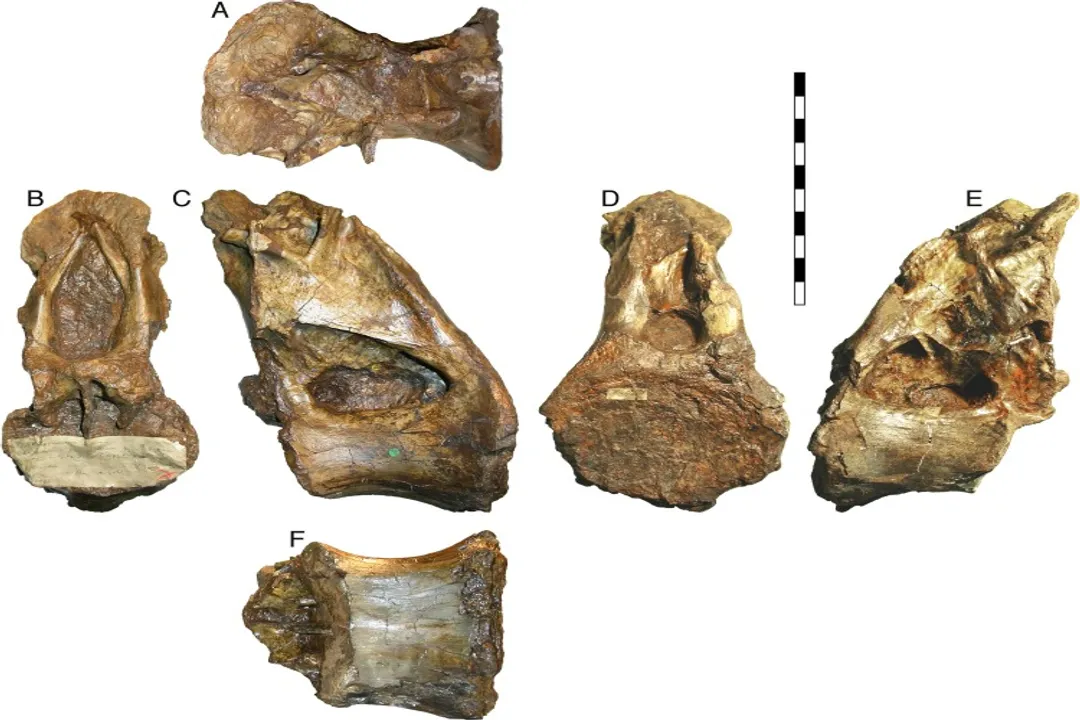
What catalog number identifies the singular *Xenoposeidon proneneukos* dorsal vertebra specimen?Which specific locale near Hastings is the most likely unearthing site for the *Xenoposeidon* vertebra?The exposed rock layers at Ecclesbourne Glen, where R2095 was found, belong to which specific geological formation?What precise geological age is estimated for the *Xenoposeidon* vertebra based on its Ecclesbourne Glen location?What geological Supergroup encompasses the geological context of the *Xenoposeidon* find?Which ancient landmass, defined by early Cretaceous geography, did *Xenoposeidon*'s presence confirm as a habitat for Rebbachisaurids?What key anatomical structure, cataloged as R2095, is the sole fossil evidence for *Xenoposeidon proneneukos*?What other major sauropod group is mentioned alongside Titanosauria as potentially existing in the Hastings Beds Group during the Early Cretaceous?What depositional environment does the Ashdown Formation at Ecclesbourne Glen typically represent?Relative to the Wessex Formation, how does the geological age of the Hastings Beds Group containing *Xenoposeidon* compare?