Relative to the Wessex Formation, how does the geological age of the Hastings Beds Group containing *Xenoposeidon* compare?
Answer
It is older
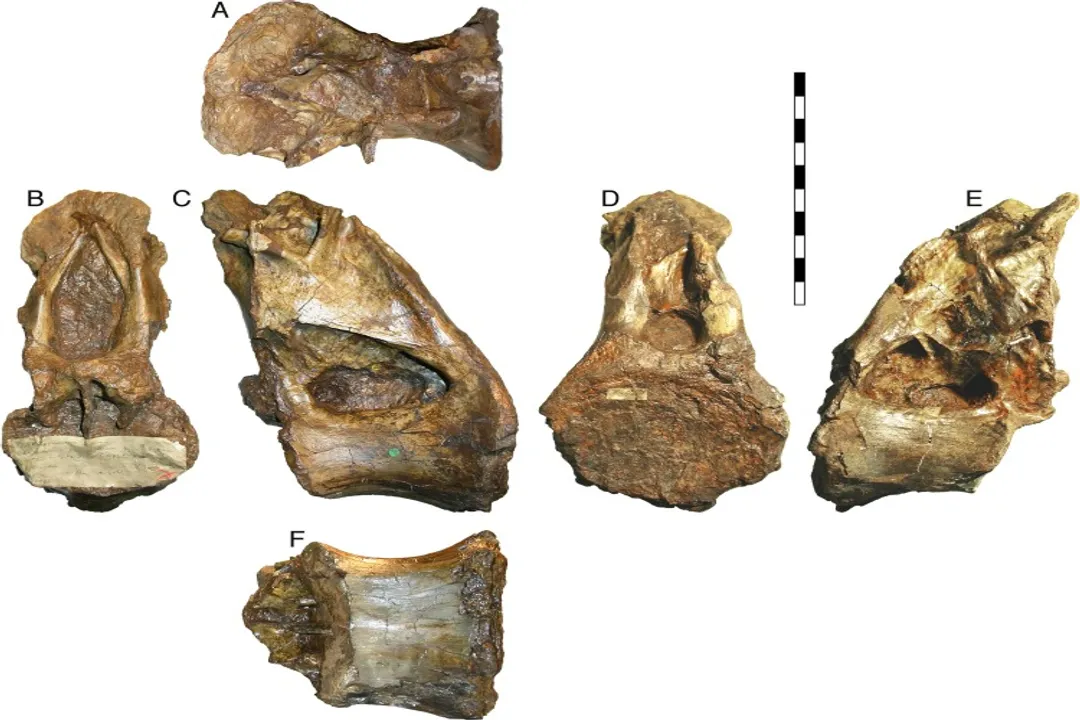
The geological sequence of the Wealden Supergroup is differentiated chronologically across its units. The Hastings Beds Group, where the holotype NHMUK PV R2095 was recovered, captures the earliest part of the Early Cretaceous period, spanning the Berriasian–Valanginian stages. Conversely, the Wessex Formation, which dominates later sauropod records, for example, from the Isle of Wight, represents younger strata within the broader Wealden assemblage. Therefore, the strata yielding *Xenoposeidon* are chronologically older than the geological deposits from which many later sauropod remains in the region have been sourced.
Related Questions
What catalog number identifies the singular *Xenoposeidon proneneukos* dorsal vertebra specimen?Which specific locale near Hastings is the most likely unearthing site for the *Xenoposeidon* vertebra?The exposed rock layers at Ecclesbourne Glen, where R2095 was found, belong to which specific geological formation?What precise geological age is estimated for the *Xenoposeidon* vertebra based on its Ecclesbourne Glen location?What geological Supergroup encompasses the geological context of the *Xenoposeidon* find?Which ancient landmass, defined by early Cretaceous geography, did *Xenoposeidon*'s presence confirm as a habitat for Rebbachisaurids?What key anatomical structure, cataloged as R2095, is the sole fossil evidence for *Xenoposeidon proneneukos*?What other major sauropod group is mentioned alongside Titanosauria as potentially existing in the Hastings Beds Group during the Early Cretaceous?What depositional environment does the Ashdown Formation at Ecclesbourne Glen typically represent?Relative to the Wessex Formation, how does the geological age of the Hastings Beds Group containing *Xenoposeidon* compare?