What observation might correlate a dip in Western Rat Snake size or number, indicating their role as a bio-indicator?
Answer
A correlation with an unseasonal crash in the local mouse population
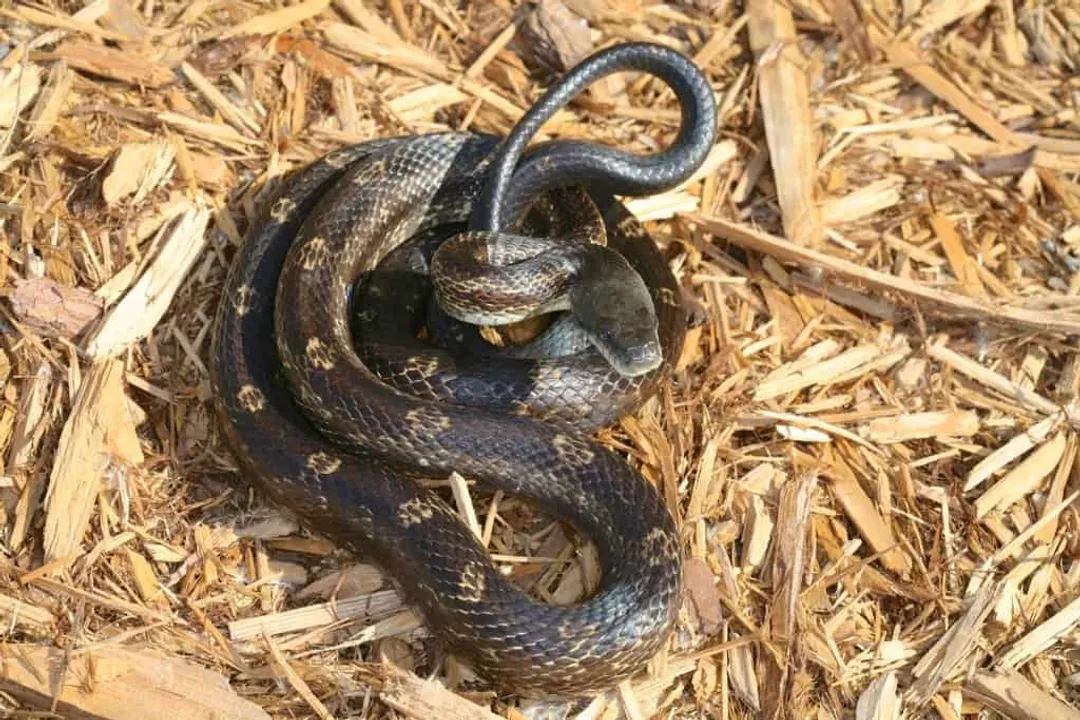
Because the Western Rat Snake's survival and growth depend heavily on consistent caloric intake from small vertebrates, changes in their population metrics can reflect underlying ecosystem health. If a wildlife survey notes reduced growth rates or lower reproductive success among the snakes, it can often be linked directly to a scarcity of their primary food source. For adults, a sustained failure to secure large meals, such as a crash in the local population of mice or rats due to environmental stress or other predation pressures, directly translates into reduced energy reserves for the snake population.
Related Questions
What primary food sources define the initial diet of newly emerged Western Rat Snakes?Why is the common name "rat snake" highly accurate for mature *Pantherophis obsoletus*?How do Western Rat Snakes subdue warm-blooded prey through constriction?How does the required feeding frequency differ between a juvenile and a large adult rat snake?What is the ecological result of the trophic separation between young and old *Pantherophis obsoletus*?Which sensory organs guide the Western Rat Snake toward hidden prey using chemical cues?What advantage does the semi-arboreal nature provide in securing meals for the Western Rat Snake?How is the feeding strategy of the Western Rat Snake best described?What observation might correlate a dip in Western Rat Snake size or number, indicating their role as a bio-indicator?Besides mice and rats, what larger mammals might occasionally be predated by a powerful adult Western Rat Snake?