What necessary input is explicitly required to sustain the pure predatory strategy adopted by diving beetles?
Answer
A constant input of mobile prey
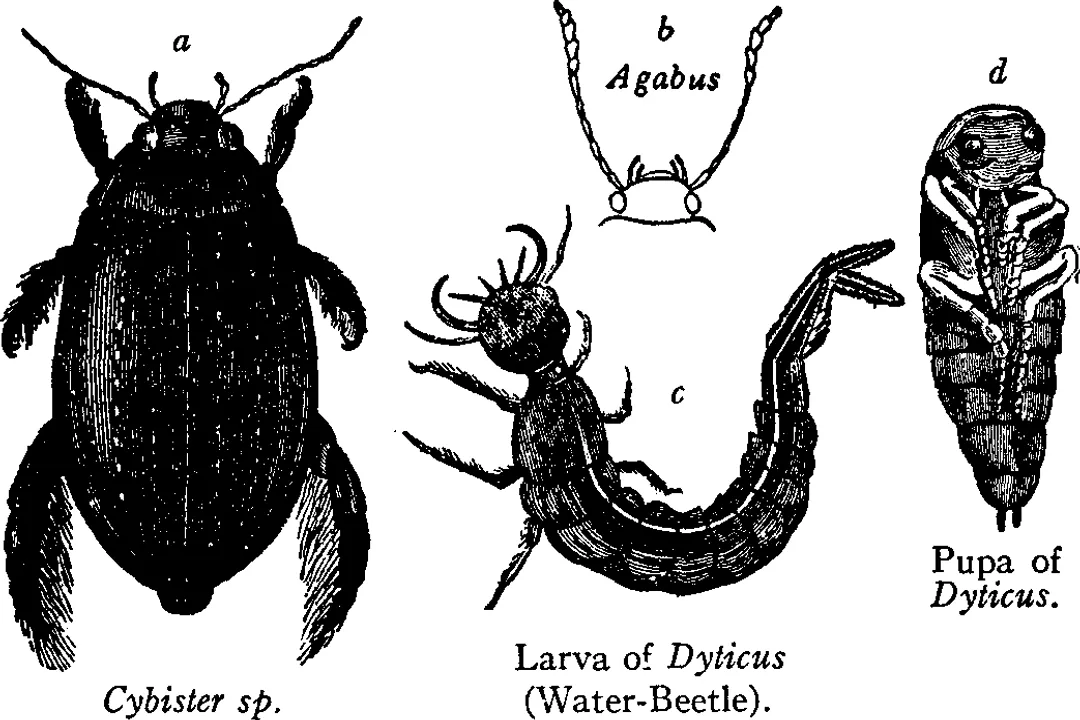
The dietary prescription for the diving beetle, which is characterized as an obligate carnivore, necessitates a steady stream of living or recently living organisms. Because they hunt and consume active prey such as insects, snails, fish, and tadpoles, their survival hinges on the availability of this mobile food source within their environment. Unlike scavengers which can utilize static, decaying resources, the predator must have constant movement and activity in the water column to meet its high caloric demands, especially during the intense growth phase of the larval stage.
Related Questions
What term is used to describe the voracious larval stage of the Predaceous Diving Beetle lineage?What is the primary dietary focus for the adult Giant Water Scavenger Beetle (*Hydrophilus*)?What specific larger fare do adult *Dytiscus* diving beetles consume besides aquatic insects?How does the feeding intensity of the diving beetle larva contrast with its adult counterpart?What is the established ecological role assigned to Water Scavenger Beetles in aquatic ecosystems?For captive keeping, what specific protein source must form the basis of a diving beetle's diet?How does the predatory inclination of the scavenger beetle larva compare to its adult counterpart?Why is the scavenger feeding strategy described as more resilient to scarcity than the diving beetle strategy?What necessary input is explicitly required to sustain the pure predatory strategy adopted by diving beetles?What is the feeding classification given to Diving Beetles such as *Dytiscus* species?