Why are rove beetles strongly associated with moist habitats?
Answer
They have shortened forewings (elytra), making them susceptible to drying out
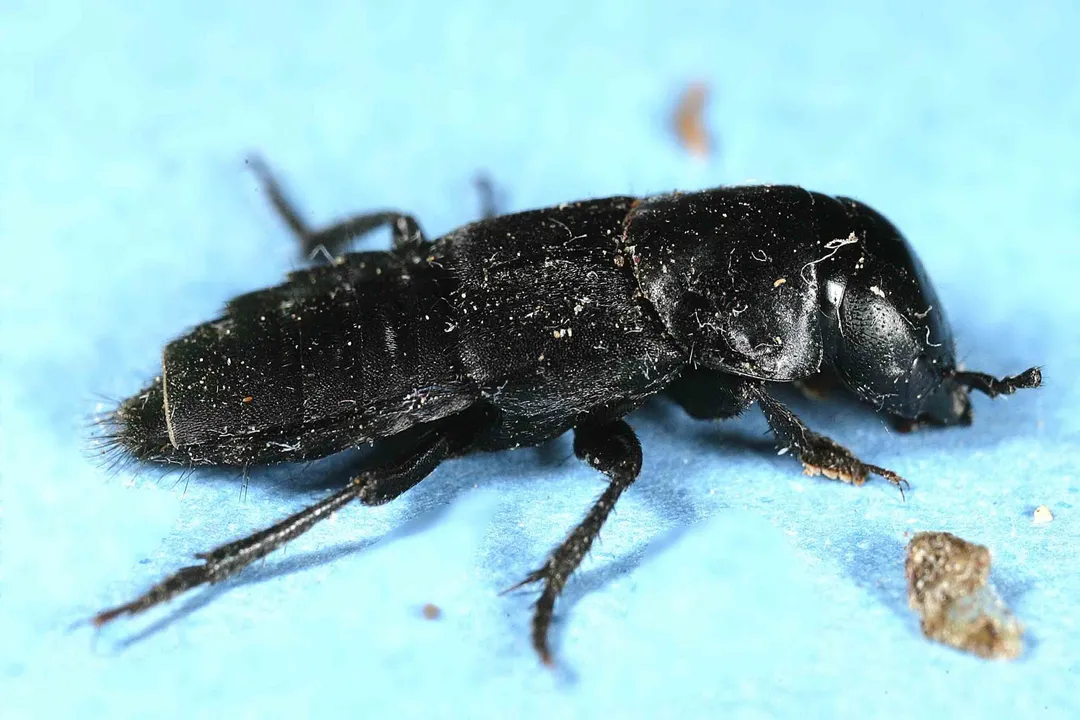
The strong preference rove beetles show for cool, damp places is directly related to their morphology. Specifically, most species within the Staphylinidae family possess shortened forewings, referred to as elytra. This anatomical feature reduces the surface area dedicated to protecting the delicate hindwings and abdomen compared to many other beetle groups. Consequently, these beetles are more prone to desiccation, meaning they lose essential body moisture quickly in dry conditions. This vulnerability necessitates seeking out moist environments such as under logs, beneath rocks, or in persistently damp basements to maintain necessary humidity levels for survival.
Related Questions
How do rove beetles often hold their abdomen when disturbed?Why are rove beetles strongly associated with moist habitats?What is the recorded daily consumption capacity of two adult Aleochara bilineata beetles regarding root maggot eggs?Which material commonly attracts rove beetles due to their scavenging instinct?What specific behavior causes adult rove beetles to accumulate around artificial light sources at night?What common management oversight occurs when controlling rove beetles by only eliminating moisture?What toxic secretion from Paederus species causes painful rashes upon skin contact?What specific target does the larva of Aleochara bilineata utilize for overwintering?Besides general damp areas, where do rove beetles commonly nest within residential structures?What strategy is cited as more effective than purchasing beetles to encourage local, beneficial Staphylinidae populations in yards?