What morphological difference separates the male abdomen tip from the female tip?
Answer
The male has three prominent spines, the female is smooth and rounded
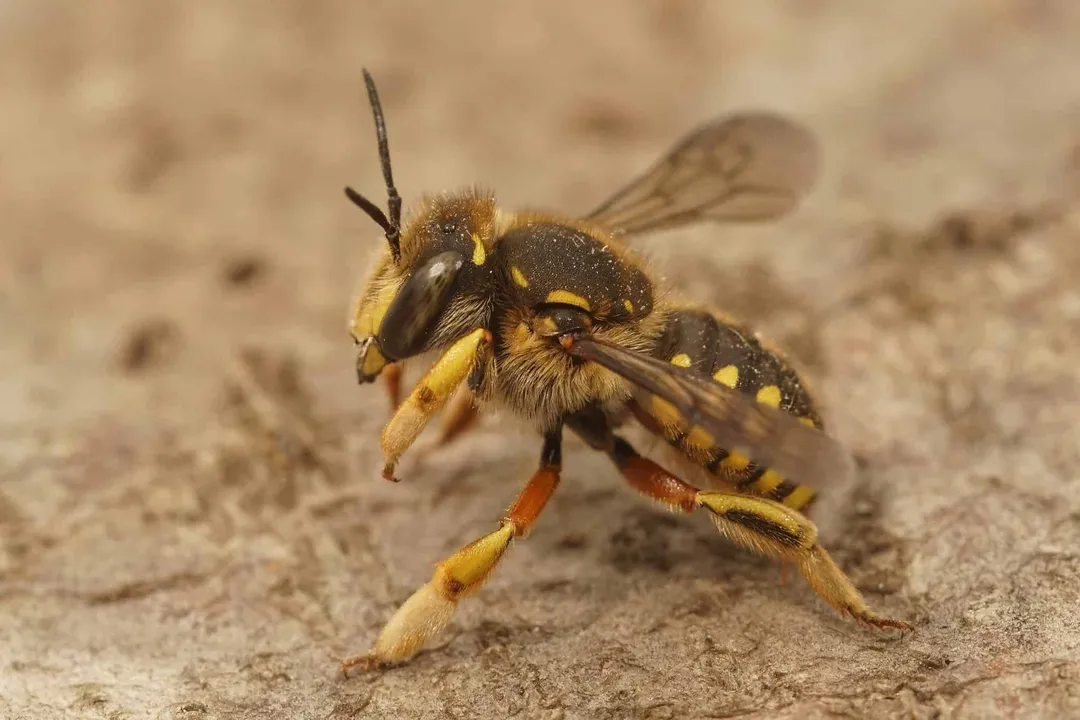
The most easily observable sexual dimorphism concerning the posterior end is the contrast in abdominal termination structures. Male *Anthidium manicatum* possess three conspicuous, pointed projections, or spines, at the tip of their abdomen, giving them an armed appearance. In stark contrast, the female abdomen terminates in a smooth, rounded tip, lacking these sharp projections entirely. This morphological division illustrates a functional split, where the male structure supports display and defense, while the female's morphology is geared toward reproductive provisioning, highlighted also by the presence of her specialized scopa.
Related Questions
What structure does the female Wool Carder Bee use to carry pollen?What specific feature identifies the male Anthidium manicatum abdomen tip?What process gives the Wool Carder Bee its common name?How does the female Anthidium manicatum abdomen terminate?What is the maximum recorded length for a male Wool Carder Bee?What is the known behavioral trait associated with male Anthidium manicatum?Which geographical areas include the native range of Anthidium manicatum?Where on the female Wool Carder Bee is the pollen-carrying scopa located?What morphological difference separates the male abdomen tip from the female tip?What common insect form might observers mistake the Wool Carder Bee for?