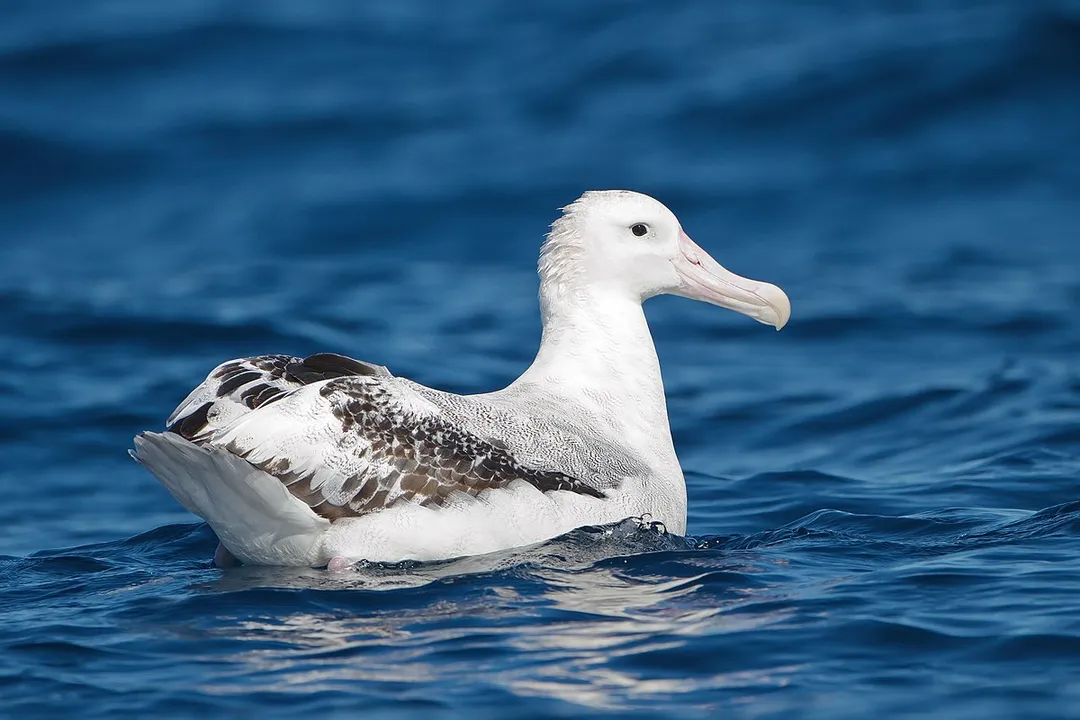
What life history strategy has natural selection historically favored for the Wandering Albatross in the Southern Ocean?
Longevity and survival over fecundity (number of offspring)
The Wandering Albatross exhibits one of the slowest reproductive schedules among avian species, reaching sexual maturity around five to six years and breeding only every other year. This low reproductive output is identified as an evolutionary trade-off that corresponds to the bird's immense lifespan and phenomenal survival rate while traversing the vast Southern Ocean. Historically, in this resource-rich but expansive environment, natural selection favored strategies that maximized individual longevity, ensuring the bird lived long enough to breed successfully across many decades. This emphasis on survival over fecundity results in a lineage with an inherently low capacity for rapid demographic rebound when faced with sharp, modern threats like fisheries mortality.