What Latin term describes the temporary classification given when a genus lacks sufficient evidence for firm placement?
Answer
Incertae sedis
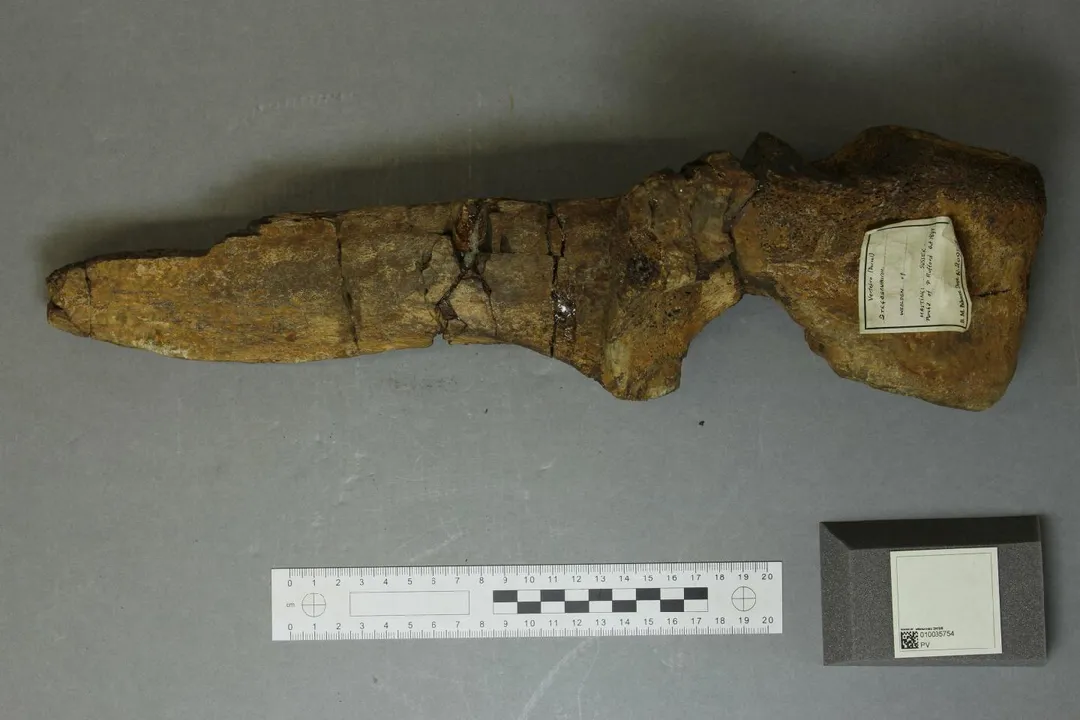
Due to the fragmentary nature of the fossil evidence for *Xenoposeidon*, scientists sometimes cannot assign it robustly to a specific family or clade. When the available anatomical data is insufficient or ambiguous for a confident assignment, paleontologists may temporarily designate the genus using the term *Incertae sedis*. This phrase translates to 'of uncertain placement' and signifies that while the higher taxonomic ranks are clear, the specific branching point within a larger group remains unresolved pending further evidence or a shift in analytical focus.
Related Questions
What Greek roots combine to form the genus name *Xenoposeidon*?What specific anatomical structure does the specific epithet *pronelkocamerus* reference?To which Order do both *Xenoposeidon* and *Diplodocus* belong based on their general classification?What specific term denotes the large, deep pneumatic hollows observed in *Xenoposeidon*'s vertebrae?Approximately how tall was the primary dorsal vertebra used to describe *Xenoposeidon*?What Latin term describes the temporary classification given when a genus lacks sufficient evidence for firm placement?What characteristic of the type specimen contributes most to the phylogenetic ambiguity of *Xenoposeidon*?Which infraorder clade is suggested to group titanosaurs and brachiosaurids, potentially linking *Xenoposeidon*?What modern digital technique is employed to overcome taphonomic distortion when analyzing *Xenoposeidon*'s fragile vertebrae?Which specific vertebral surfaces determine how one vertebra articulates with the next in the spine?