What characteristic of the type specimen contributes most to the phylogenetic ambiguity of *Xenoposeidon*?
Answer
The remains being fragmentary
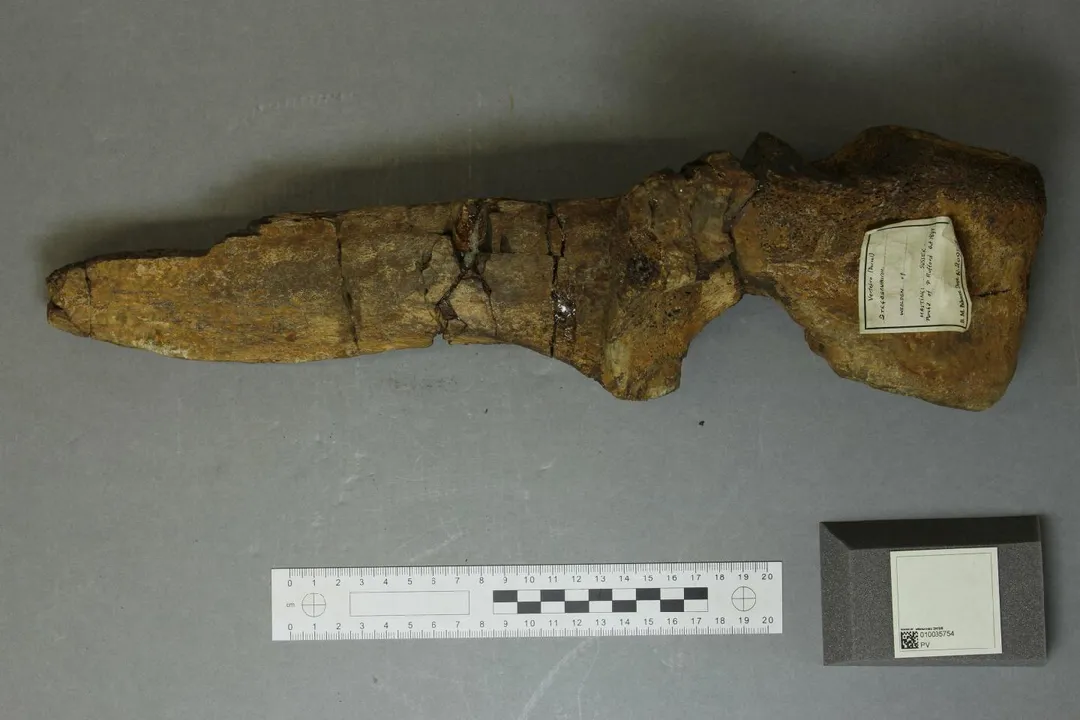
The primary hurdle in confidently resolving *Xenoposeidon*'s exact position on the dinosaur family tree is the nature of the fossil evidence itself. The type specimen, which is the basis for its description, consists mainly of those distinctive, massive vertebrae, meaning it is fragmentary. This incompleteness prevents scientists from gathering a complete set of characteristics necessary for a robust cladistic analysis. Without complete articulation surfaces or other skeletal parts, slight variations in interpreting the preserved elements, like the orientation of the neural arch, can significantly shift the mathematical outcome of phylogenetic tests.
Related Questions
What Greek roots combine to form the genus name *Xenoposeidon*?What specific anatomical structure does the specific epithet *pronelkocamerus* reference?To which Order do both *Xenoposeidon* and *Diplodocus* belong based on their general classification?What specific term denotes the large, deep pneumatic hollows observed in *Xenoposeidon*'s vertebrae?Approximately how tall was the primary dorsal vertebra used to describe *Xenoposeidon*?What Latin term describes the temporary classification given when a genus lacks sufficient evidence for firm placement?What characteristic of the type specimen contributes most to the phylogenetic ambiguity of *Xenoposeidon*?Which infraorder clade is suggested to group titanosaurs and brachiosaurids, potentially linking *Xenoposeidon*?What modern digital technique is employed to overcome taphonomic distortion when analyzing *Xenoposeidon*'s fragile vertebrae?Which specific vertebral surfaces determine how one vertebra articulates with the next in the spine?