Xenoposeidon Scientific Classification
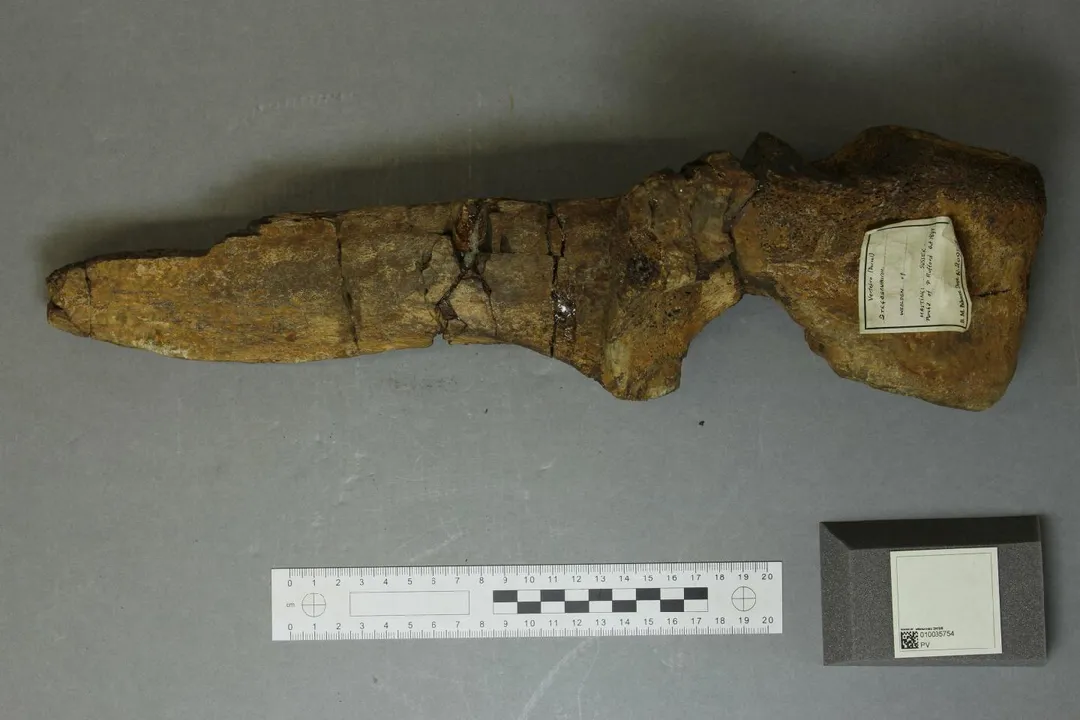
The story of Xenoposeidon is less about finding a definitive, universally agreed-upon spot on the dinosaur family tree and more about shaking up the branches of that tree entirely. When this giant sauropod was formally described, it immediately caused a stir because its physical characteristics didn't neatly fit into the established categories for massive, long-necked dinosaurs. To properly situate Xenoposeidon within the grand biological system, we must trace its classification from the broadest categories down to the specific genus and species assignment, keeping in mind that for this particular dinosaur, the lower ranks are where the real scientific argument lies. [4][8]
# Naming Meaning
The name itself offers a clue into the creature's imposing nature. The genus name, Xenoposeidon, is derived from Greek roots, combining xenos, meaning "strange" or "foreign," with Poseidon, the Greek god of the sea who could also cause earthquakes. [1][4][8] This "Strange Poseidon" moniker hints at the dinosaur's unusual anatomy, setting it apart from better-known giants. [1][4][8] The specific epithet, pronelkocamerus, translates roughly to "with forward-curving hollow chambers," which directly references the unique internal structure observed in its enormous vertebrae. [4][8] This naming convention immediately signals to paleontologists that this animal possesses traits that challenge previous assumptions about sauropod anatomy. [1][4][8]
# High Ranks
Moving up the Linnaean hierarchy, Xenoposeidon fits comfortably within the established framework for gigantic terrestrial reptiles of the Mesozoic Era. [4] It belongs to the Kingdom Animalia, signifying it was a multicellular, heterotrophic organism. [2][4] Following this, it is placed in the Phylum Chordata, meaning it possessed a notochord or a vertebral column, which is evident in the fossil material recovered. [2][4] The Class is Sauropsida, encompassing modern reptiles and birds, and more specifically within the Clade Dinosauria. [2][4]
Within Dinosauria, Xenoposeidon is firmly situated in the gigantic herbivorous group known as Order Sauropoda. [4] Sauropods are defined by their long necks, long tails, small heads, and pillar-like limbs, adaptations necessary to support their immense bulk. [4] This broad grouping means Xenoposeidon shares its ancient ancestry with iconic dinosaurs like Brachiosaurus and Diplodocus, even if its specific branch diverged significantly. [4]
# Sauropod Placement
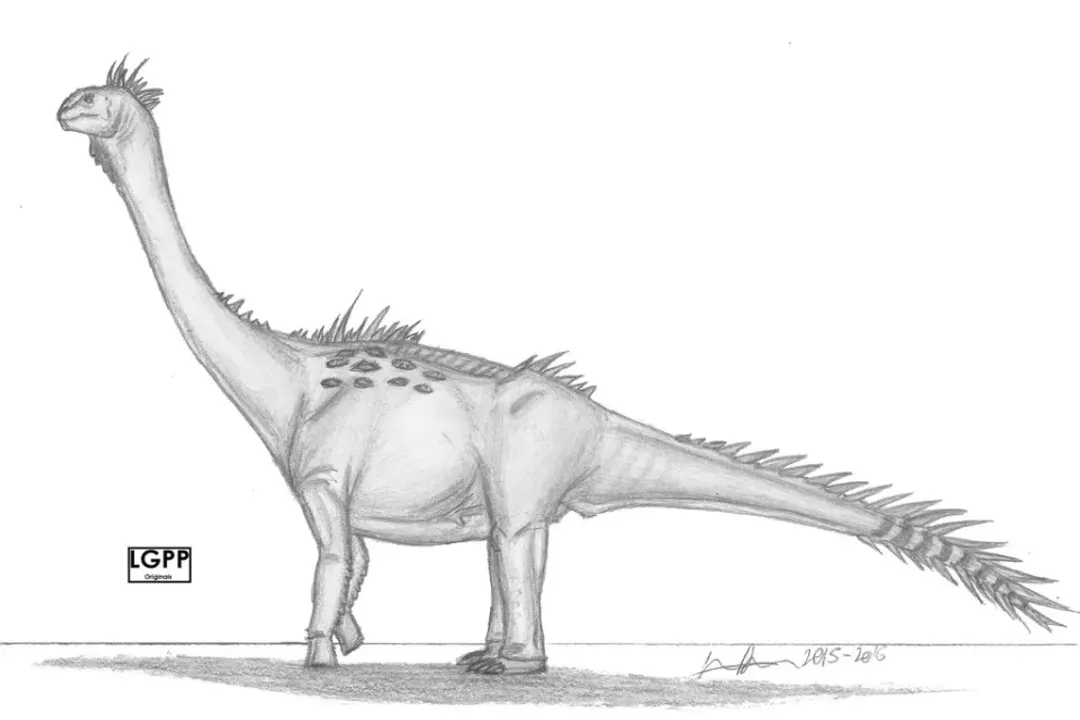
The more granular classification within Sauropoda is where the scientific inquiry intensifies, moving from well-accepted placement to areas of active debate. [8] Generally, Xenoposeidon is classified within the Clade Titanosauria or closely related to it, based on certain similarities in its vertebral structure. [4][8] However, its discovery, based primarily on massive vertebrae, meant initial analysis placed it in a position that tested the very definition of the Titanosaur group. [8]
One key piece of data suggests a placement within the Titanosauriformes clade, which groups together titanosaurs and brachiosaurids. [8] Specifically, the original analysis suggested a relationship with the Brachiosauridae family, although this relationship was tentative due to the limited fossil evidence. [8] The primary specimen used for description, a partial dorsal vertebra, was so disproportionately large and structured differently from other known sauropods that its placement was initially left somewhat generalized within the larger Sauropoda group while more detailed study was conducted. [8]
If we assemble the generally accepted higher tiers based on consistent data across sources:
| Taxonomic Rank | Classification | Notes |
|---|---|---|
| Kingdom | Animalia | |
| Phylum | Chordata | Possessed a backbone |
| Class | Reptilia (Sauropsida) | |
| Order | Dinosauria | |
| Clade | Saurischia | Lizard-hipped dinosaurs |
| Clade | Sauropoda | Long-necked herbivores |
| Infraorder | Titanosauriformes (Debatable) | Related to Brachiosaurids and Titanosaurs [8] |
| Genus | Xenoposeidon | The "Strange Poseidon" [4][8] |
| Species | X. pronelkocamerus | Referring to its hollowed vertebrae [4][8] |
It is important to note that dinosaur phylogeny is constantly being refined. The classification of Xenoposeidon is particularly sensitive to which specific anatomical features are prioritized in a cladistic analysis, leading to variations in placement depending on the research group. [8]
# Defining Features
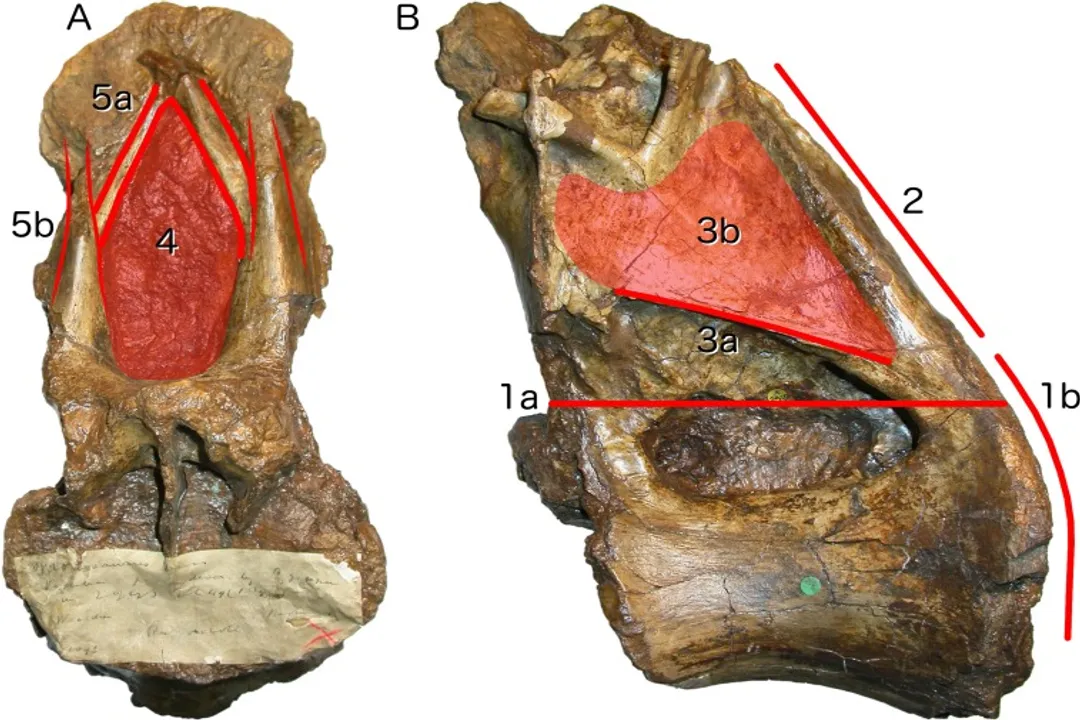
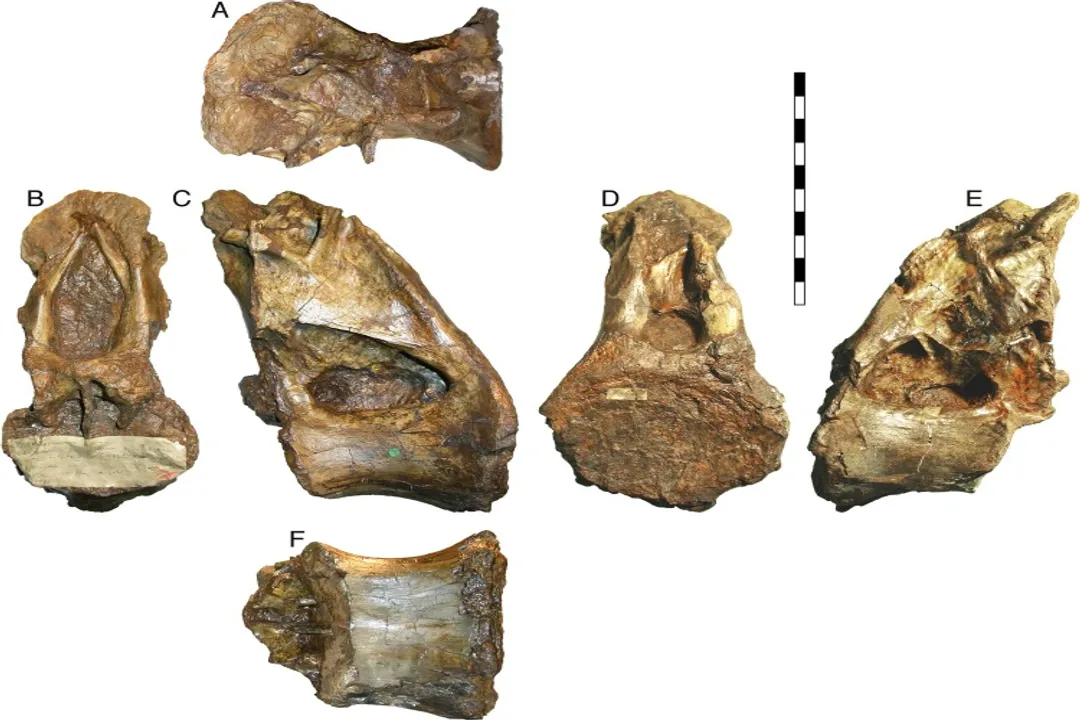
The reason Xenoposeidon's classification is so scrutinized stems directly from its astonishing morphology, particularly the vertebrae that form the basis of its recognition. [4][8] The immense size suggested by these fossils—one described dorsal vertebra being over 1.7 meters tall—immediately places it among the largest land animals ever known, rivaling or possibly exceeding other giant titanosaurs. [4][8]
The most taxonomically significant feature is the structure of these vertebrae, which gives the species its name. [4] They exhibit a unique internal architecture characterized by large, deep pneumatic hollows, or pleurocoels, giving the bone its "hollow chamber" characteristic. [4][8] Crucially, in Xenoposeidon, these features appear to be positioned differently relative to other sauropods, suggesting a distinct evolutionary pathway. [4] This condition, where the internal structure is dramatically modified for weight reduction without compromising strength, is present in other sauropods but seems to be expressed uniquely in Xenoposeidon. [4]
Thinking about the sheer engineering challenge this creature presented, its classification isn't just an academic exercise in naming; it's a test of biomechanical limits. A spine supporting an animal of this inferred mass, especially one exhibiting such extreme pneumaticity in the centra, suggests that the anatomical solutions for gigantism evolved along several distinct, highly specialized evolutionary lines within the Sauropoda. The fact that its features suggest a potential close relationship with Brachiosauridae while simultaneously displaying features seen in Titanosaurs underscores a complex evolutionary history where intermediate forms might have been far more diverse than previously assumed. [8]
# Phylogenetic Ambiguity
The ambiguity in placing Xenoposeidon firmly within the Titanosaur group or closer to the Brachiosauridae highlights a common problem in paleontology: dealing with taxa of low confidence due to incomplete remains. [8] The type specimen is fragmentary, meaning scientists do not have a complete set of characteristics against which to test its position robustly. [8]
In one analysis, the interpretation of the specific way the neural arch elements are connected, or the exact orientation of the pre- and post-zygapophyses—the surfaces that articulate one vertebra to the next—can swing the analysis toward one family or another. [8] If the features lean too heavily toward the morphology seen in Brachiosaurus or Giraffatitan (which are often grouped near the base of Titanosauriformes), it suggests a more primitive placement within that major clade. [8] If the features align better with later, more derived titanosaurs, its position shifts later in the evolutionary timeline. [8] The term Incertae sedis, meaning "of uncertain placement," is often temporarily applied when the evidence is insufficient to confidently place a genus within a defined family or clade. [8]
The reliance on these few, albeit massive, bones means that any slight variation in the measurement or interpretation of the remaining surfaces can alter the outcome of a computer-based phylogenetic analysis. [8] This sensitivity demands a high degree of caution when assigning it to a specific family, making its classification fluid pending the discovery of more complete material. [8]
# Fossil Record Issues
The difficulties in firm classification are compounded by the nature of the fossil evidence itself. The primary material for Xenoposeidon is relatively scant, consisting mainly of those distinctive vertebrae. [8] This is a frequent hurdle in classifying prehistoric life, especially for creatures so large that they likely dispersed their remains widely after death. [4] When a dinosaur reaches truly gigantic proportions, the sheer volume of bone required for its structure means that any remains found are often isolated specimens, rather than part of a nearly complete skeleton. [4]
To overcome the limitations imposed by such sparse, fractured records, modern paleontological practice increasingly relies on advanced imaging and digital reconstruction, a necessity clearly recognized in the study of Xenoposeidon. [5] When dealing with fossilized bones that might be crushed, distorted, or incomplete, generating high-resolution three-dimensional models allows researchers to digitally manipulate the fossil evidence to test hypotheses about its original shape and internal structure. [5] This digital environment permits researchers to virtually "clean up" taphonomic distortion—the changes that happen to bones after burial—and then compare the reconstructed morphology against complete skeletons of related species with much greater precision than traditional two-dimensional measurements allow. [5] This methodology is crucial for resolving taxa like Xenoposeidon, where small, subtle differences in the articulation points of the spine are the key diagnostic features separating major families. [5] The ability to digitally rotate and measure the internal pneumatic spaces without damaging the fragile original specimen effectively turns the digital model into a more pliable scientific tool than the rock itself.
Related Questions
#Citations
Xenoposeidon proneneukos - A-Z Animals
Xenoposeidon is the earliest known rebbachisaurid sauropod ...
Specimens - PV R 2095 - Data Portal
Xenoposeidon - Dinopedia - Fandom
Xenoposeidon - Mindat
Xenoposeidon - World Species
Xenoposeidon - Prehistoric Wildlife
[PDF] [i]Xenoposeidon[i] is the earliest known rebbachisaurid sauropod ...
Xenoposeidon: the crucial importance of 3D models