What landscape characteristic makes the Whinchat a sensitive indicator species across its European range?
Answer
Its preference for transitional zones between intensive agriculture and wilderness, revealing fragmented landscapes.
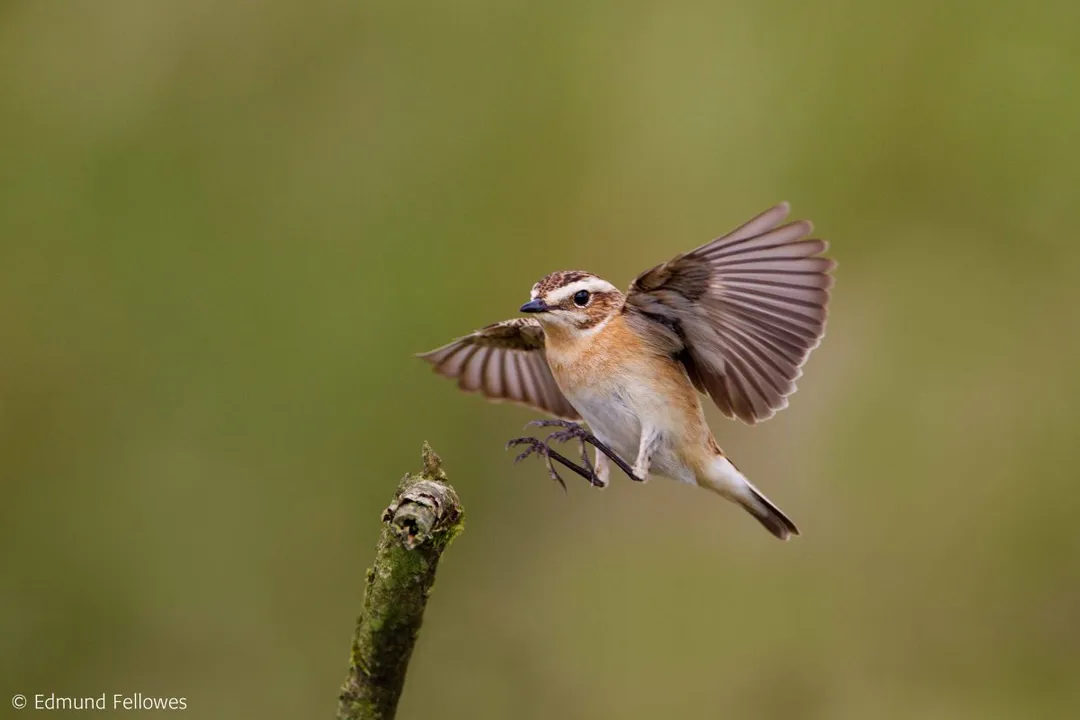
The habitat niche chosen by the Whinchat, characterized by a specific mosaic of short grass and scattered cover, makes it highly susceptible to changes in land management. It thrives in transitional zones—areas that are not fully wild but also not subject to intensive, clean cultivation. When agricultural practices lead to highly uniform or overly manicured landscapes, these preferred transitional zones disappear. Consequently, the bird's declining occupancy serves as an indicator of habitat fragmentation and the homogenization of open, structurally diverse areas across Europe.
Related Questions
What is the primary period for the bulk departure of Whinchats during their autumn migration south?What structural feature distinguishes successful Whinchat breeding territories from uniformly covered fields?Where does the Whinchat establish its primary wintering grounds outside of the northern breeding season?What specific items might serve as necessary perching spots for a breeding Whinchat to survey its territory?How does the typical vegetation structure of the Whinchat's wintering site contrast with its European breeding grounds?What do Whinchats primarily seek at migratory stopover sites during their rapid transit?What is the current breeding status of the Whinchat in places like Ireland compared to the European continent?During which period can the presence of singing males most reliably confirm an active Whinchat breeding territory in late spring?What landscape characteristic makes the Whinchat a sensitive indicator species across its European range?What consistent functional requirement must be met by a location regardless of continent or season for the Whinchat?