What key trait distinguishes the annual feather cycle of the Yokohama from the ancestral Onagadori?
Answer
The Yokohama molts its long sickle feathers annually
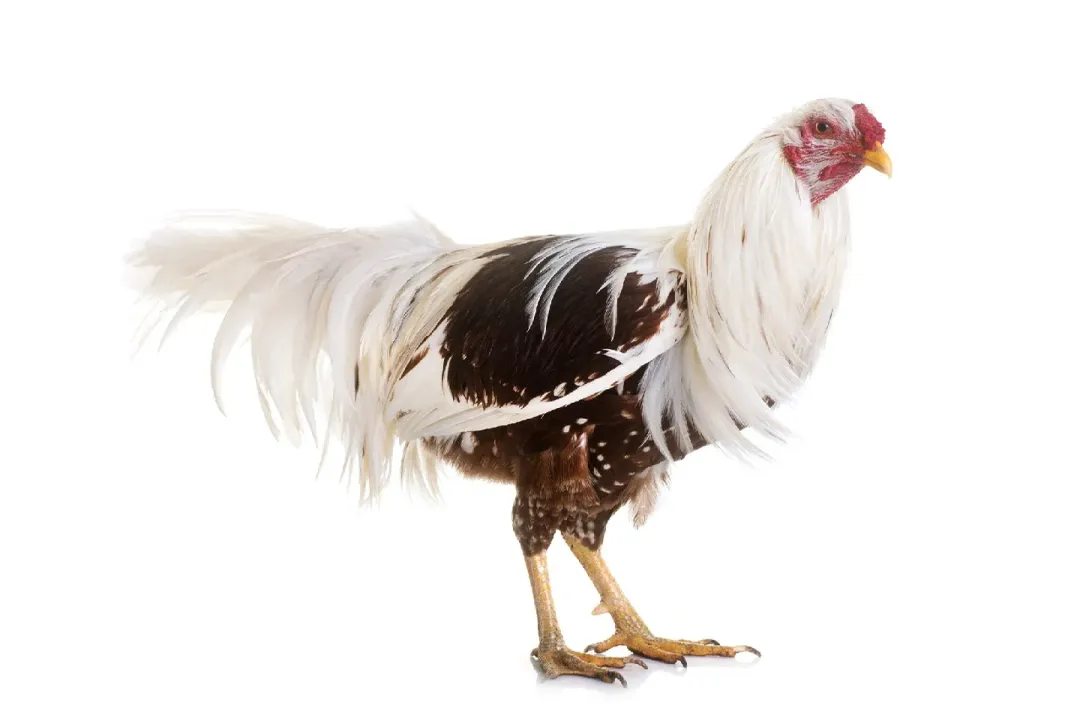
A significant genetic difference between the modern Yokohama and the ancestral Japanese Onagadori concerns molting. The Onagadori carries a specific recessive gene that prevents it from molting its extreme tail feathers, allowing them to grow continuously. In contrast, the Yokohama, despite possessing the traits for dramatic tail length due to selective breeding, does molt its long sickle feathers every year. This annual molt means that maintaining the ornamental tail length requires consistent, specific care and nutrition year after year to support the necessary keratin production for regrowth.
Related Questions
What is the scientific binomial nomenclature assigned to the Yokohama chicken?What name were the original long-tailed fowl exported from Yokohama known as in Japan?Which individual initiated the selective breeding that resulted in the modern Yokohama chicken in Germany?To which taxonomic family does the Yokohama belong, along with pheasants and partridges?What key trait distinguishes the annual feather cycle of the Yokohama from the ancestral Onagadori?What specific structural protein requires a high-protein diet to sustain the Yokohama's dramatic tail growth?Which breeds were utilized in outcrossing efforts to ensure the continuation of the Yokohama line after early transport losses?What conservation status does The Livestock Conservancy assign to the Yokohama chicken population?What genetic mechanism explains the Red Shoulder color variety recognized by the American Poultry Association?What major divergence in breed standards exists between the UK and other regions regarding the Yokohama designation?