Yokohama Chicken Scientific Classification
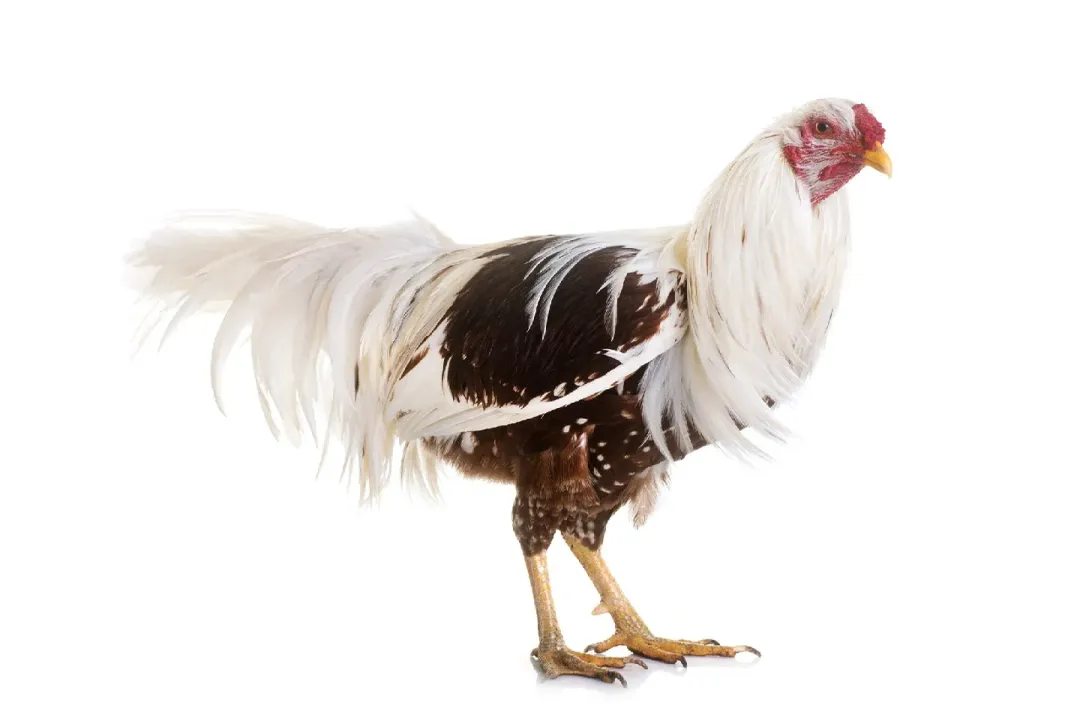
The Yokohama chicken, a striking ornamental fowl prized for its exceptionally long tail feathers, firmly belongs within the scientific classification system as a domesticated variety of the red junglefowl. Its accepted scientific binomial nomenclature is Gallus gallus domesticus. [3] This designation places it within the specific species that encompasses all modern domestic poultry worldwide, tracing its genetic lineage back to the wild Gallus gallus, originally classified by Linnaeus in 1758. [3]
# Taxonomic Placement
Understanding where the Yokohama fits within the hierarchy of life reveals its fundamental nature as a bird, specifically a member of the order that includes turkeys and pheasants. The standard taxonomic breakdown for this breed shows a clear path from the broadest kingdom to the specific breed designation:
| Rank | Classification |
|---|---|
| Kingdom | Animalia |
| Phylum | Chordata |
| Class | Aves (Birds) |
| Order | Galliformes |
| Family | Phasianidae |
| Genus | Gallus |
| Species | Gallus gallus |
| Subspecies/Breed | G. g. domesticus ('Yokohama') |
The placement within the family Phasianidae confirms its relationship with game birds like pheasants and partridges. [3][1] While the species is Gallus gallus, the inclusion of the subspecies designation, domesticus, is critical, acknowledging that this bird is a product of human selection rather than a wild population. [4]
# Breed Origin and Naming
The specific history of the Yokohama chicken helps explain why its classification as Gallus gallus domesticus represents a distinct German creation, rather than a direct, unaltered Japanese type. The breed's story begins with the export of long-tailed fowl from the Japanese port city of Yokohama in 1864. [3][4][5] These original birds, known in Japan as Minohiki chickens, reputedly possessed tails up to 27 feet long. [4][1] They were renamed for their port of departure when they reached Europe, primarily France and Germany. [5][3]
In Germany, the desire to establish a hardy, beautiful flock led to selective breeding initiated by Hugo du Roi, the president of the German Poultry Association. [4][5] Initial imports suffered heavy losses, with only males frequently surviving the long sea voyage. [1][5] This genetic bottleneck and subsequent outcrossing—using lines such as Malay, Phoenix, common Game fowl, and Sumatra chickens—created the Yokohama we recognize today. [1][5] The German standard recognizes only white or red-saddled birds. [4]
This divergence is an important clarification in classification studies. While the Yokohama shares ancestry with the Japanese Onagadori—the breed believed to hold the genetics for the extreme, non-molting tail growth—the modern Yokohama is a German creation derived from those imported Japanese fowl. [3][5] Furthermore, in the United Kingdom, the term "Yokohama" is sometimes used to categorize birds that breeders elsewhere call Phoenix chickens, highlighting regional variation in breed standards even within the same species complex. [4][5]
# Physical Markers of Subspecies Status
The traits that define the Yokohama chicken are highly specific results of this selective breeding, manifesting as fixed characteristics within the G. g. domesticus subspecies. The breed is generally small; standard males weigh around 4.5 lbs, and females about 3.5 lbs. [1][5] They possess a walnut-shaped comb, yellow legs, and a temperament described as alert and friendly. [1][4]
The most distinguishing features relate to plumage and tail length:
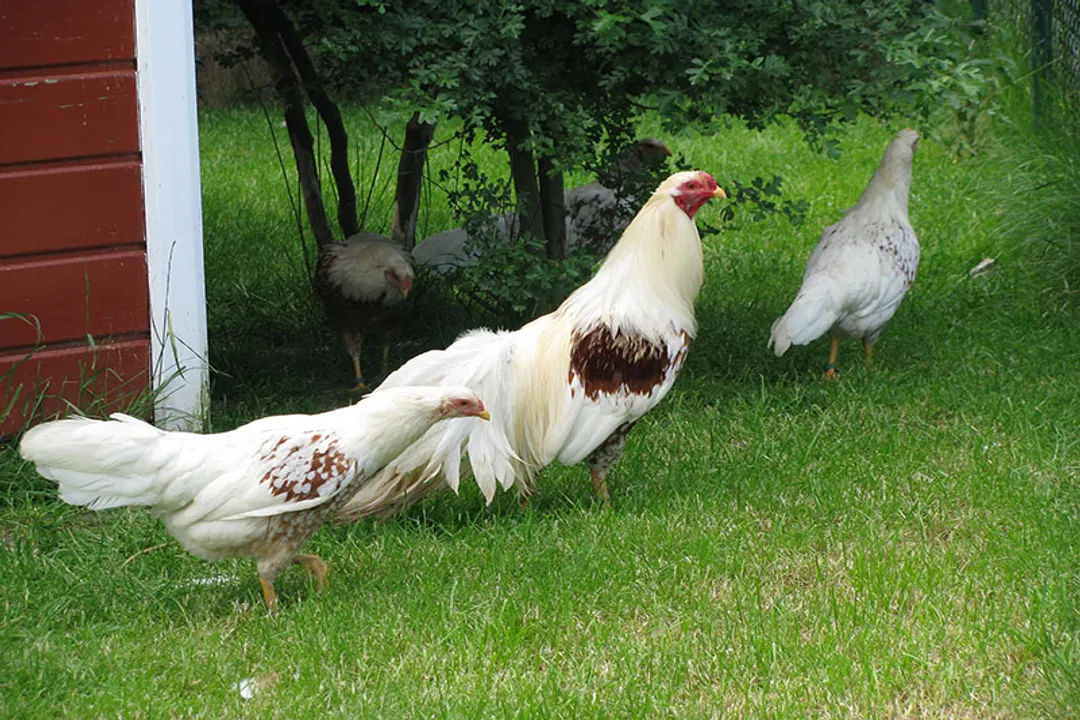
- Coloration: The primary varieties recognized by the American Poultry Association are the pure White and the Red Shoulder. [1][3] The pure white is attributed to a dominant white gene, while the red-shouldered pattern results from this white gene having an incomplete dominance effect when paired with red genes. [1][4]
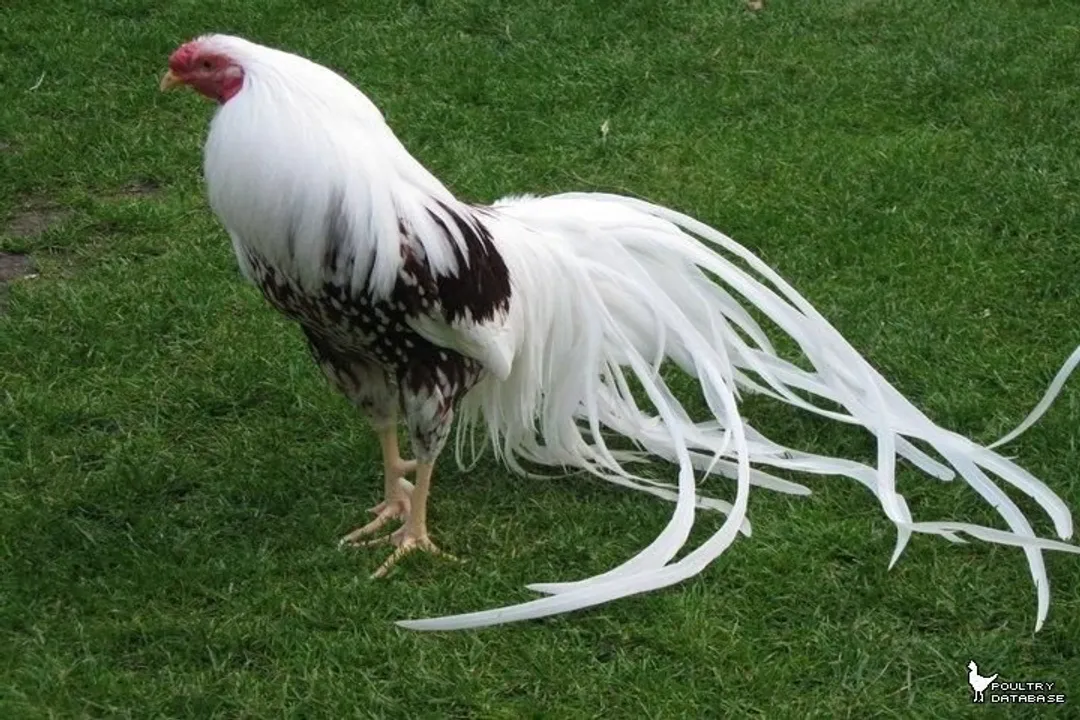
- Tail Feathers: The long saddle feathers and sickle feathers on the male can reach lengths of three to four feet, often dragging on the ground. [1][5] This dramatic tail growth requires a specific, high-protein diet to supply the necessary keratin for feather structure. [3][1]
It is an interesting consequence of this genetic manipulation that the very trait making the breed ornamental—the long tail—also makes the bird vulnerable. Unlike the ancestral Onagadori, which carries a recessive gene that prevents molting, the Yokohama does molt its long sickle feathers annually, making continuous, successful tail growth dependent on consistent nutrition and care year after year. [3][5]
# Conservation Context
The scientific classification of an organism is static, but its population status is dynamic. The Yokohama’s reliance on precise breeding and specialized care has placed it in a precarious position regarding genetic preservation. The Livestock Conservancy lists the Yokohama chicken under its Threatened status. [5] This designation reflects a small population size—fewer than 1,000 individuals worldwide—and makes it one of the rarer chicken breeds kept today. [3]
This conservation concern provides an original point of reflection on applied taxonomy. When a breed like the Yokohama is maintained purely for ornamental value, rather than utility (eggs or meat), its survival hinges entirely on dedicated hobbyists, not on economic necessity. [5][1] The fact that breeders had to intentionally cross them with hardier breeds like the Malay simply to ensure the continuation of the line following early transport disasters speaks volumes about the fragility of intentionally shaped genetic pools within the Gallus gallus domesticus species. [5] To put the population figures in perspective, the Livestock Conservancy's Threatened category for chickens implies that fewer than 5,000 birds exist in the United States, with no more than five flocks containing 50 or more birds. [5] Maintaining a breed at this level requires an active commitment to preserving a very specific, human-selected section of the Gallus gallus domesticus gene pool, effectively managing genetic variation at the breed level. [5]
Related Questions
#Citations
Yokohama Chicken Bird Facts - A-Z Animals
Yokohama chicken - Wikipedia
Yokohama Chickens | Oklahoma State University - Breeds of Livestock
Yokohama Chicken - The Livestock Conservancy
Yokohama Chicken (Gallus gallus domesticus 'Yokohama')
Breeds of Chickens: The Ultimate Backyard Flock Guide