What key feature indicates Lithobates sylvaticus's placement in Phylum Chordata?
Answer
Presence of a notochord at some stage of life.
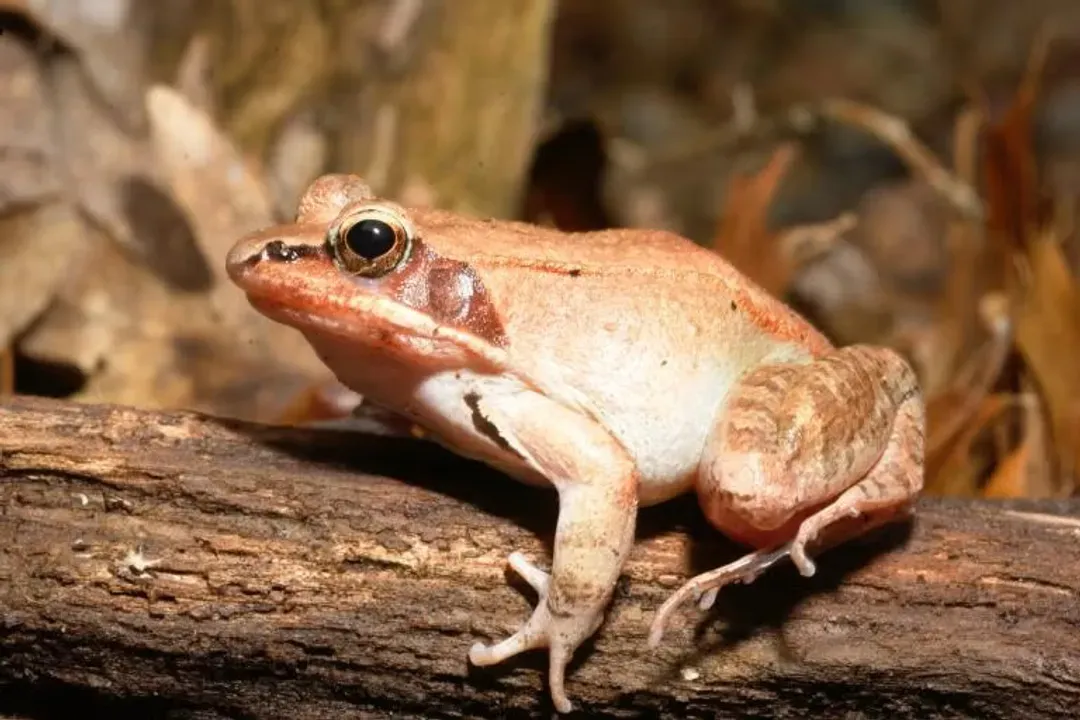
Placement within the Phylum Chordata signifies that an organism belongs to a group characterized by possessing specific anatomical structures at some point during its ontogeny, or life cycle development. The defining feature for this phylum is the notochord, a flexible rod providing skeletal support. For the Wood Frog, this structure is present during its embryonic or larval development, even though it may be replaced later by a vertebral column in the adult amphibian. This developmental presence of the notochord, regardless of the adult form, is the critical criterion that places *Lithobates sylvaticus* firmly within Chordata, separating it from invertebrates.
Related Questions
What characteristics define Lithobates sylvaticus's placement in Class Amphibia?What distinguishes the Order Anura to which Lithobates sylvaticus belongs?Which genus classification preceded Rana for the Wood Frog, Lithobates sylvaticus?What does the specific epithet sylvaticus roughly translate to for the Wood Frog?What does NatureServe's global listing of G5 signify for the Wood Frog?What conservation status might a state listing for Lithobates sylvaticus show, unlike its global G5 status?What remarkable biological feature allows the Wood Frog to survive being frozen solid?What specific substance is produced by the Wood Frog to prevent lethal intracellular ice formation?What key feature indicates Lithobates sylvaticus's placement in Phylum Chordata?Why do field biologists use the binomial nomenclature Lithobates sylvaticus universally?