What is the classification of a leopard frog?
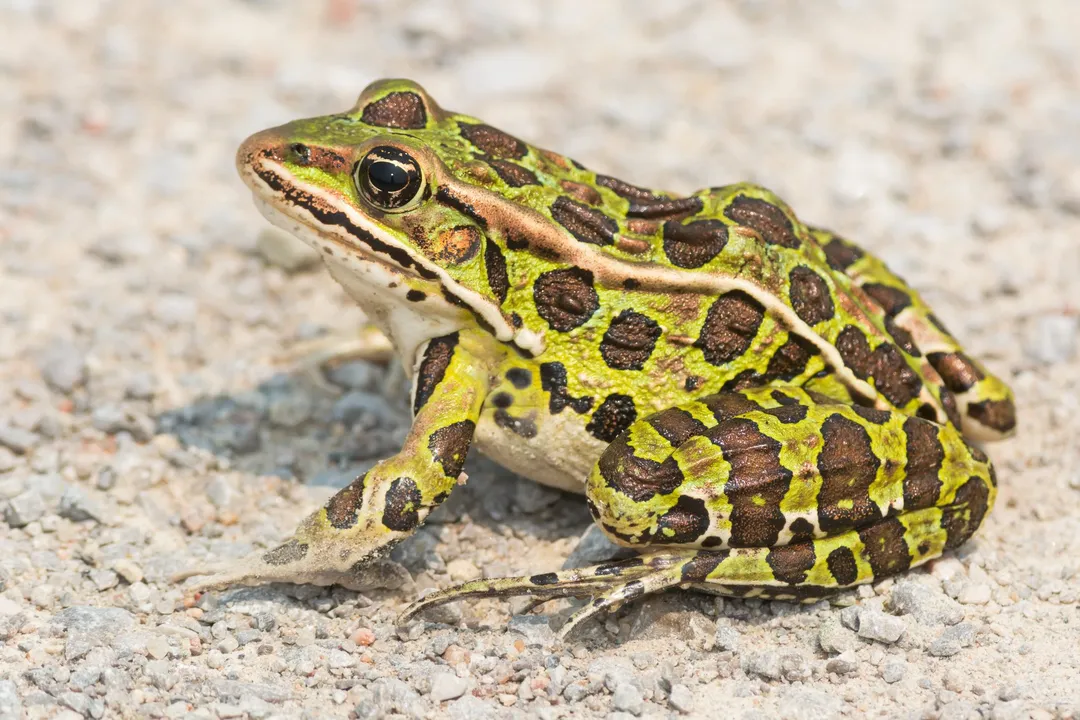
The name "leopard frog" conjures an image of a familiar, spotted amphibian often found near wetlands across North America. However, beneath this singular common name resides a fascinating reality rooted deeply in scientific classification, where several distinct species share the spotted pattern. [1][3] To truly understand what a leopard frog is, one must dive into the Linnaean hierarchy, moving past the visual similarity to examine the genetic and morphological evidence that separates these closely related amphibians. [6] This process of classification is not merely academic; it defines how we study their ecology, track their populations, and approach conservation efforts for these creatures that rely heavily on specific local environments. [2][5]
# Taxonomic Placement
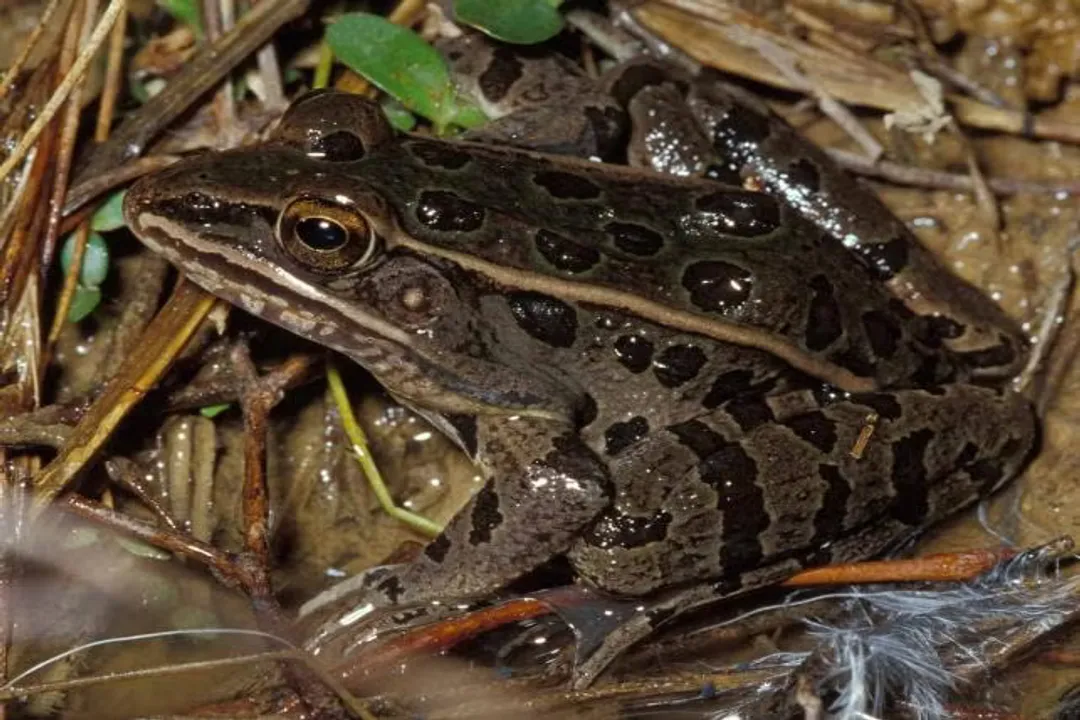
The current scientific consensus places leopard frogs squarely within the genus Lithobates. [6] This placement is significant because, not too long ago, many North American frogs, including these spotted beauties, were classified under the much broader genus Rana. [1] The shift to Lithobates reflects a deeper understanding, often supported by molecular data, revealing that these New World frogs form a distinct evolutionary lineage separate from the typical Rana species found in the Old World. [6] Think of it like updating an old family tree when new documentation proves distant cousins are actually part of a separate, though related, branch of the family. [1]
Within the kingdom Animalia, the leopard frog lineage follows a standard path: it belongs to the phylum Chordata, the class Amphibia, and the order Anura (frogs and toads). [1] The crucial differentiators, however, come at the family level, typically Ranidae (true frogs), and most immediately, the genus Lithobates. [6] It is at the species level that the true complexity arises, distinguishing the frogs we see in Missouri from those inhabiting Illinois or the Atlantic seaboard. [3][8][5]
# Species Variation
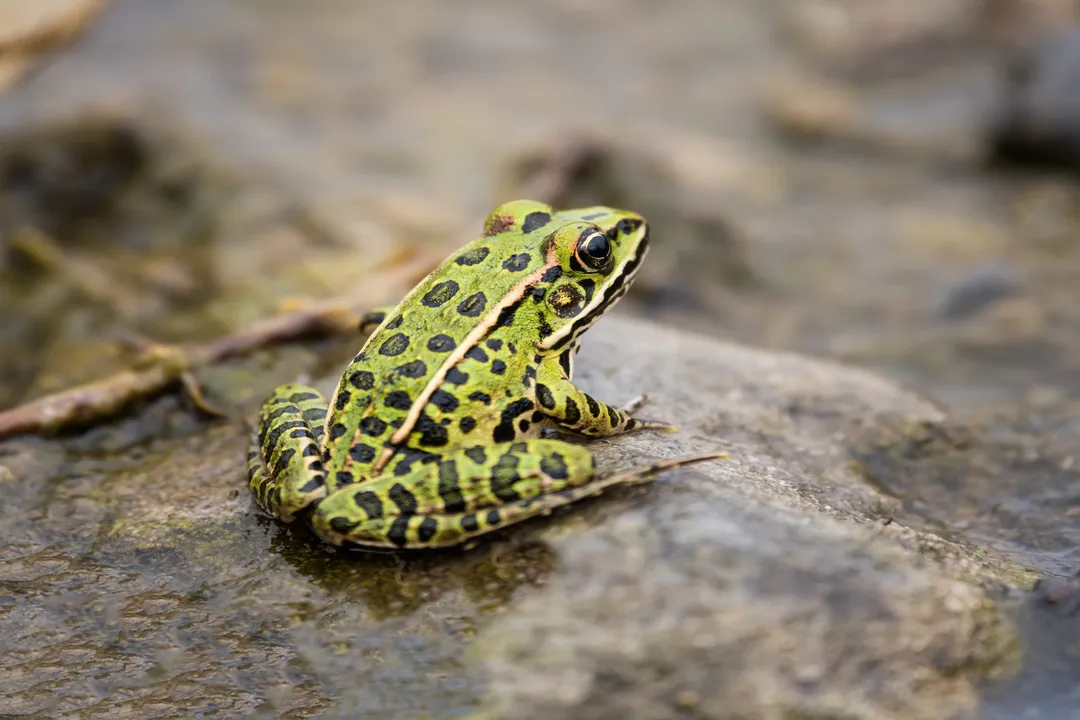
The general reader might encounter a leopard frog and simply label it as such, but biologists recognize several valid species that fit this description, each with its own scientific designation. [6] The three most frequently mentioned in regional guides illustrate the fine lines drawn by taxonomy: the Northern Leopard Frog, the Southern Leopard Frog, and the Atlantic Coast Leopard Frog. [1][3][5]
The Northern Leopard Frog (Lithobates pipiens) is perhaps the most widely recognized, historically inhabiting broad swathes of the continent. [1][2][6] Its classification is based on a combination of features that distinguish it from its cousins. [7]
In contrast, the Southern Leopard Frog (Lithobates sphenocephalus) occupies more southerly ranges, often being the default leopard frog found in states like Missouri or Georgia. [3][8][9] While they share the characteristic spots, their precise morphology and vocalizations set them apart taxonomically. [8]
Then there is the Atlantic Coast Leopard Frog (Lithobates kauffmani), a species whose very name defines its restricted geographical classification. [5] Its presence along the coast necessitates its own species status, implying that its isolation and genetic makeup warrant separation from inland populations. [5]
To provide clarity on how these closely related amphibians are separated based on taxonomic keys, we can organize some of the distinguishing characteristics often used by herpetologists:
| Feature | Northern Leopard Frog (L. pipiens) | Southern Leopard Frog (L. sphenocephalus) |
|---|---|---|
| Dorsolateral Fold | Usually extends to the groin [2][7] | Folds usually curve inward or are interrupted before the groin [8] |
| Spotting | Usually distinct, circular dark spots [7] | Spots often more irregular or slightly indistinct [8] |
| Vocalization | A distinct, rapid, low-pitched snore or cackle [2] | A slower, more drawn-out, "guttural" quality [8] |
| Nasal Area | Typically lighter color between eye and nostril [7] | Often has a dark triangular patch in this region [8] |
This table clearly shows that classification isn't based on just one trait, but a suite of subtle differences—a core principle in taxonomy where even small variations in where a fold ends or how a sound is produced can mean the difference between two distinct species living side-by-side. [2][8] The slight differences in the snout region, for instance, might seem trivial to a casual observer, but they represent long-term evolutionary divergence resulting in separate species classifications. [8]
# Morphological Cues in Classification
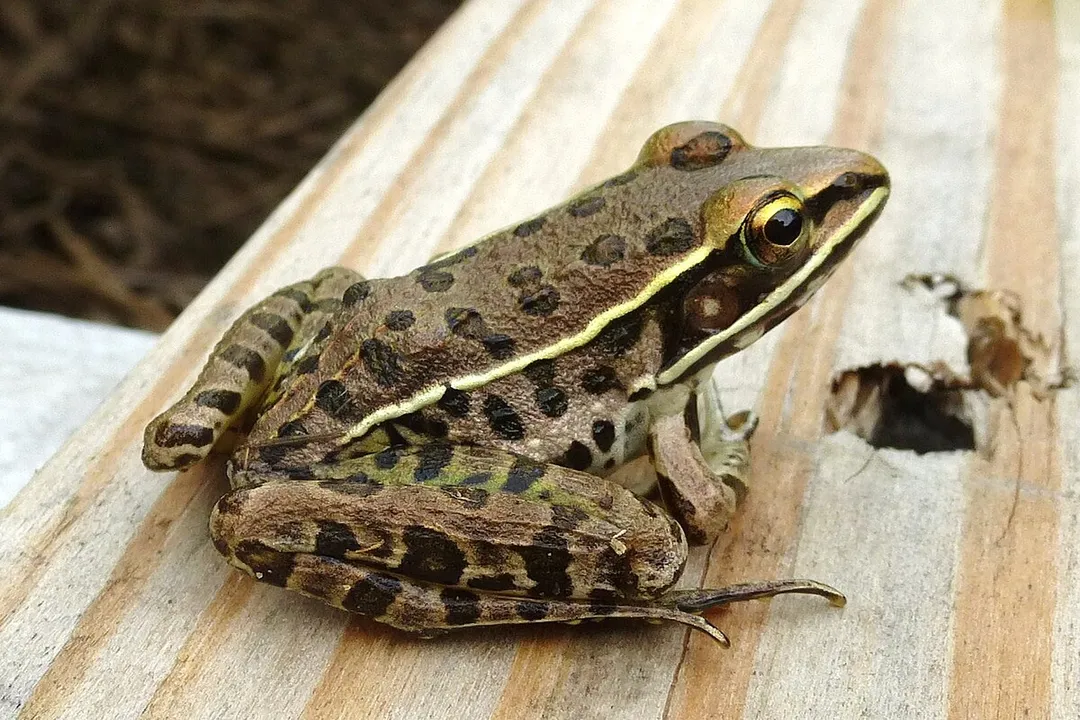
The spots are the namesake feature, yet their variability proves that relying solely on "spots" is insufficient for accurate classification. [1][7] For the Northern Leopard Frog, the spots are typically dark, round, and well-defined, contrasting sharply with the green or brownish background skin. [7] In the Southern species, these spots can sometimes appear more oblong or irregular, a key difference noted by field guides. [8]
The dorsolateral folds—the ridges running down the back from behind the eyes—are particularly important morphological markers used for field identification, which directly supports the species-level classification. For L. pipiens, these folds typically run nearly the entire length of the back, often reaching the groin. [2][7] Conversely, for L. sphenocephalus, these folds are often interrupted or curve distinctly inward well before reaching the groin area. [8] If you are examining a specimen, noting the path of these folds provides an immediate, quantifiable difference between the two primary species groups. [2][8]
Furthermore, understanding the finer points of anatomy helps solidify why these classifications exist. The relative size of the tympanum (eardrum) compared to the eye, or the precise color shading of the skin behind the nostril, are consistent identifiers that experts rely upon to confidently assign a specimen to its correct species Lithobates designation. [7][8]
# Geographic Range and Species Definition
A major factor influencing species classification, especially for widely distributed animals like frogs, is geography. Isolation over time allows populations to evolve independently, leading to reproductive isolation and eventually, the establishment of new species—this is speciation in action. [5]
The ranges of the Northern and Southern Leopard Frogs frequently overlap, creating areas where a frog enthusiast might find both species present, though usually favoring slightly different microhabitats or elevations. [2][8] In areas where ranges meet, recognizing the subtle differences becomes critical; for example, in Illinois, the Southern Leopard Frog is often found in the southern third of the state, while the Northern dominates the central and northern sections, a pattern that reinforces their distinct species classification based on adaptation to regional climates. [7][9]
Considering the Atlantic Coast Leopard Frog (L. kauffmani), its classification highlights the role of geographic barriers like mountain ranges or major river systems in creating isolated evolutionary paths. [5] A frog population restricted to a specific coastal plain, evolving without gene flow from interior populations, will eventually accrue enough unique traits to warrant its own species name, even if it looks superficially similar to its inland relatives. [5] When observing these frogs, one must always consider the local context; the "leopard frog" in coastal South Carolina is likely classified differently than the one found in a prairie pond in Missouri simply due to historical geography. [8] If a general rule of thumb were needed for initial field sorting, noting the state or region is the quickest way to narrow down the likely Lithobates species present before checking the finer morphological details. [2][7]
# Vocalization as a Classification Tool
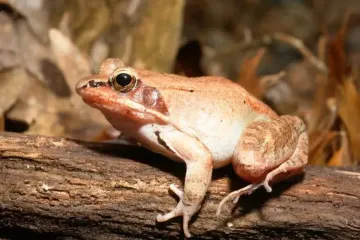
The auditory environment plays a significant role in amphibian speciation, often leading to distinct calls that prevent interbreeding. The vocalizations of leopard frogs are an excellent example of this principle in action, providing a non-lethal way to classify individuals in the field. [2][8]
The Northern Leopard Frog produces a distinct, slow, grating, or snoring call—often described as a "creak" or a drawn-out, low-pitched rattle. [2] This sound is crucial for males advertising to females of the same species. [2]
The Southern Leopard Frog’s advertisement call tends to be shorter, less rhythmic, and possesses a rougher, more guttural quality than the Northern’s. [8] While both are somewhat rasping, the rhythm and tonal quality are reliably different enough for experienced observers to distinguish them without seeing the animal. [8]
Imagine a night chorus near a pond in the spring. If the calls are rapid, rhythmic, and sound almost like a drawn-out "cackle," you are likely listening to L. pipiens. If the sounds are slower, deeper, and have a more irregular, croaking texture, L. sphenocephalus is probably the singer. [2][8] These distinct, genetically based calls solidify the distinction between the species, as they reinforce reproductive barriers in areas of sympatry. [8]
# Conservation Implications of Classification
The detailed classification of leopard frogs carries practical weight for conservation biology. [5][6] A species listed as "Threatened" in one region may have a healthy population just a few hundred miles away, or it might be a distinct subspecies or species altogether that is in severe decline. [5]
For instance, if an entire population of Lithobates pipiens in a northern state is declining due to habitat loss, understanding its exact classification ensures that conservation resources are targeted correctly toward that specific genetic entity. [2][7] If, however, a population is merely a transient group of the more common L. sphenocephalus, the conservation priority might differ significantly. [8][9]
The focus on species-specific identification allows organizations to track population trends with greater accuracy. [5] When reports come in, knowing whether an observation pertains to the Northern, Southern, or Atlantic Coast variant means that managers can apply the appropriate local recovery plans or monitoring protocols established for that specific Lithobates species. [5][7] This precision in nomenclature moves conservation beyond general awareness to targeted, effective action. [2]
# Synthesis of Identity
In summary, the classification of a leopard frog is less about finding a single answer and more about recognizing a group of closely related, yet scientifically distinct, species within the genus Lithobates. [6] The common name serves as a useful starting point, but true identification—and proper ecological understanding—requires acknowledging the differences between L. pipiens, L. sphenocephalus, and other recognized coastal forms like L. kauffmani. [1][5] These differences manifest in subtle yet consistent ways: the trajectory of the dorsolateral folds, the exact pitch and rhythm of their calls, and their historical geographic separation. [2][8] For the general public interested in nature, this taxonomic layering adds a rich layer of detail to what otherwise appears to be a single, familiar amphibian, reminding us that nature’s diversity is often hidden in the details. [7]
Related Questions
#Citations
Leopard frog - Wikipedia
Northern Leopard Frog- Lithobates pipiens - New Hampshire PBS
Northern Leopard Frog - Nevada Department of Wildlife
Southern Leopard Frog (Rana [Lithobates] sphenocephala)
Atlantic Coast Leopard Frog | NC Wildlife
Lithobates pipiens - Northern Leopard Frog - NatureServe Explorer
Northern Leopard Frog - INHS Herpetology Collection
Southern Leopard Frog - Missouri Department of Conservation
southern leopard frog - Illinois Department of Natural Resources