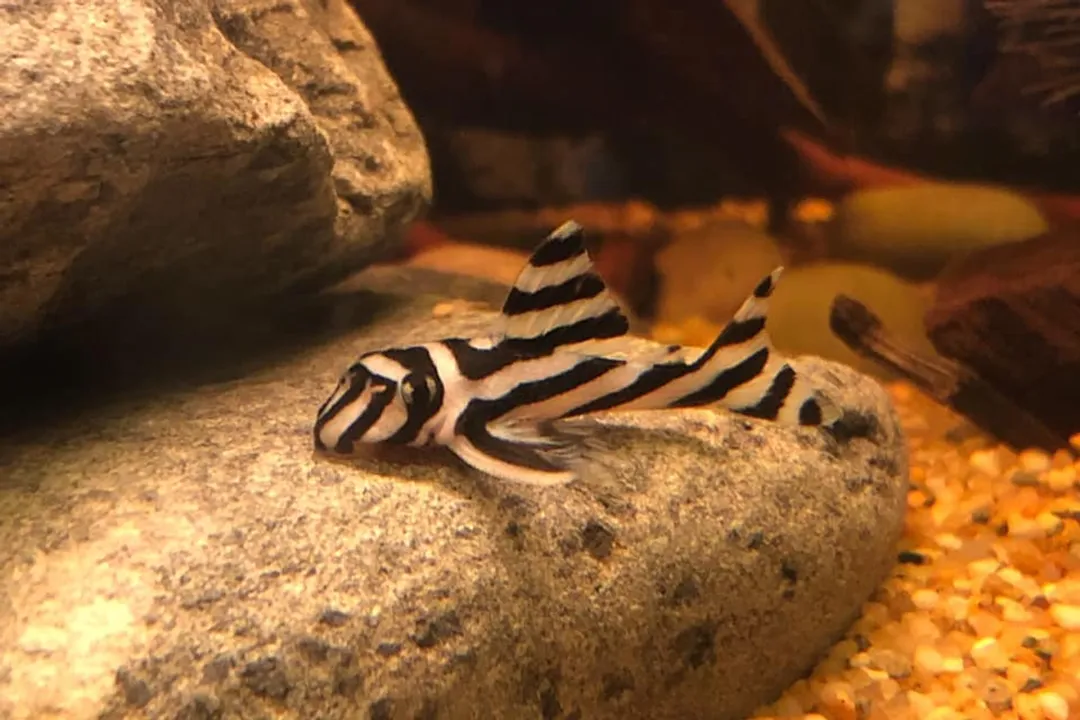
What is the likely evolutionary purpose of the striking black and white banding on *H. zebra*?
Answer
Effective camouflage against dappled light and complex textures
The distinctive, high-contrast black and white banding pattern characteristic of *Hypancistrus zebra* serves a crucial ecological role related to crypsis within its native environment. This coloration pattern is hypothesized to function as excellent camouflage, allowing the fish to blend seamlessly against the highly textured, rocky substrate of the riverbed, especially when the water surface creates dappled light patterns moving over the rocks. This adaptation is a key component of its successful niche occupation over geological timescales.
#Videos
Pleco Biologist talks Pleco Evolution (The Phylogenetics ... - YouTube
Related Questions
To which family does the black and white banded *Hypancistrus zebra* belong?To what specific river basin is *H. zebra* historically confined?What was the IUCN status of *H. zebra* following its 2016 re-evaluation?What anthropogenic activity most impacts the survival trajectory of wild *H. zebra*?What environmental parameters define the native habitat of *H. zebra* in the middle Xingu?What is the likely evolutionary purpose of the striking black and white banding on *H. zebra*?Which genus confirms the Zebra Pleco's identity as a member of the armored catfish group?What historical reliance for the aquarium trade initially placed unchecked pressure on wild *H. zebra* stocks?How do major hydroelectric dams create an ecological bottleneck for *H. zebra*?What genetic responsibility is now carried by the population existing outside the Xingu river system?