What is the fundamental trade-off presented when woolly monkey troops forage in larger groups?
Answer
Better defense against predators but increased competition for localized fruit patches
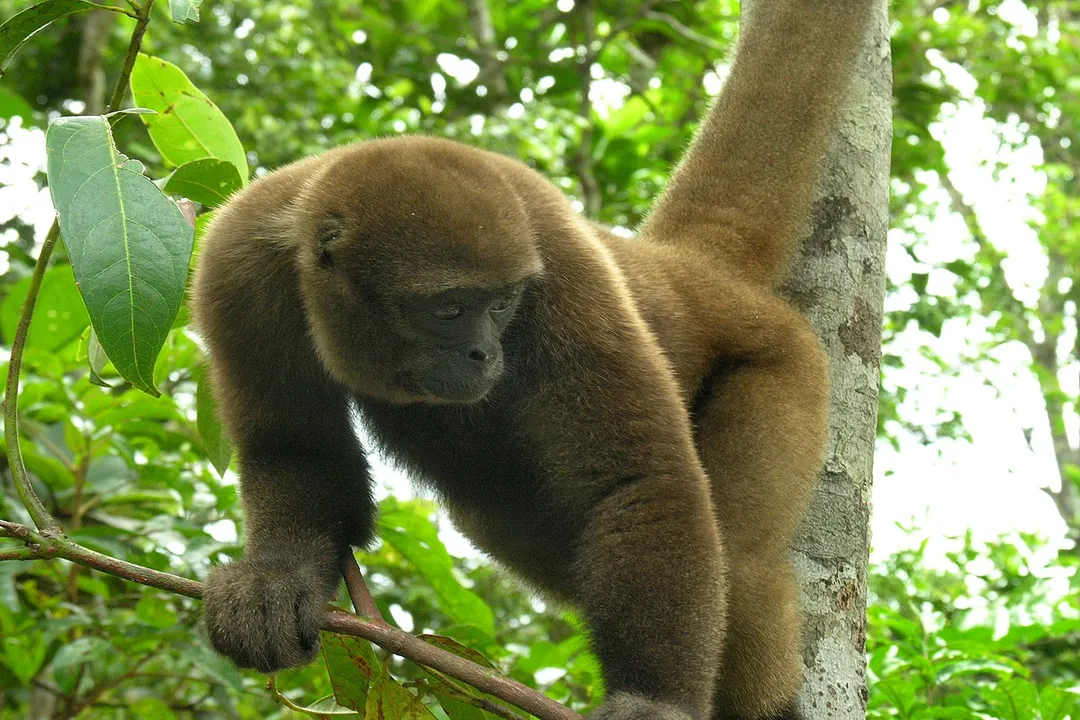
Woolly monkey social dynamics involve a constant balancing act regarding troop size relative to resource availability and safety. While residing in larger groups, typically numbering between 10 and 30 individuals, offers significant advantages such as enhanced defense mechanisms against predators like harpy eagles or large cats, this benefit comes at a cost. Larger numbers intensify the competition for localized, temporary patches of fruit. If the resource density drops too low due to high demand, the troop is often forced to fracture into smaller foraging units to cover more ground efficiently and avoid immediate food scarcity.
Related Questions
What does the Greek origin of the genus name *Lagothrix* suggest about woolly monkeys?What specific anatomical feature allows the woolly monkey's tail to function as a fully prehensile fifth limb?What term classifies the woolly monkey based on its primary nutritional requirement being ripe fruit?What is the conservation status frequently assigned to several woolly monkey species by conservation bodies?What is the fundamental trade-off presented when woolly monkey troops forage in larger groups?What is the critical reason why habitat destruction poses a greater long-term threat than just the immediate loss of trees?Up to what approximate elevation do some woolly monkey populations inhabit humid montane forests in South America?What specific percentage of a woolly monkey's intake is typically composed of fruit pulp and seeds?Which country is explicitly listed among the nations encompassing the geographic range of the woolly monkey?What is the key consequence of the woolly monkey's heavy fruit consumption for the wider forest ecosystem?