What is the critical reason why habitat destruction poses a greater long-term threat than just the immediate loss of trees?
Answer
It fragments the canopy, isolating small populations and reducing genetic diversity
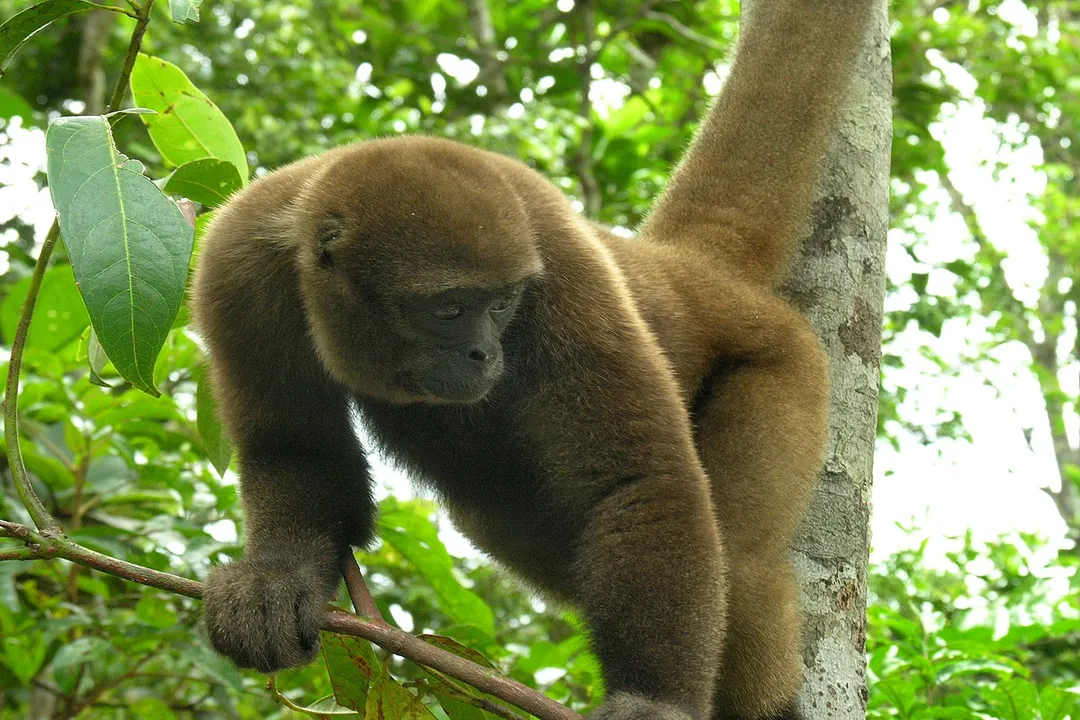
While the immediate impact of deforestation is the removal of large, mature, fruit-bearing trees, leading to rapid food collapse, a more subtle but significant long-term danger is habitat fragmentation. When the continuous forest canopy is broken up by agricultural expansion or logging, it separates populations into smaller, isolated pockets. This isolation prevents necessary movement and genetic exchange between these groups, leading to a reduction in overall genetic diversity over time, which severely compromises the long-term viability and adaptability of the species.
Related Questions
What does the Greek origin of the genus name *Lagothrix* suggest about woolly monkeys?What specific anatomical feature allows the woolly monkey's tail to function as a fully prehensile fifth limb?What term classifies the woolly monkey based on its primary nutritional requirement being ripe fruit?What is the conservation status frequently assigned to several woolly monkey species by conservation bodies?What is the fundamental trade-off presented when woolly monkey troops forage in larger groups?What is the critical reason why habitat destruction poses a greater long-term threat than just the immediate loss of trees?Up to what approximate elevation do some woolly monkey populations inhabit humid montane forests in South America?What specific percentage of a woolly monkey's intake is typically composed of fruit pulp and seeds?Which country is explicitly listed among the nations encompassing the geographic range of the woolly monkey?What is the key consequence of the woolly monkey's heavy fruit consumption for the wider forest ecosystem?