What historical status suggests the Xoloitzcuintli’s genetic divergence is ancient?
Answer
Being a pre-Columbian breed developed in Mexico
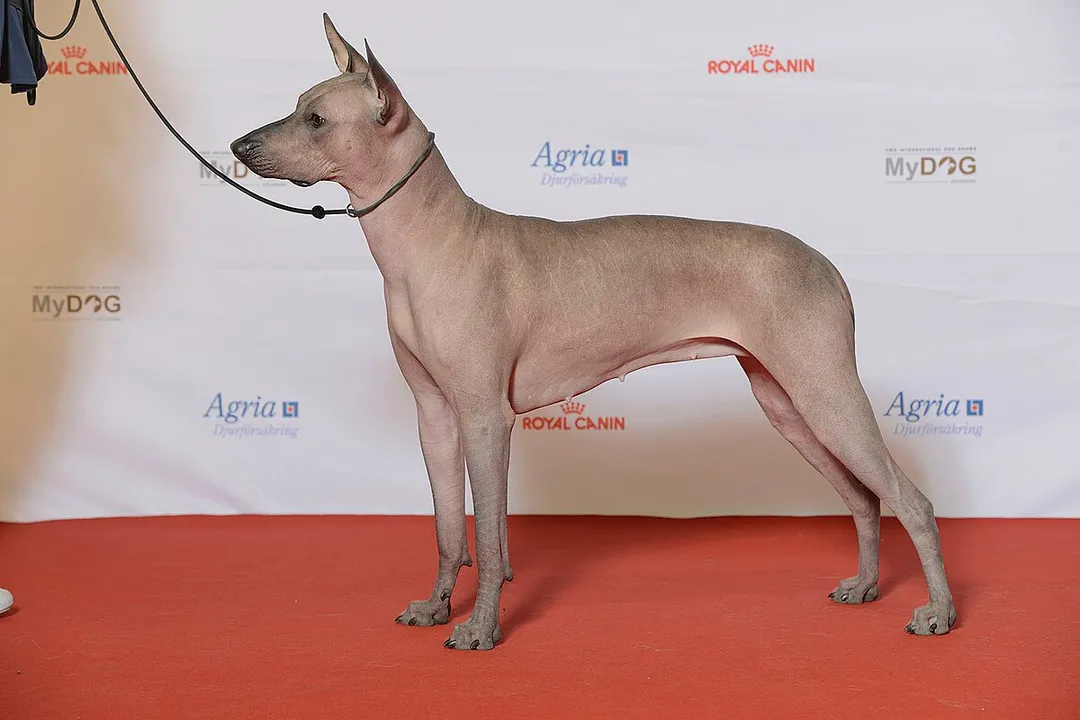
The Xoloitzcuintli's standing as a pre-Columbian breed, with archaeological and historical evidence tracing its development in Mexico before European contact, signifies a deep evolutionary separation from most modern dog breeds. While many contemporary breeds have only a few centuries of selective history, the Xolo’s genetic profile reflects a much earlier stage of canine evolution. This ancient isolation in Central Mexico likely preserved its genetic makeup against admixture from non-native gene pools introduced later, contributing to a foundational genetic divergence compared to breeds developed rapidly for modern specialized tasks.
Related Questions
What is the common subspecies designation for the Xoloitzcuintli within Canis lupus?Which gene is linked to the Xoloitzcuintli's dominant, inherited hairlessness trait?What biological concept explains the hairless gene influencing tooth structure in Xolos?From which language does the name Xoloitzcuintli derive, referencing god Xolotl?To which Linnaean Kingdom does the Xoloitzcuintli belong as a multicellular eukaryote?Which Genus groups the Xoloitzcuintli with the gray wolf and the coyote?How is the Coated Xoloitzcuintli variety genetically characterized regarding the hairless allele?What practical group does the Royal Kennel Club assign the Xoloitzcuintli?What dental issue correlates directly with the FOXI3 mutation in Xoloitzcuintli?What historical status suggests the Xoloitzcuintli’s genetic divergence is ancient?