Xoloitzcuintli Scientific Classification
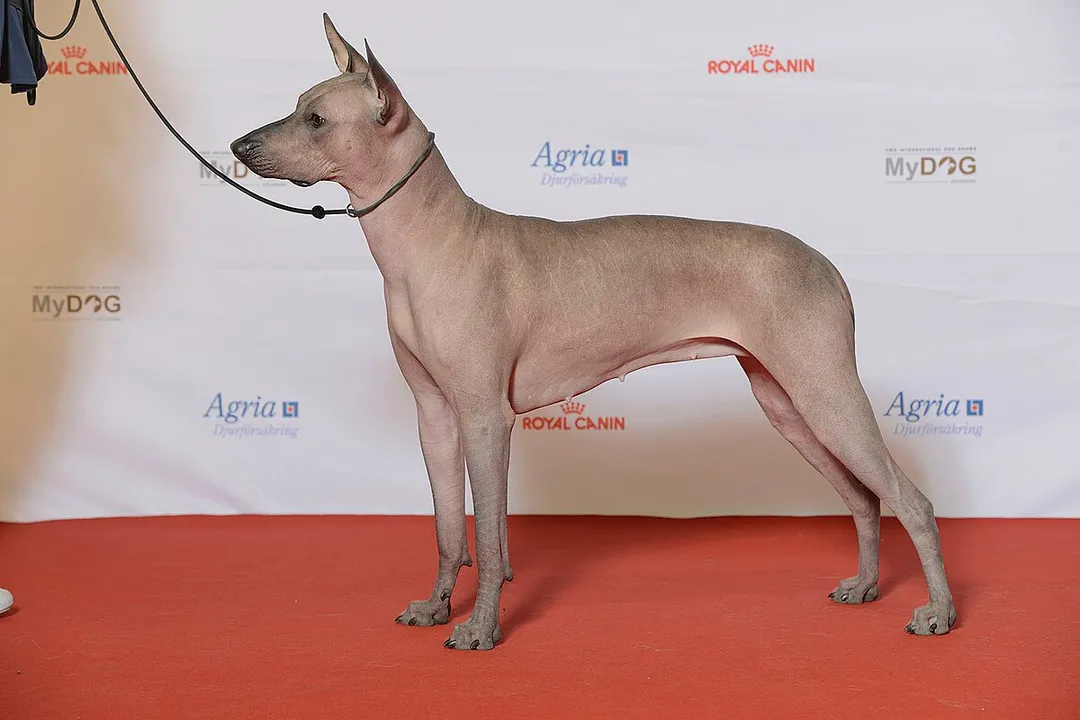
The Xoloitzcuintli, frequently shortened to Xolo, stands as one of the world’s most ancient and distinct dog breeds, a living testament to selective breeding that spans millennia within Mesoamerica. [1][2][6] While most enthusiasts recognize the breed for its striking, nearly hairless appearance and warm skin, understanding its scientific placement requires looking past the phenotype to its formal taxonomic positioning within the biological world. Placing the Xoloitzcuintli into the Linnaean system reveals its place firmly within the domesticated lineage of the wolf, Canis lupus, yet it possesses unique characteristics that fascinate geneticists and canine biologists alike. [3][4]
# Taxonomic Placement
The official scientific classification of the Xoloitzcuintli follows the universally accepted hierarchy used to categorize all life forms. This systematic arrangement helps scientists understand its evolutionary relationships and shared ancestry with other organisms. [5] At the broadest level, the Xolo belongs to the Kingdom Animalia, as it is a multicellular, eukaryotic organism that obtains nutrition by consuming other organisms. [1] Moving down, it falls into the Phylum Chordata, characterized by the presence of a notochord at some stage of development, which, in this case, develops into the vertebral column. [1][3]
Within the chordates, the Xolo is a member of the Class Mammalia. This classification denotes characteristics such as having fur (even if minimal in this breed), being warm-blooded, possessing mammary glands for nursing young, and having a neocortex in the brain. [1][4] The Order is Carnivora, reflecting its diet and physical structure adapted for hunting and consuming meat, placing it alongside cats, bears, and seals. [1][4]
# Canine Lineage

The Family Canidae groups the Xolo with dogs, wolves, foxes, and jackals—the entire dog subfamily. [1][4] This family designation solidifies its evolutionary path as a member of the Canids. [5] The specific Genus is Canis, which encompasses the group of dog-like canids, including the gray wolf and the coyote. [1]
The final species designation is where domestic dogs often see slight variation in scientific naming conventions, though all refer to the same entity. Most modern authorities place domestic dogs, including the Xoloitzcuintli, as a subspecies of the gray wolf: Canis lupus familiaris. [4] Some older or alternative classifications may simply list the species as Canis familiaris. [1][5] Regardless of the precise subspecies designation, the Xoloitzcuintli is unequivocally recognized as a domesticated animal, sharing a common ancestor with the modern wolf. [3][6] Its history as a companion and ceremonial animal in ancient Mexico provides substantial evidence for its classification as a distinct, long-established dog breed within this species. [6]
It is interesting to note that while the Xolo’s primary scientific identity is Canis lupus familiaris, the breed standards recognized by organizations like the Royal Kennel Club place it within the Utility Group. [5] While this kennel club grouping is practical for conformation shows and does not reflect deep evolutionary science, it highlights the distinction between human categorization for utility and strict biological taxonomy. [5] For instance, the FCI recognizes three size varieties—standard, miniature, and toy—which, while morphologically different, do not change the fundamental scientific classification of the breed itself. [3]
# Genetic Distinction
The most scientifically fascinating aspect of the Xoloitzcuintli, which does not alter its placement in Canis lupus, is the genetic mechanism responsible for its defining feature: the absence of hair. [4] This hairlessness is not a result of disease or injury but is an inherited trait controlled by a dominant gene. [4] Specifically, studies have linked this trait to a mutation in the FOXI3 gene. [4]
This genetic marker is critical because it causes abnormal development of the tooth structure, leading to missing premolars, which is another recognized trait in the breed standard. [4] This correlation between the hairless gene and dental anomalies illustrates a concept called pleiotropy, where one gene influences two or more seemingly unrelated phenotypic traits. [4] While many dog breeds possess unique genetic markers that define their appearance, the simple dominance of the hairless allele in the Xolo makes its primary distinguishing feature scientifically straightforward to track. [4] Understanding this genetic signature confirms its place as a unique population within the broader dog species.
When considering the ancient nature of the Xolo, one can reflect on how different breeds have diverged genetically. Most modern breeds have relatively recent ancestry tracing back only a few centuries, defined by numerous minor selection pressures for specific looks or tasks. The Xolo, however, carries a genetic signature that appears to have been strongly selected for in its native environment, potentially due to climate adaptation or cultural significance, making its fundamental genetic divergence from other dog populations older and perhaps more foundational than mutations related purely to coat color or size variation seen elsewhere.
# Breed Recognition
The acceptance of the Xoloitzcuintli into official registries around the world validates its status as a distinct breed unit within the species Canis lupus. [3][5] The Fédération Cynologique Internationale (FCI) recognizes the breed, classifying it under Section 6: Scent Hounds and related breeds, although many contemporary standards place it in a primitive/ancient dog group or a utility group, depending on the registry. [3][5] This disparity in group placement underscores the challenge of fitting ancient, culturally significant breeds into modern, often arbitrary, kennel club structures designed around more recent European breeding programs. [6]
For those interested in the practical implications of its scientific grouping, the breed has official recognition, which means breeders and owners adhere to strict standards regarding phenotype (appearance) and temperament, ensuring the genetic health and integrity of the established population. [5] These standards acknowledge the two primary types: the Hairless and the Coated. The Coated variety, which possesses a full coat of hair, is genetically significant because it carries the recessive gene for coat presence, meaning it is homozygous for the non-hairless allele, versus the Hairless variety which is heterozygous for the dominant hairless allele. [4] This genetic reality means that two Hairless Xolos can produce both Hairless and Coated puppies, a crucial piece of data for any breeder operating under genetic principles. [4]
# Origin Science
The classification of the Xoloitzcuintli is deeply intertwined with its geography and history. Archaeological evidence and historical accounts place the dog’s development in Mexico long before European contact, suggesting it is one of the oldest domesticated canids still existing. [2][6] Its status as a pre-Columbian breed means its genetic divergence occurred relatively early in the history of dog domestication, before the massive introduction of non-native gene pools into the Americas. [6]
The very name, Xoloitzcuintli, derives from the Nahuatl language, linking the dog to the god Xolotl, the god of lightning and deformities, which speaks volumes about its cultural, and thus historical, significance in its native classification system. [2][6] While its scientific classification centers on its biological markers (Canis genus, lupus species), its cultural classification as a sacred animal further distinguishes it from modern breeds that lack such deep historical context. [6]
When assessing the scientific classification of any animal, the concept of breed purity often becomes subjective. For the Xolo, its ancient isolation in central Mexico likely helped preserve a genetic profile that reflects an earlier stage of canine evolution compared to breeds developed rapidly in the last few centuries for specialized tasks. [6] Understanding this ancient separation helps place the Xolo not just in the taxonomy, but also in the phylogeny—the evolutionary history—of Canis lupus. The existence of the hairless trait, maintained for thousands of years, indicates a strong, persistent selection pressure, whether natural (climate) or artificial (human preference), unlike traits that might disappear quickly without constant reinforcement.
# Practical Application of Classification Knowledge
For a current owner or prospective owner, understanding the Xolo’s scientific classification offers practical benefits beyond mere trivia. Because the breed is recognized as genetically unique due to the FOXI3 mutation, owners must be cognizant of related health considerations, particularly regarding dental health, which is an established corollary of the hairless gene. [4] This is a direct link between its scientific marker and daily care; knowing the genetic basis allows for proactive veterinary attention to the missing teeth. [4]
Furthermore, recognizing the Xolo as part of the Canis lupus species confirms that its behavioral needs—social structure, intelligence, and trainability—align generally with other dogs, despite its unique appearance. While their temperament is often described as aloof or reserved with strangers, this is a breed characteristic, not a biological anomaly suggesting they belong to a different family or genus. [2][5] They require the same level of socialization and training expected of any domestic dog, confirming their ultimate placement within the familiaris subspecies. [2] The fact that the breed exists in a standard, miniature, and toy size confirms its plasticity within the established species boundaries, much like the Great Dane and the Chihuahua, showcasing the powerful, yet boundary-respecting, role of artificial selection within a single species. [3]
Related Questions
#Citations
Xoloitzcuintle - Wikipedia
Xoloitzcuintli - Discover Animals
Mexican Hairless Dog - Europetnet
All about Xoloitzcuintle breed - Animalia
Xoloitzcuintle (Mex Hairless) Std | Breeds A-Z - The Kennel Club
Mexico's Legendary Xoloitzcuintli, the Hairless Dog | NMAI Magazine
Xoloitzcuintli | FictionRulezForever Wiki - Fandom
Pre-Columbian origins of Native American dog breeds, with only ...
Xoloitzcuintle facts - Animals Top