What dental issue correlates directly with the FOXI3 mutation in Xoloitzcuintli?
Answer
Missing premolars
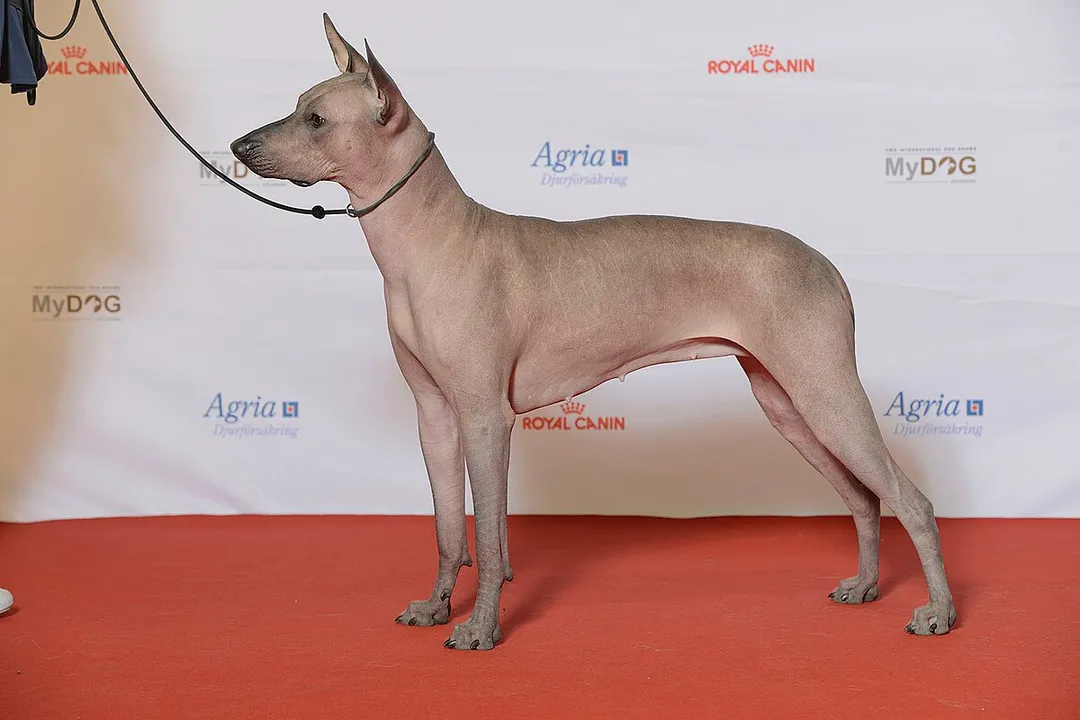
The mutation in the *FOXI3* gene responsible for the hairless phenotype has a secondary, yet recognized, effect on skeletal development, specifically impacting the teeth. This correlation dictates that the presence of the hairless gene leads to abnormal development of the tooth structure. The direct manifestation of this anomaly in the Xoloitzcuintli breed standard is the absence of certain teeth, most notably the missing premolars. This connection is a vital piece of practical knowledge for owners, linking scientific genetics to required proactive veterinary dental care.
Related Questions
What is the common subspecies designation for the Xoloitzcuintli within Canis lupus?Which gene is linked to the Xoloitzcuintli's dominant, inherited hairlessness trait?What biological concept explains the hairless gene influencing tooth structure in Xolos?From which language does the name Xoloitzcuintli derive, referencing god Xolotl?To which Linnaean Kingdom does the Xoloitzcuintli belong as a multicellular eukaryote?Which Genus groups the Xoloitzcuintli with the gray wolf and the coyote?How is the Coated Xoloitzcuintli variety genetically characterized regarding the hairless allele?What practical group does the Royal Kennel Club assign the Xoloitzcuintli?What dental issue correlates directly with the FOXI3 mutation in Xoloitzcuintli?What historical status suggests the Xoloitzcuintli’s genetic divergence is ancient?