What function does the bright coloration of the spotted lanternfly often serve?
Answer
It functions as a visual warning sign, known as aposematism.
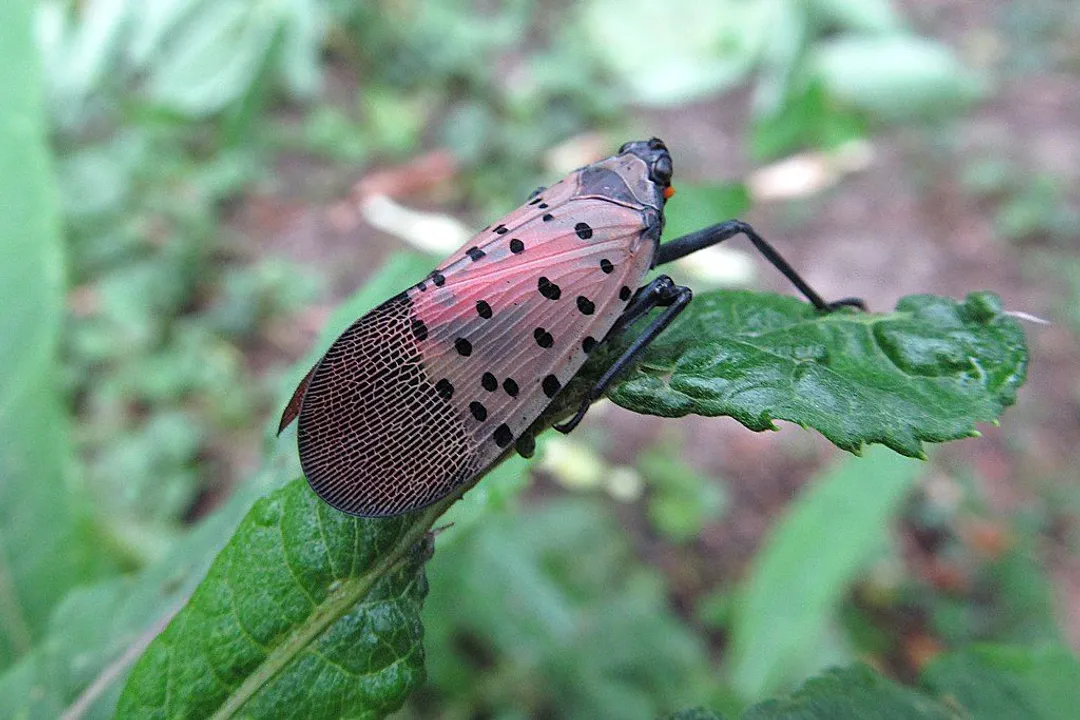
The conspicuous and bright coloration displayed by the spotted lanternfly, often featuring distinct black, red, and white patterns, aligns with the biological concept of aposematism. Aposematism is a survival strategy where an organism advertises its unpalatability or toxicity to potential predators through striking visual signals. In the case of the lanternfly, this coloration serves as a warning flag indicating that the creature is likely either poisonous or, at the very least, tastes exceptionally bad, thereby discouraging birds from initiating feeding attempts.
Related Questions
Why are slow-moving, brightly colored spotted lanternflies not devoured by every bird?Which specific bird species is confirmed in reports as occasionally consuming SLF?What function does the bright coloration of the spotted lanternfly often serve?What ecological context can reduce a Blue Jay's incentive to risk eating SLF?Compared to adults, which SLF life stage might be more readily accepted by foragers?Which university research suggested avian avoidance of SLF due to a toxic shield?What is the consequence of a single unpleasant encounter with SLF for a foraging bird?What happens to predation rates across a local bird population due to rapid learned avoidance?What management approach bypasses the biological uncertainty of avian predation on SLF?What is the long-term habitat management consideration to potentially increase opportunistic SLF feeding by predators?