What are the characteristics of the harrier bird?
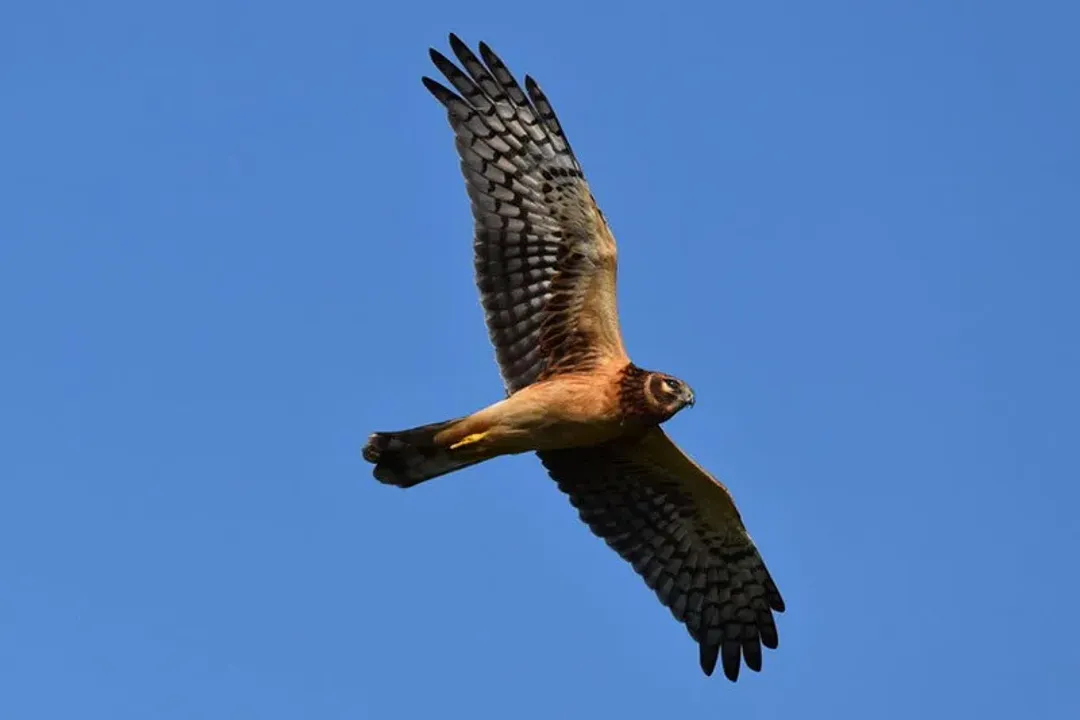
The harrier represents a distinct group among birds of prey, belonging to the genus Circus, known universally for their peculiar habit of hunting low over open ground. [1] Unlike the high-soaring Buteos or the swift, plunging falcons, harriers specialize in a buoyant, almost tentative search pattern across fields, marshes, and prairies. [1][2] This low-level flight style is one of their most immediate identifying characteristics, allowing them to detect the slightest movement beneath dense vegetation from just a few feet above the grass canopy. [3] While several species exist globally, the Northern Harrier (Circus hudsonius) serves as the quintessential example of the group's defining traits across North America. [6]
# Buoyant Flight
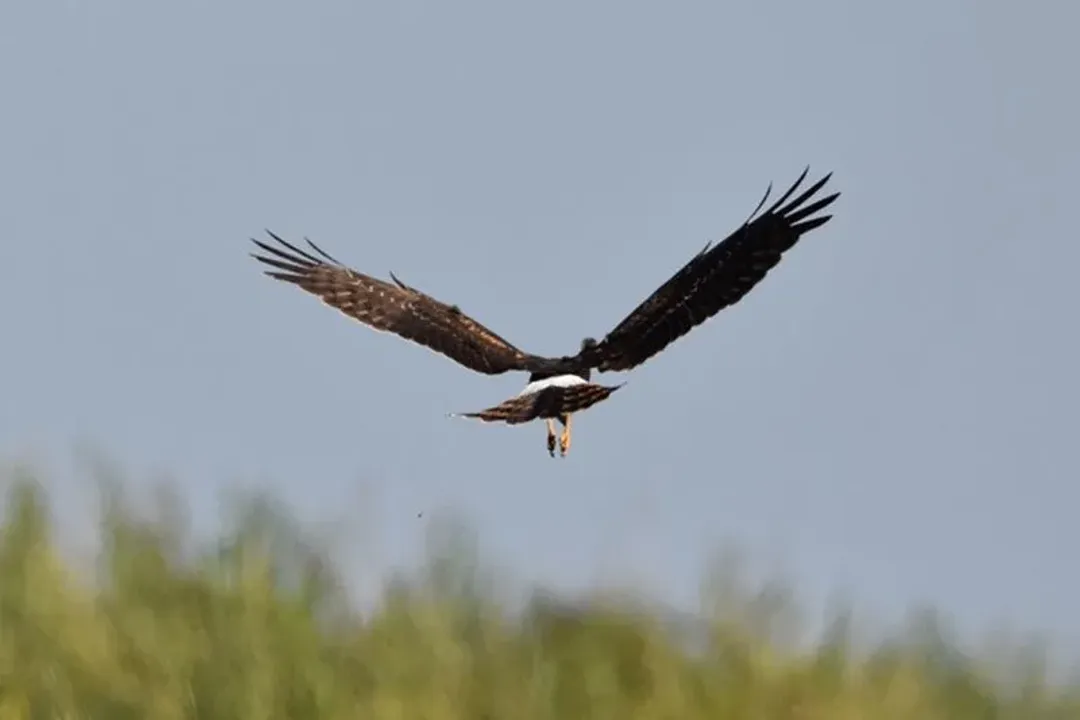
The flight style of the harrier is immediately recognizable to any observer of raptors. [2][5] They move with a characteristic, almost buoyant flapping interspersed with long glides. [2] When actively searching for prey—a process often termed "quartering"—the harrier seems to bounce along, tipping sideways with the wind, looking less like a predator and more like an aimless wanderer. [2][3] This seemingly casual motion is actually highly efficient for flushing out concealed creatures. [2] Another critical identifier in flight is the dihedral, a shallow V-shape the wings form when the bird is sailing. [2][3] This posture, combined with their slender body, long wings, and long tail, can sometimes cause them to be mistaken for a large gull or an unusually pale, chunky-winged hawk when seen from a distance. [3]
# Facial Design
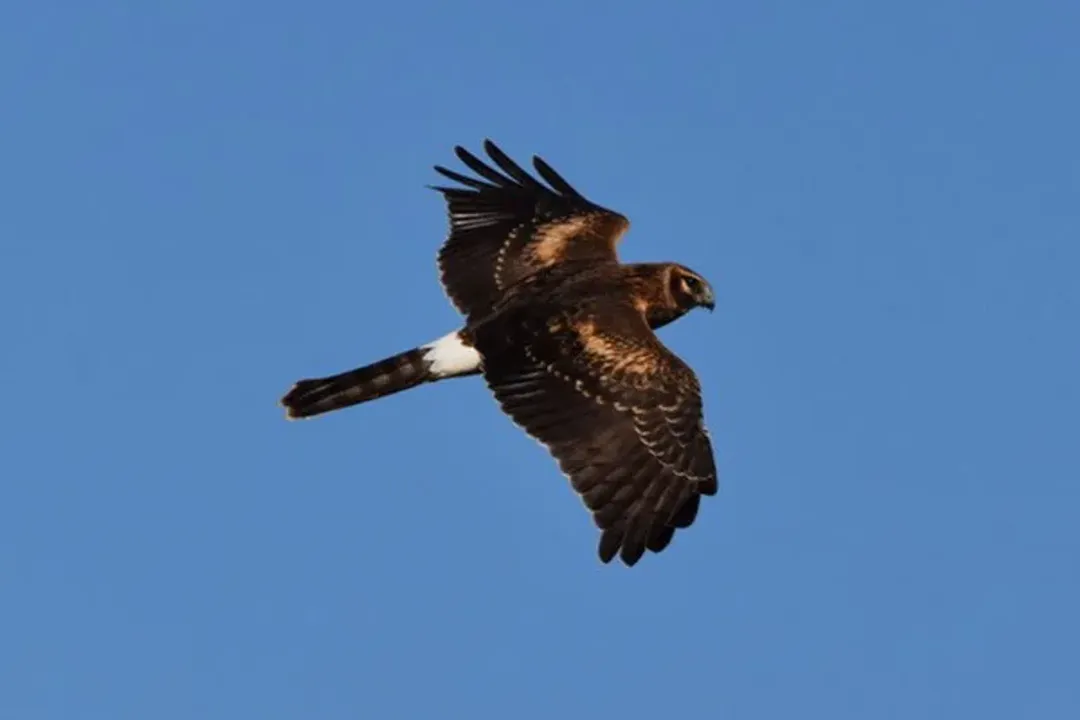
Perhaps the most surprising feature of the harrier, especially to those familiar only with common hawks and eagles, is its face. [4] The Northern Harrier possesses a distinct facial disc, a structure of stiff, radiating feathers surrounding the eyes and bill that strongly resembles that of an owl. [2][3][4] This feature is not merely cosmetic; it serves a functional purpose similar to its nocturnal counterparts. [3] The facial disc helps to gather and funnel sound waves toward the bird’s ears, significantly enhancing its hearing. [2][5] For a raptor that hunts visually over dense, concealing vegetation, this acoustic aid is invaluable, allowing it to pinpoint the rustle of a vole or mouse hidden deep within the grass before it is even seen. [4] It is this combination of keen eyesight and specialized hearing that sets the harrier apart from many other diurnal birds of prey. [3]

# Dimorphism Marked
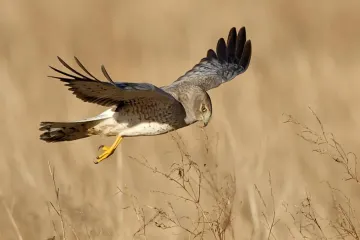
Harriers exhibit pronounced sexual dimorphism, meaning the male and female look distinctly different, a contrast often more dramatic than in many other raptor families. [5] The adult male is strikingly pale, often described as looking ghostly or ghostly-gray. [3] His upperparts are a dark slate-gray, contrasting sharply with the whitish or pale gray plumage underneath. [3][5] His wingtips are tipped in black, completing a look that might lead a distant observer to wonder if they are seeing a large, pale gull sweeping over the field. [3]
The female, however, is built for camouflage within the brown and green tones of the field. [3] She is predominantly brownish, often with streaking on her breast and belly. [3][5] Immature harriers, regardless of sex, resemble the adult female in their brownish coloration, although they often show lighter streaks on the underside. [3][5] One feature that reliably remains consistent across sexes and ages—and is a key field mark for the Northern Harrier—is the white rump patch, clearly visible when the bird is flying away from the observer. [3][5] It is interesting to note that the female is generally noticeably larger than the male, a reversal of size dominance seen in many other raptors. [5]
| Characteristic | Adult Male Northern Harrier | Adult Female Northern Harrier |
|---|---|---|
| Upperparts | Dark slate-gray [3] | Brownish [3] |
| Underparts | Pale gray/white [3] | Brownish with streaking [3] |
| Size | Smaller | Larger [5] |
| Flight Appearance | Pale, almost silvery-gray [3] | Brown, mottled [3] |
When considering the energetic demands of hunting, this difference in size suggests that the larger female might be better equipped to handle a wider variety of prey items or perhaps carry larger prey back to the nest, while the slightly smaller male might benefit from a slightly lower metabolic requirement while covering vast territories during the breeding season. [5]
# Hunting Niche
The harrier's hunting strategy is perfectly adapted to its open-country habitat. [6] They patrol fields, marshes, grasslands, and prairies, flying just meters above the ground. [3][4] This continuous, low-level search allows them to exploit small mammals like voles, mice, and shrews, which form the bulk of their diet. [2][3] They are also known to take small birds, reptiles, and amphibians when available. [2][3]
When a harrier spots or hears prey, the approach is direct and low. [2] Unlike a stoop from altitude, the harrier drops down quickly, pinning the prey with its talons. [2] Because they are so often associated with marshlands and damp meadows, it is common to observe them snatching prey right off the water's surface or from thick cattails. [4] A key behavioral observation is how silent they are during these pursuits; the feather structure of harriers, like owls, aids in muffling the sound of their wingbeats, enabling a stealthy approach. [2] This dedication to low-altitude, systematic searching over expansive ground defines their ecological role as airborne mouse-catchers. [2][4] If you are observing an area of native grassland or restored prairie, noticing a bird quartering back and forth in that characteristic bouncy flight is almost certainly an indicator of a harrier nearby. [3]
# Habitat and Ground Nests
The habitat preference of the harrier dictates its nesting habits. [4][6] They require large tracts of open country—this includes agricultural fields, fresh and saltwater marshes, coastal dunes, and expansive prairies. [5][6] They avoid forested areas entirely, as their hunting style relies on clear sightlines across open terrain. [2]
Nesting behavior is another area where the harrier displays unique traits. Unlike many other raptors that build conspicuous stick nests high in trees, harriers construct their nests directly on the ground. [4][6] These nests are typically situated in dense, protective vegetation—thick grass, reeds, or low shrubs—offering some cover from terrestrial predators. [6] The male courts the female with elaborate aerial displays, including steep dives and chases, before nesting begins. [3] Once a pair bonds, they tend to be monogamous for the season. [6] Recognizing this ground-nesting habit has direct conservation implications. For landowners or conservation managers working with grassland ecosystems, understanding that harriers might be incubating eggs or raising young in dense cover during the spring and early summer is vital; poorly timed mowing or burning schedules during this critical period can easily destroy nests and fatally impact the brood. [6] Protecting these essential open areas is fundamental to the survival of the species. [8]
# Taxonomic Distinction
For many years, the bird recognized across North America was considered the same species as the harrier found across Europe and Asia, known then as the Hen Harrier (Circus cyaneus). [1] However, modern genetic and morphological studies have led to the recognition of two distinct species: the Northern Harrier (Circus hudsonius) in the Americas and the Hen Harrier (Circus cyaneus) in the Old World. [1][6] While visually similar, particularly in the flight patterns and general size, this split recognizes evolutionary divergence between the populations. [1] This taxonomic refinement underscores the distinct presence of Circus hudsonius within the North American avifauna, separate from its Eurasian counterpart. [6] Although they share fundamental characteristics—the low flight, the facial disc, the ground nest—they represent two lines of evolutionary adaptation to similar ecological pressures across continents. [1]
Related Questions
#Citations
Harrier (bird) - Wikipedia
Northern Harrier Identification - All About Birds
Northern Harrier - Montana Field Guide
Northern harrier | The Raptor Center
Circus hudsonius (Northern harrier) - Michigan Natural Features ...
What are the distinctive features of a Northern Harrier hawk?
Northern Harrier | Mass.gov
Northern Harrier | Bird Gallery - Houston Audubon Society