Why do birds not eat spotted lanternflies?
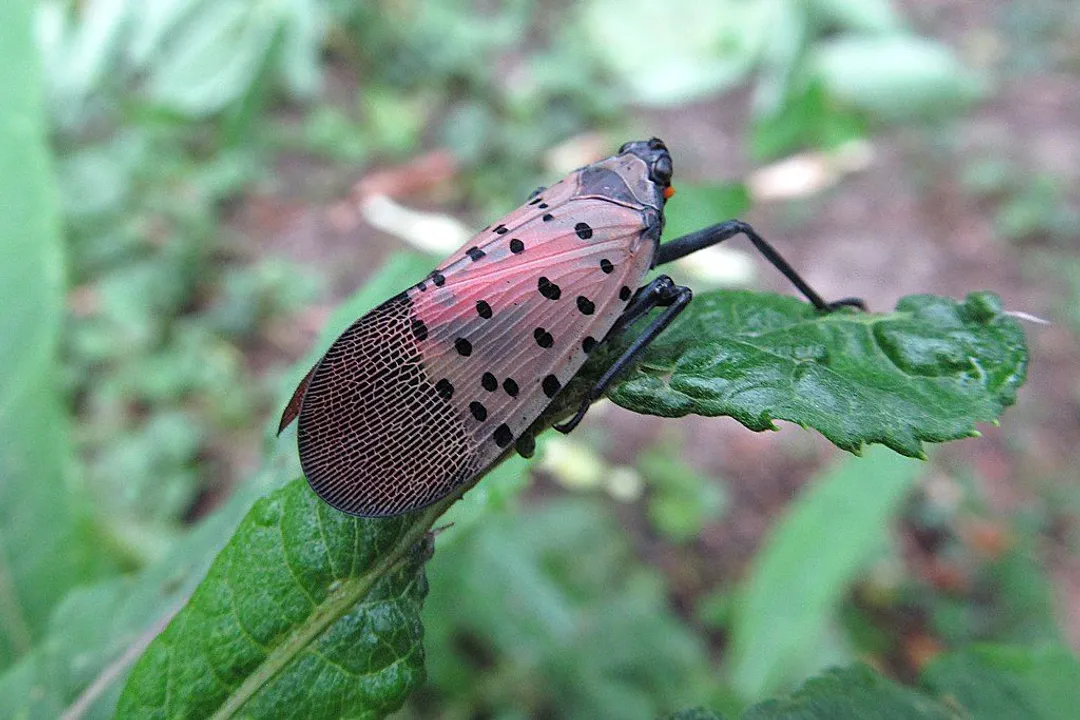
The sheer number of spotted lanternflies visible across affected regions often leads to a single, logical question from observers: If these insects are slow-moving, brightly colored, and seem so abundant, why aren't they being devoured by every bird in the neighborhood? It seems counterintuitive; nature usually provides a check on such visible population booms, and birds are often the primary agents of that natural control. [6][7] However, the relationship between the invasive Lycorma delicatula and avian predators is far more complex than a simple visibility-to-prey ratio suggests.
# Toxicity Defense
The primary factor scientists point to in explaining avian avoidance is a potential chemical defense mechanism employed by the spotted lanternfly. [3] Research conducted by Penn State University indicated that birds may be reluctant to consume the insect, suggesting that the SLF may possess a toxic shield. [3] This is a common strategy in the insect world; bright, noticeable coloration—known as aposematism—often serves as a visual warning sign that the creature is either poisonous or tastes exceptionally bad. [3]
While the level of toxicity required to deter a bird might not be lethal, even mild illness following consumption can create a powerful, rapid learning experience for a bird. A single unpleasant encounter can teach a bird to associate that distinct black, red, and white patterning with physical discomfort, leading to long-term avoidance. [3] This learned aversion, driven by taste or mild physiological reaction, can be more effective at keeping predators away than camouflage.
# Actual Eaters
Despite this defensive signaling, the story is not entirely one of universal avoidance. Reports and observations confirm that some bird species do consume spotted lanternflies, even if they do so infrequently or only after initial hesitation. [4] In areas where the invasive species has established itself, predators identified as occasionally feeding on SLF include the American Crow, Blue Jay, Northern Cardinal, Mockingbird, Downy Woodpecker, Tufted Titmouse, and the European Starling. [2][7]
It is important to note the contrast between early assumptions and later findings. When the insect first arrived, many hoped for immediate, mass consumption by local avifauna. [7] While the birds listed above are known predators, their consumption often appears opportunistic rather than forming a dietary staple. [2] This suggests that while the deterrent mechanism is effective on many individuals, it does not completely shut down predation across the entire avian population.
For birds that do successfully consume the lanternflies, the experience can differ based on the insect's life stage. Nymphs, which are not yet displaying the full adult coloration, might be more readily accepted by inexperienced or highly motivated foragers compared to the distinctively marked adults. [7]
# Initial Avoidance
The paradox of the slow, conspicuous insect remains interesting when considering avian foraging behavior. Birds generally key in on conspicuous, slow-moving prey—it’s an energy-efficient meal. Yet, the SLF seems to trigger an innate, or very quickly learned, stop signal in many species. [3][6]
Consider the speed of learning. If a bird encounters a new, brightly colored insect, the trial-and-error period is often very short, especially if the consequence is nausea. In environments where birds have not co-evolved with this specific chemical signature, the learning curve for avoidance is incredibly steep. A single individual bird might sample a few nymphs or adults, decide the payoff isn't worth the risk, and then communicate that negative signal—even non-verbally, through its subsequent avoidance behavior—to others nearby. This rapid spread of learned avoidance can dramatically suppress predation rates across a local population until new generations of birds replace the experienced ones, or until the insects' chemical composition changes (perhaps in different life stages). [3]
If we look at this from an ecological perspective outside of the immediate chemical defenses, it is interesting to consider the context of local food availability. If a particular yard or forest patch is currently flush with high-fat, easily digestible native caterpillars or grubs, a Blue Jay or a Cardinal has little energetic incentive to risk sampling an insect whose nutritional value is questionable or whose taste is disagreeable. [2] The effort required to crack through the insect's exoskeleton versus the established reward of a known native food source tips the scales firmly toward the familiar, native option. This means that the "lack of eating" might sometimes be less about poison and more about preference when easier, safer calories are readily available.
# Management Attempts
Observing the situation often prompts residents to seek ways to encourage birds to help manage the pests, especially when noticing their sheer numbers overwhelming local flora. [1][8] While direct intervention is often discouraged due to the risk of exposing birds to any potential toxins, understanding the feeding habits of native predators can inform broader habitat management.
A potential long-term consideration involves supporting the natural predators that do exhibit a willingness to feed on SLF. For instance, encouraging native insect populations that serve as primary food sources for birds like Blue Jays or Cardinals ensures that these predators remain abundant in the area. When their preferred, safe food sources become scarcer later in the season, they may become more opportunistic in testing novel food items like the spotted lanternfly. [2][7] This is not an immediate fix, but it speaks to maintaining a healthy, balanced predator base that can potentially pick off the stragglers or the less chemically-defended life stages.
It is worth noting that community efforts often involve physical removal—squashing or freezing the insects—rather than encouraging predation. [1][6] This direct action bypasses the biological uncertainty associated with relying on birds that may be deterred by the lanternfly's defense mechanisms. Because the efficacy of bird predation remains variable based on local conditions and the specific bird species present, direct, non-chemical removal remains the most reliably documented method for immediate population reduction in residential areas. [5] The ultimate success of avian control hinges on whether the next generation of birds hatches without inheriting the taste aversion of their parents, or whether some birds exist that simply metabolize the SLF chemicals without issue. [3]
Related Questions
#Citations
What eats lantern flies and can we all chip in and buy like ...
Birds Are One Line of Defense Against Dreaded Spotted ...
Spotted lanternfly may use 'toxic shield' to fend off bird ...
Spotted Lanternfly (SLF) news! A recent Penn State study ...
Do birds help to control spotted lanternfly populations?
Why aren't birds eating the spotted lantern flies if they're big ...
Top Predators of Spotted Lanternflies
Send in the Birds: Eliminating Pennsylvania's Spotted ...
Spotted Lanternflies: Facts, Information, and Treatment