What does Linnaeus's two-toed sloth eat?
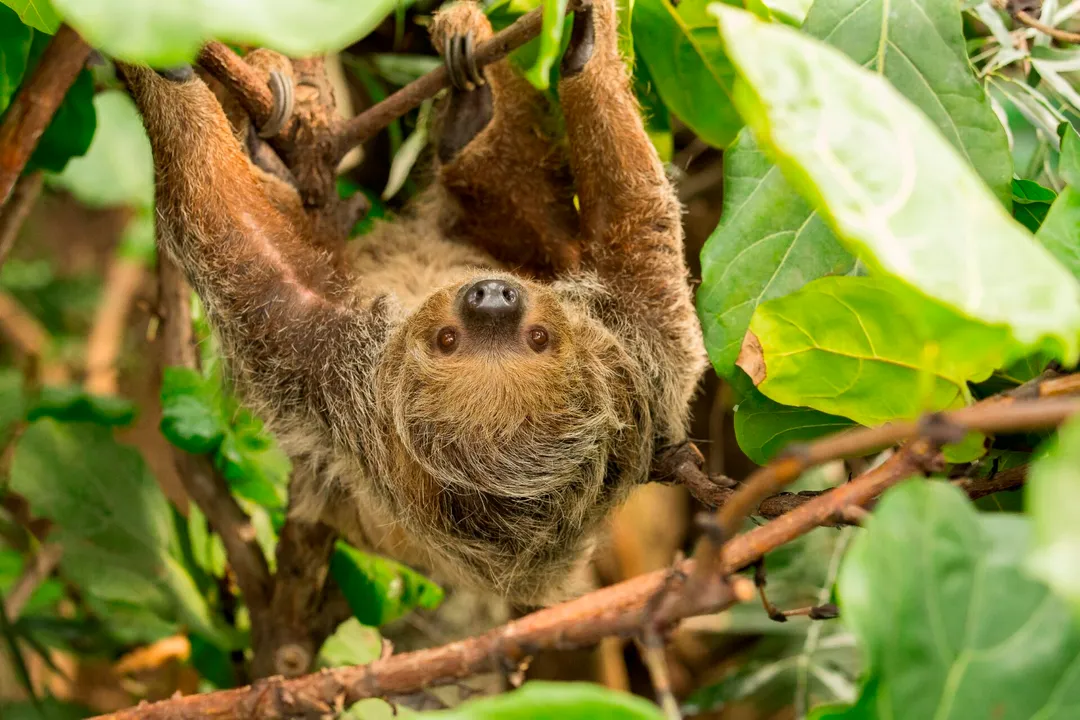
The diet of Linnaeus’s two-toed sloth, Choloepus didactylus, is central to understanding their famously sedentary existence high in the tropical rainforest canopy. Far from being lazy, these creatures are master energy conservers, a necessity dictated almost entirely by what they consume. As strict herbivores, their primary food source is not energy-dense, forcing a lifestyle of minimal expenditure and extreme metabolic patience.
# Wild Menu
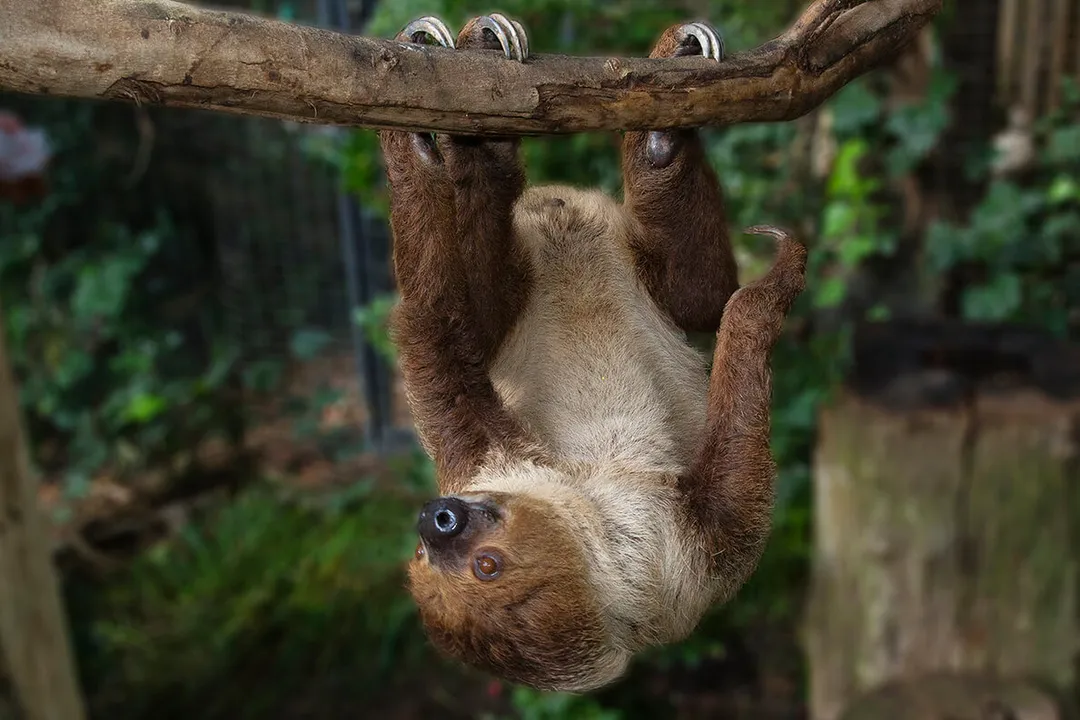
In their native habitats spanning Central and northern South America, two-toed sloths rely on a diet consisting predominantly of leaves. This forms the bulk of their sustenance, supplemented by various other plant materials, including flower buds, tender twigs, and fruit. The consumption of fruit, while present, is often secondary to leaf matter. Sloths are not known to chew on hard, crunchy twigs, preferring softer vegetation. They utilize their long forearms to carefully pull vegetation within reach of their mouths.
However, the classification as strictly herbivorous sometimes blurs at the edges of observation. While plant matter makes up the vast majority of their intake, documented instances exist where they will occasionally consume small, passive, protein-rich snacks. This can include bird's eggs or insects encountered in their treetop environment. Despite these occasional additions, the core principle remains a high-fiber, low-nutrient foundation. It is worth noting that gathering precise data on the full extent of their wild diet is inherently challenging due to their nocturnal habits and superb camouflage within the dense foliage.
# Digestive Engine
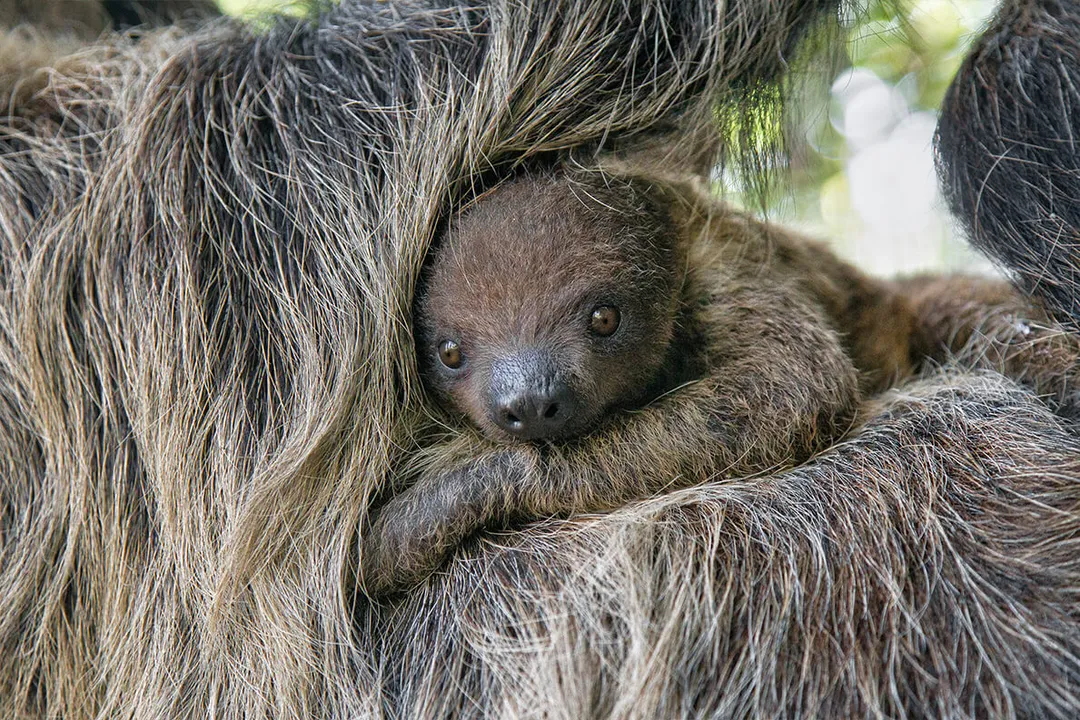
The reason leaves and twigs can sustain such a large mammal lies deep within the sloth's specialized anatomy. Linnaeus’s two-toed sloths possess a complex, multi-chambered stomach, similar in structure to that of a cow. This organ is not merely for storage; it hosts an entire community of symbiotic bacteria essential for breaking down tough plant cellulose. This fermentation process allows the sloth to extract what little nutrition is available from the fibrous material.
This digestive strategy is extraordinarily slow. Some sources report that food can take "days to process a single meal", while others note that digestion may take "an entire week to pass through the guts". Other detailed observations place the transit time significantly longer, suggesting that food remains in their relatively short digestive tract for approximately one month. This vast timeline necessitates a highly efficient, albeit slow, internal operation.

# Metabolic Cost
The low nutritional return from their diet directly governs the sloth’s entire physiology and behavior. To survive on such meager energy input, they have evolved to expend energy frugally. They exhibit one of the lowest and most variable body temperatures among mammals, ranging from about to ( to ). Since they cannot shiver to maintain warmth like other mammals, they regulate temperature by moving into or out of the sun, or by letting their temperature drop during inactivity or cool weather. Their relative muscle mass is only about half that expected for their weight, further limiting their ability to generate metabolic heat.
Movement is deliberately slow, often described as effortless hand-over-hand motions, to conserve what little energy is gained from digestion. Sleep is extensive, often consuming 15 to 18 hours per day. The extreme slowness of digestion and low energy demands lead to an infrequent waste schedule. Sloths are known to store waste, sometimes comprising up to 30% of their body weight, and descend from the safety of the trees to defecate only once or twice a week.
# Captive Variety

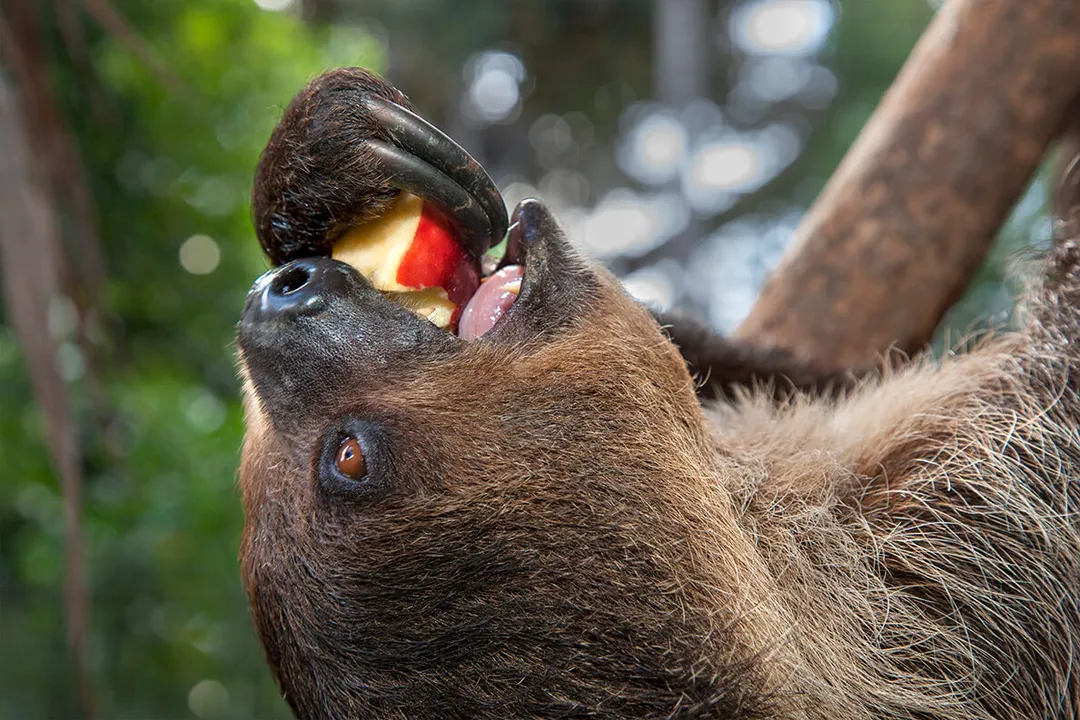
In managed care settings, like those at accredited zoos, the diet is carefully constructed to provide consistent nutrition while still mimicking the need for high fiber, and sometimes introducing variety that might be scarce or unavailable in the wild. For instance, sloths at the San Diego Zoo receive low-starch, high-fiber biscuits, alongside fresh fruits and vegetables, and a variety of fresh browse. Zoos like Folly Farm note their residents are particularly fond of vegetables such as asparagus and baby corn. Wild Florida residents enjoy treats like corn and carrots during encounters.
It is interesting to compare the energy profile of wild versus managed diets. While wild sloths must survive almost exclusively on leaves—a diet so low in energy that it mandates their extreme slowness—captive diets often supplement this with higher-calorie, easily digestible components like specialized biscuits and specific fruits. This difference means that while wild sloths have adapted to starve slowly, captive animals may actually consume a higher caloric density overall, necessitating careful monitoring by keepers to prevent weight gain or digestive upset from excessive sugars or starches that their system is not evolved to handle rapidly. Therefore, for keepers, monitoring the sloth's weight, especially after its weekly elimination trip, is a crucial indicator of digestive health, as weight loss of up to 30% can occur post-defecation.
# Foraging Care
Zoo nutritionists often follow detailed guidelines, such as those provided by the USDA, to create a balanced captive intake. A general rule of thumb suggests feeding an amount equal to about 10 percent of the sloth’s body weight each day. This total daily ration is broken down into several categories: commercial biscuits (low-starch, high-fiber), leafy greens (like kale or romaine), non-leafy vegetables (like sweet potato or carrots), fruit, and free-choice browse material (like hibiscus or mulberry branches) to encourage natural foraging behavior. Leafy greens and browse provide the necessary roughage mimicking their natural intake.
When preparing food for these unique feeders, presentation is key. The USDA recommends cutting food items into long, thin pieces. This is more than a simple preference; it is a functional accommodation for their specialized feeding technique. A sloth grasps vegetation with one foot, pulls the item to its mouth, and then chews repeatedly. If food is presented in large chunks, the sloth’s limited ability to manipulate food once it’s near its mouth, combined with the need to support its weight while feeding, makes smaller, manageable pieces essential for successful ingestion. Furthermore, keepers must be careful to exclude seeds from fruits or vegetables like pumpkin, as these components are harder to digest and pose a risk of causing a potentially fatal blockage within the slow-moving gut.
# Unusual Additions
Though the Linnaeus’s two-toed sloth is categorized as an herbivore, their diet in the wild is not exclusively vegetarian, which distinguishes them slightly from some other folivores. The occasional need for supplemental nutrients, perhaps to aid in healing or during specific life stages, seems to be met by opportunistic foraging. They have been known to ingest larval insects or consume small bird eggs they find. In captivity, this occasional protein requirement is sometimes met through the very sparing addition of a hard-boiled egg to the overall diet, though this must be calculated carefully against the sloth's low-protein tolerance. This small allowance for non-plant matter in the wild hints at an adaptability that helps them survive in an environment where leaf nutrition can be highly inconsistent, especially during prolonged periods of adverse weather when their digestive bacteria might struggle to function efficiently. The key to their survival, whether in the rainforest or in expert care, is ensuring that any supplemental food, including treats used for training, is accounted for within the strict, low-energy parameters their body systems are built to handle.
Related Questions
#Citations
Two-toed sloth | Smithsonian's National Zoo and Conservation ...
Two-toed Sloth | San Diego Zoo Animals & Plants
Two Toed Sloths Facts & Information - Folly Farm
Linnaeus's two-toed sloth - Wikipedia
Linnaeus's Two-Toed Sloth - Lehigh Valley Zoo
[PDF] Feeding Two-Toed Sloths • AC-21-001 - usda aphis
Linné's Two-toed Sloth | Choloepus didactylus | Marwell Zoo
Two-Toed Sloth: Habitat, Diet & Fascinating Facts - Wild Florida Blog