What do onagers eat?

The diet of the onager, a wild equid native to the arid regions of Central Asia, is intrinsically linked to the challenging environments it inhabits. These animals are highly specialized herbivores, capable of thriving where many other large mammals struggle to find sustenance. [1][3] Their feeding habits reflect an adaptation to landscapes characterized by sparse vegetation, deserts, and steppes. [6]
# Grazing Equid

The onager, closely related to horses and donkeys, falls firmly into the herbivore category. [4] They are predominantly grazers, meaning their diet centers on grasses. [3][8] However, their survival in harsh territories necessitates flexibility, meaning they also incorporate browsing elements when grasses are scarce or seasonally unavailable. [1][4] The term onager itself refers to several subspecies of the Asiatic wild ass (Equus hemionus), including the Persian onager (Equus hemionus onager). [1][10] Regardless of the specific type, the general composition of their food intake follows a pattern dictated by the availability of low-growing vegetation. [2][7]
# Plant Staples
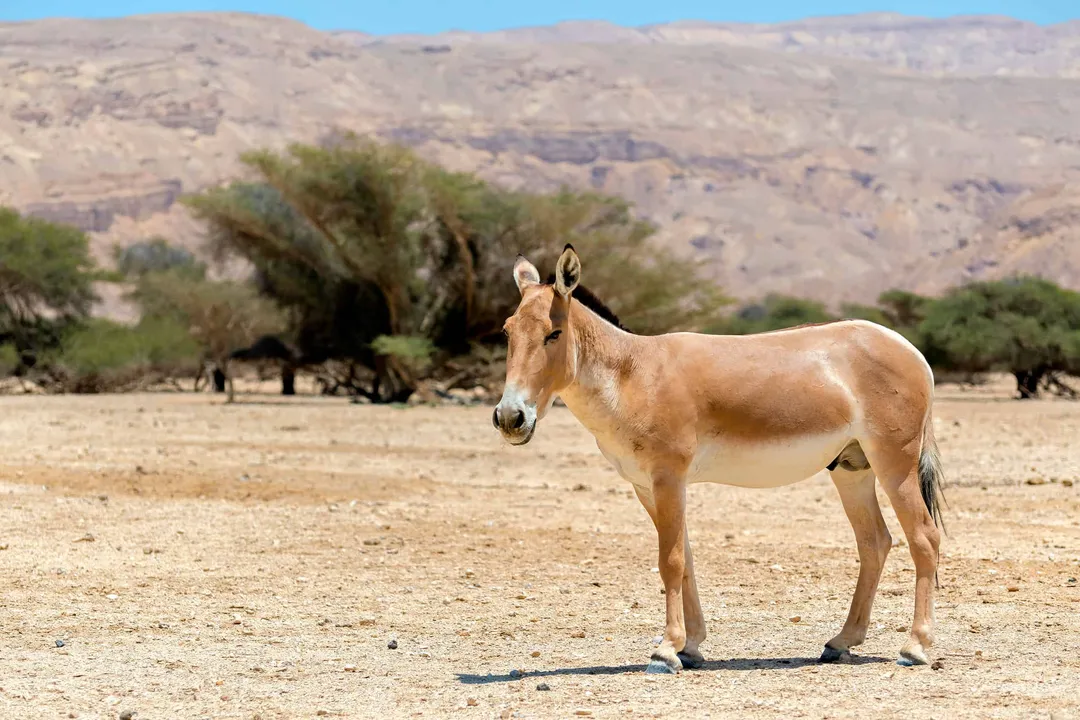
The bulk of the onager’s sustenance comes from the low-growing, often coarse vegetation characteristic of their dry habitats. [6] This includes a wide array of grasses, herbs, and forbs. [3][4][7] In the steppes and semi-deserts where they range, these plants are often tough and possess lower nutritional density compared to the lush pastures found in more temperate zones. [6] Because of this, the onager must consume significant quantities of forage to meet its energy needs. [6] They are not picky eaters when necessity calls, consuming stems, leaves, and roots when necessary to survive lean periods. [4]
While grasses form the foundation, their diet broadens seasonally. For instance, in springtime, they will readily consume new, tender shoots and small shrubs that emerge after infrequent rains. [6] This ability to shift preference—from dominant grazing to opportunistic browsing—is key to maintaining body condition throughout the year. [1] Comparing their needs to those of a domestic horse kept on rich meadow grass highlights an important distinction in foraging strategy: the onager is built to process high volumes of lower-quality, coarse dry matter, whereas a horse thrives on concentrated energy intake. This specialization allows the onager to occupy ecological niches unavailable to less adaptable equids. [1][6]
# Water Requirement
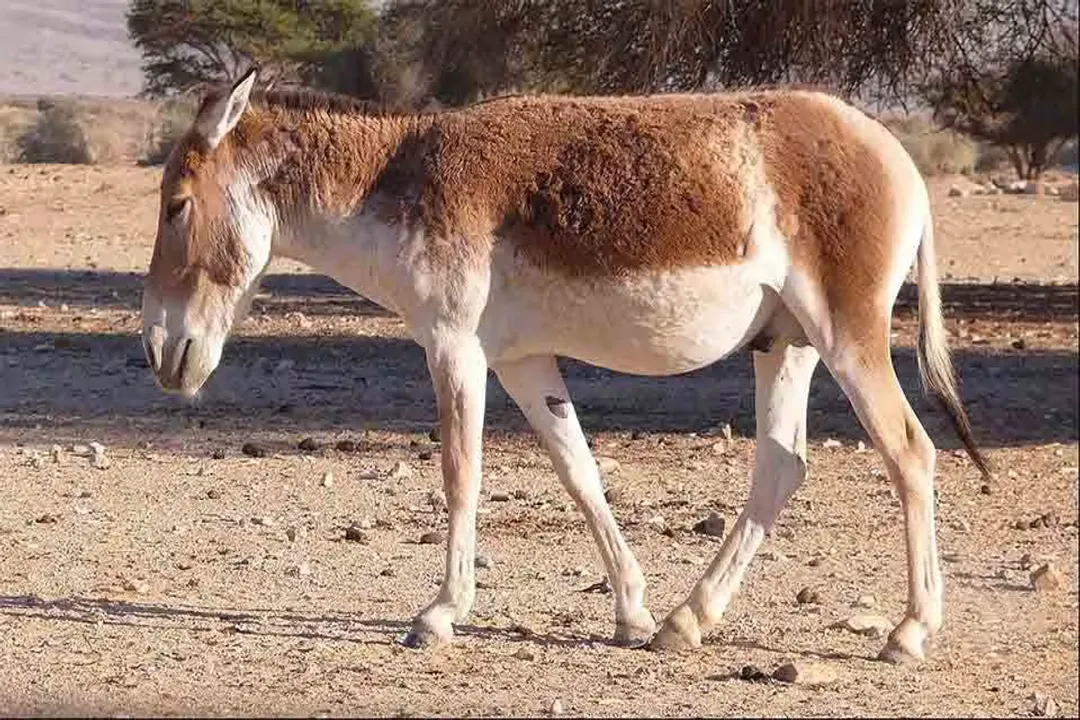
A factor as critical as the vegetation itself is water access. Like all equids, onagers must drink regularly. [1] In their arid environments, the proximity to reliable water sources dictates their migratory patterns and, consequently, where they find their primary food sources. [6] They generally need to drink water daily when it is accessible. [1] When surface water dries up during extreme dry seasons, they become entirely dependent on the moisture content within the plants they consume, which places further selection pressure on which forbs or succulent vegetation they seek out. [6]
# Daily Intake
The feeding routine of the onager is opportunistic yet structured by the environment. They typically graze during the cooler parts of the day to avoid the intense heat of midday, often resuming feeding in the late afternoon and evening. [6]
This results in a significant portion of their 24-hour cycle being dedicated to foraging and moving between feeding grounds and watering holes. [6] Their digestive system is optimized for this sustained processing. While the specifics of their gut flora and digestive efficiency aren't always detailed in basic species summaries, the sheer volume they must process implies a highly efficient mechanism for extracting nutrients from fibrous, dry material. [4][9]
For keepers managing onagers in zoological settings, understanding this reliance on high-fiber, lower-energy input is vital. [2][5] If the diet leans too heavily toward rich, high-sugar foods—common in standard horse feeds—it can lead to obesity and metabolic issues, failing to mimic the necessary digestive 'work' provided by the coarse desert vegetation they evolved to eat. [2] Therefore, a diet heavy in hay and low in rich grains or molasses better supports their long-term health by aligning with their innate physiological needs for constant, high-volume fiber consumption. [5]
# Subspecies Variation
While the general description holds true across the species, slight variations exist depending on the specific subspecies and its localized habitat. [1][10] The Persian Onager, for example, is historically associated with the steppes and deserts of Iran. [2] Its diet would be adapted to the specific composition of the Iranian plateau's vegetation, which might include different ratios of woody shrubs versus true steppe grasses compared to, say, the Kulan found further north. [1] However, the overarching principle remains: success is defined by the ability to utilize whatever sparse, predominantly herbaceous matter is available. [7] The onager's success in these extreme settings illustrates the high degree of specialization necessary for wild equids existing at the very limits of vegetation productivity. [4]
Related Questions
#Citations
Onager - Wikipedia
Persian onager | Smithsonian's National Zoo and Conservation ...
Onager - Facts, Diet, Habitat & Pictures on Animalia.bio
Equus hemionus onager - Animal Diversity Web
Onager | Zoo 2: Animal Park Wiki | Fandom
ONAGERS: HISTORY, CHARACTERISTICS, BEHAVIOR ...
Onager facts, distribution & population - BioDB
Onager - Equus hemionus - A-Z Animals
Onager: The Animal Files
Persian Onager (Equus hemionus onager) Dimensions & Drawings