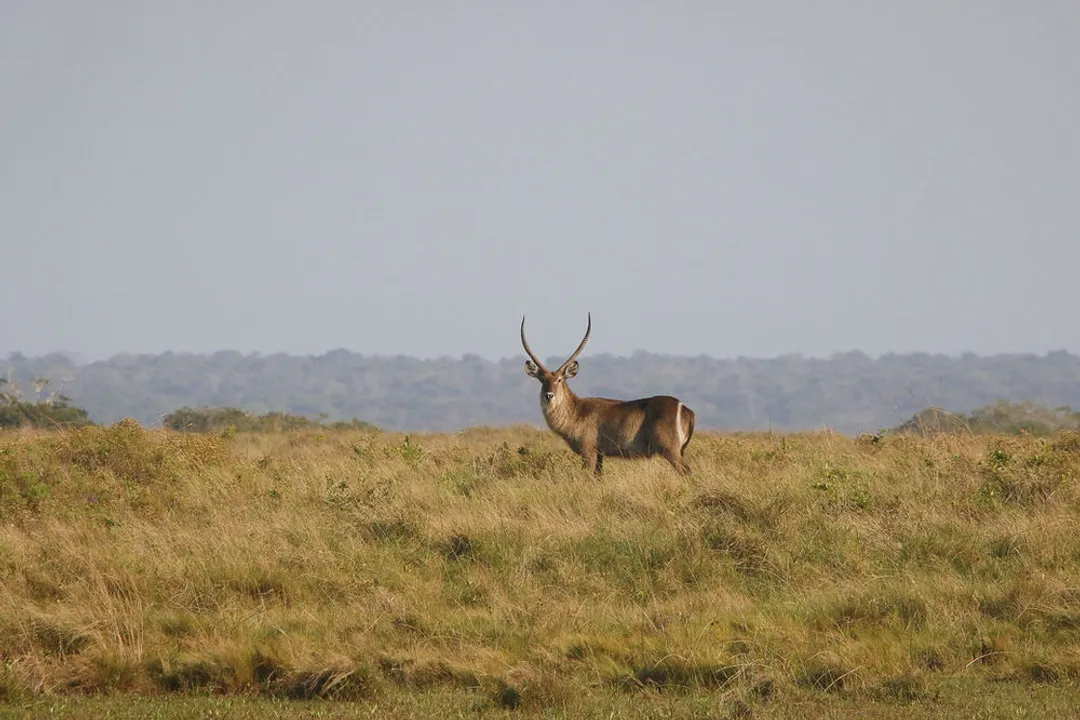
What evolutionary trade-off is suggested by the waterbuck's adaptation of having a water-repellent, oily coat?
They favored a water-shedding and deterrent adaptation over developing superior swimming capabilities.
The specialized coat, saturated with oils to shed water quickly, represents a clear evolutionary compromise. While this adaptation perfectly addresses the need to maintain body temperature after exiting the water, it comes at a cost regarding aquatic locomotion. The text indicates that despite their proximity to water and the ability to shed water rapidly, waterbucks are not considered agile or enthusiastic swimmers, generally preferring shallow retreats over lengthy aquatic escapes. This suggests that the selective pressures favored adaptations that managed their environment *at* the water's edge—repelling water and potentially deterring predators via odor—rather than evolving the physical attributes necessary for sustained, efficient movement through deep water, relying instead on the proximity to the bank for refuge.