Waterbuck Evolution
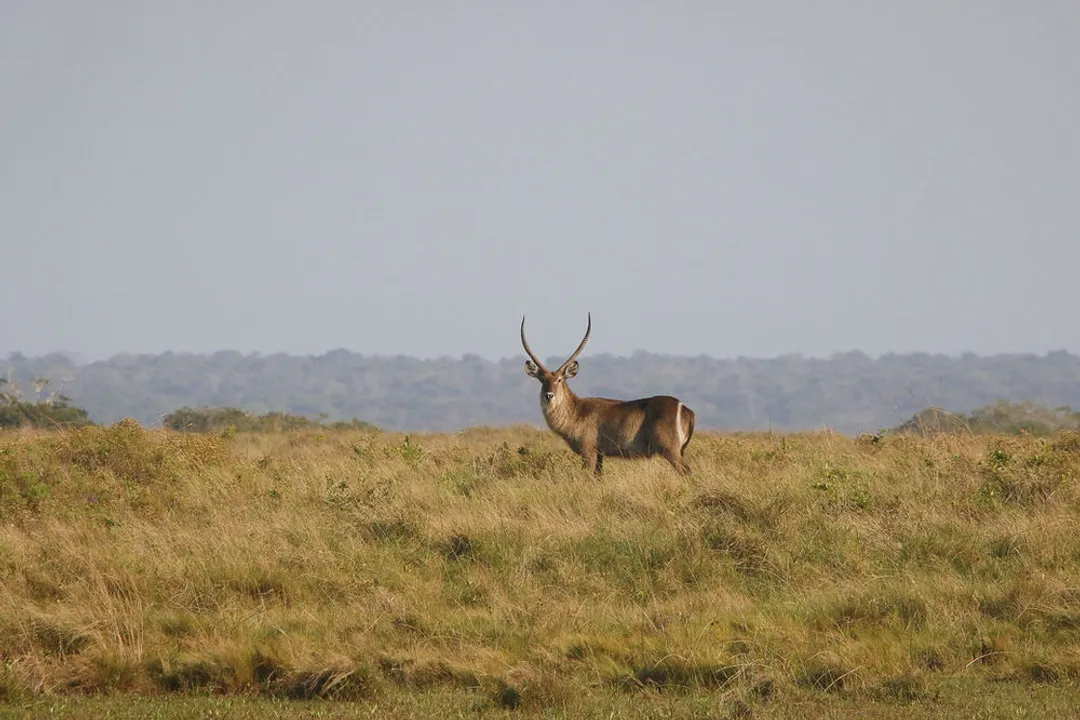
The waterbuck, Kobus ellipsiprymnus, stands as a distinct presence on the African savanna, immediately recognizable not just by its sturdy build and shaggy coat, but by its profound attachment to riparian zones and wetlands. These large antelopes are intrinsically linked to water sources, a defining ecological characteristic that has shaped their morphology and behavior over evolutionary time. While they are classified as "Least Concern" across their range, their reliance on reliable water access offers a clear glimpse into a specific adaptive strategy within the broader context of African ungulate evolution. Unlike some of their more drought-tolerant relatives, the waterbuck's very existence is tethered to the riverbank, suggesting a lineage that specialized early on for environments where permanent water was guaranteed.
# Taxonomy Rank
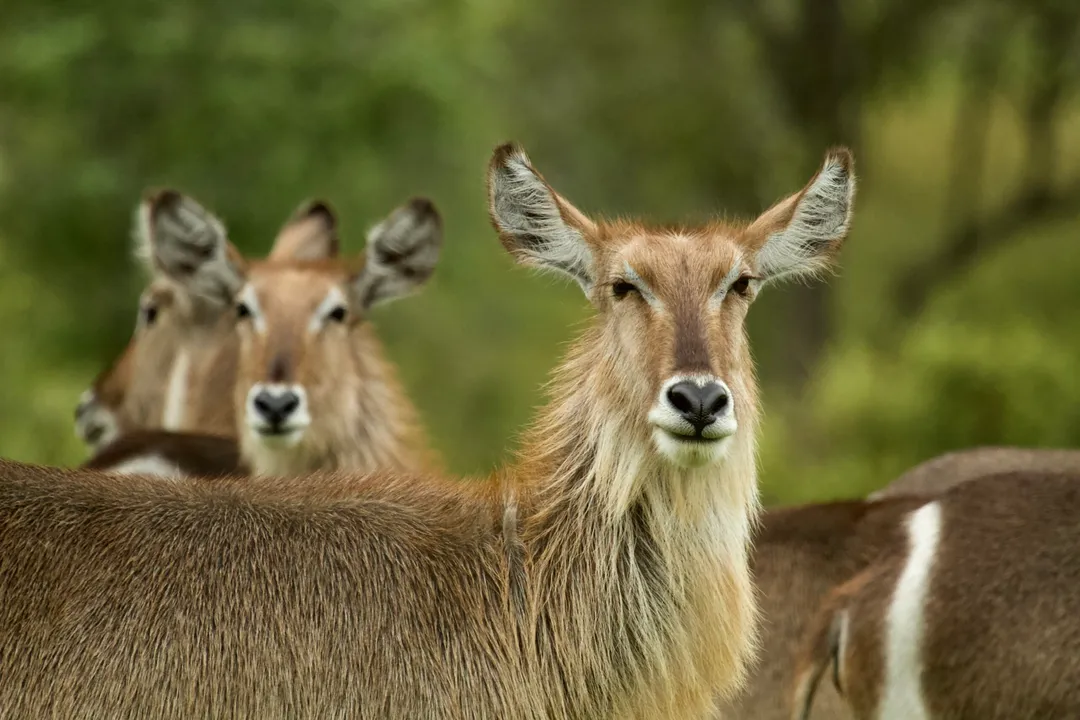
The waterbuck occupies a significant position within the animal kingdom's classification system. It belongs to the family Bovidae, which encompasses all cattle, goats, sheep, and antelopes. More specifically, it is placed within the genus Kobus, a group that includes several medium-to-large African antelopes such as the waterbuck, red lechwe, puku, and kob. Understanding its placement within Kobus is crucial for tracing its evolutionary path, as members of this genus often share similar body plans but occupy distinct ecological niches, frequently separated by habitat preference, particularly water availability.
Recent molecular data and phylogenetic studies have been instrumental in refining the relationships within the Kobus genus, illustrating the diversification events that led to the distinct species we see today. The waterbuck, Kobus ellipsiprymnus, is recognized as a single species, though it manifests in two primary subspecies, representing a key point of variation shaped by geography and time. The morphological features, such as the size, coat texture, and the distinctive white markings, often serve as the external markers of these underlying evolutionary splits.
# Subspecies Divergence
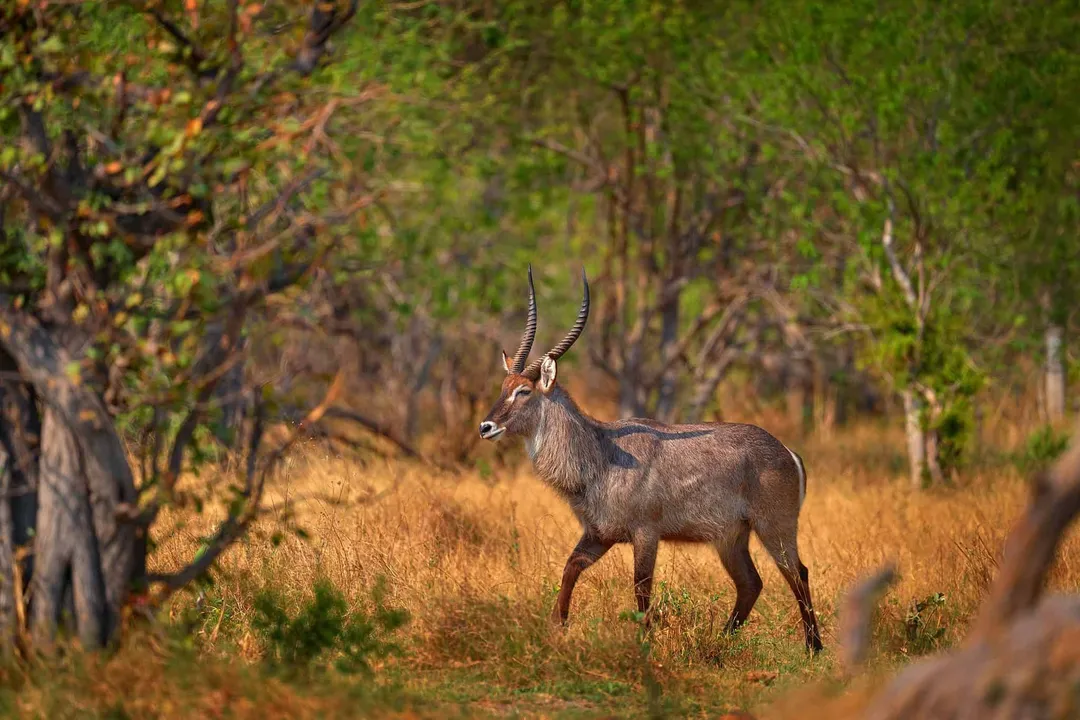
The species Kobus ellipsiprymnus is traditionally divided into two major groups: the common waterbuck (K. e. ellipsiprymnus) and the Defassa waterbuck (K. e. defassa). This split provides a tangible example of how geographical isolation can lead to distinct evolutionary trajectories, even within a single species that requires proximity to water.
The primary physical differentiator lies in the white marking pattern on the rump, which is a hallmark feature across all waterbucks. The common waterbuck exhibits a distinct white ring around the tail. In contrast, the Defassa waterbuck displays a more solid white patch that covers the entire rump area, often lacking the distinct ring shape. This variation in marking, while seemingly superficial, reflects different genetic backgrounds that have become fixed across the subspecies' respective ranges.
When considering the ecological pressures faced by these populations across Africa, one might hypothesize that the variation in the rump marking could correlate with local predator pressures or specific camouflage needs in different riparian habitats, though the exact selective agent for this specific trait remains an area of active observation. It is interesting to note that while they are classified separately, they are both still functionally waterbucks—their core ecological requirements remain the same. This suggests that the environmental pressures that drove speciation in other antelope lineages—such as major shifts in climate or vegetation—may have been less intense on the waterbuck's core requirement: proximity to permanent water.
An analytical perspective reveals that this subspecies divergence, driven by geographic separation, highlights a fascinating evolutionary trade-off. In regions where the ranges of these two forms meet or overlap, hybridization is rare, suggesting that other subtle, yet significant, ecological or behavioral barriers have evolved to maintain the separation, even if the external marking is the most obvious difference. The continued presence of two distinct, yet closely related, forms emphasizes that evolution can operate effectively through gradual divergence driven by localized adaptation, even in species that share a fundamental, non-negotiable ecological constraint like water dependence.
# Coat Adaptation
Perhaps the most striking evolutionary adaptation of the waterbuck is its coarse, shaggy coat. This fur is heavily impregnated with sebaceous oils, giving it a distinctive, somewhat musky or rank odor. This oily coating serves a dual purpose, reflecting its name: it is highly water-repellent, allowing the animal to shed water quickly after emerging from a swim or wallow. This is a critical feature for maintaining body temperature in environments where they spend significant time near or in water.
However, this same characteristic—the strong odor—is often cited as a potential anti-predator measure. The unpleasant smell may make the waterbuck less appealing to predators, such as lions or hyenas, who often rely on scent to track prey. This provides a chemical defense mechanism that complements their physical defense of remaining close to water, where they can often retreat.
It is worth noting the inherent cost of this specialization. While the coat repels water, the animal is generally not considered an agile or enthusiastic swimmer, preferring to retreat into shallow water rather than attempt long aquatic escapes. This suggests the evolutionary pathway favored a deterrent and water-shedding adaptation over the development of superior swimming capabilities, likely because staying near the bank offered the most reliable defense across their ecosystem. The success of this trade-off is evidenced by their historical distribution across much of sub-Saharan Africa.
# Horns and Selection
The males of the waterbuck species bear impressive horns that curve backward and then sweep upward in an open spiral. These horns are heavily ridged, adding to their formidable appearance. Unlike many other antelope species where horn morphology might vary significantly between subspecies, the horns of the waterbuck are relatively consistent in structure across the species, emphasizing that the selection pressures acting on male weaponry may be more generalized across their range than the pressures shaping coat color.
These horns function primarily in intraspecific competition, used in dominance displays and actual combat between males over territory and mating rights. In the structure of territorial male societies, these weapons are essential tools for maintaining control over prime grazing and resting areas situated near vital water sources. The size and symmetry of the horns likely serve as honest signals of male fitness to potential mates and rivals, a classic example of sexual selection driving the evolution of exaggerated secondary sexual characteristics in mammals. The presence of these large weapons indicates a strong evolutionary investment in male-male competition as the primary mechanism for reproductive success.
# Social Structure Evolution
Waterbuck social organization provides another window into their evolutionary strategy shaped by their reliance on water and vegetation. Males generally adopt one of two strategies: they are either territorial or they form bachelor herds.
Territorial males defend an area that includes access to water and good grazing, actively excluding other mature males. This is a high-investment strategy, as holding prime real estate near water is critical for attracting females. In contrast, non-territorial males form bachelor groups, moving between territories until they are dominant or old enough to secure their own patch.
Female waterbucks typically congregate in small herds, often centered around a dominant female, or they may remain solitary. The stability of these female groups, contrasted with the fluidity of the male bachelor herds, suggests that the primary evolutionary driver for female sociality is safety in numbers while grazing near water, rather than complex group defense strategies that might require extensive coordination across large distances.
If we consider the habitat constraint, this social structure appears optimized for resource defense in a predictable, but relatively confined, habitat. Since the key resource—water—is geographically fixed, defending a territory around it becomes a viable long-term strategy for males. If the environment were prone to severe, extended droughts that forced the entire population to migrate great distances, a highly territorial social structure would likely fail, favoring a more migratory bachelor-group dominance structure similar to other wide-ranging bovids. The waterbuck’s long-term survival within the Kobus genus suggests that, for a significant portion of its evolutionary history, localized water availability has been consistently reliable enough to reward territorial defense. This stability is what allows the territorial system to persist, contrasting sharply with evolutionary adaptations seen in species dependent on ephemeral resources.
# Ecological Pressures
The evolutionary path of the waterbuck seems fundamentally defined by a balancing act: maximizing access to preferred forage (grasses) while mitigating the high risk associated with predator exposure near open water. Their habitat preference—well-watered grasslands and savannas—is not accidental; it is the niche they have adapted to dominate.
This niche dictates a relatively slow growth and reproductive cycle compared to some smaller antelope. Females typically give birth to a single calf after a gestation period of around 8 to 9 months. This conservative reproductive output is often characteristic of larger ungulates whose survival depends more on adult longevity and consistent access to high-quality forage than on sheer numbers to offset heavy predation.
The need to remain close to water means that waterbucks are generally slower to flee long distances compared to species that inhabit drier plains. Their primary defense mechanism, therefore, appears to be reliance on their coat oil, their intimidating appearance (especially the horns), and immediate proximity to cover or water refuge.
This entire suite of features—the specialized coat, the fixed social structure around water, and the moderate reproductive rate—paints a picture of an animal that has undergone specialization rather than broad adaptation. Their evolutionary success lies not in mastering the entire savanna, but in becoming supremely adapted to the life zone immediately adjacent to perennial African water bodies. The absence of significant variation in their fundamental ecological requirement across the known subspecies further suggests that this ancient specialization has been highly successful and evolutionarily conserved.
Related Questions
#Citations
Waterbuck - Wikipedia
Waterbuck - Kobus ellipsiprymnus - A-Z Animals
The Uniqueness of Waterbuck - Londolozi Blog
Chromosome-level genomics and historical museum collections ...
Kobus ellipsiprymnus (waterbuck) - Animal Diversity Web
Chromosome‐Level Genomics and Historical Museum Collections ...
Discover the Majestic Cobe Defassa Waterbuck at Fathala Wildlife ...
Persistent Gene Flow Suggests an Absence of Reproductive ...
Animals I Love – The Waterbuck | The Go-To Guy
Wild Facts Sabi Sabi Private Game Reserve | Waterbuck