What evidence commonly points to mollusks being a significant food source for wild Wood Turtles?
Answer
Snail shell fragments stuck to the beak
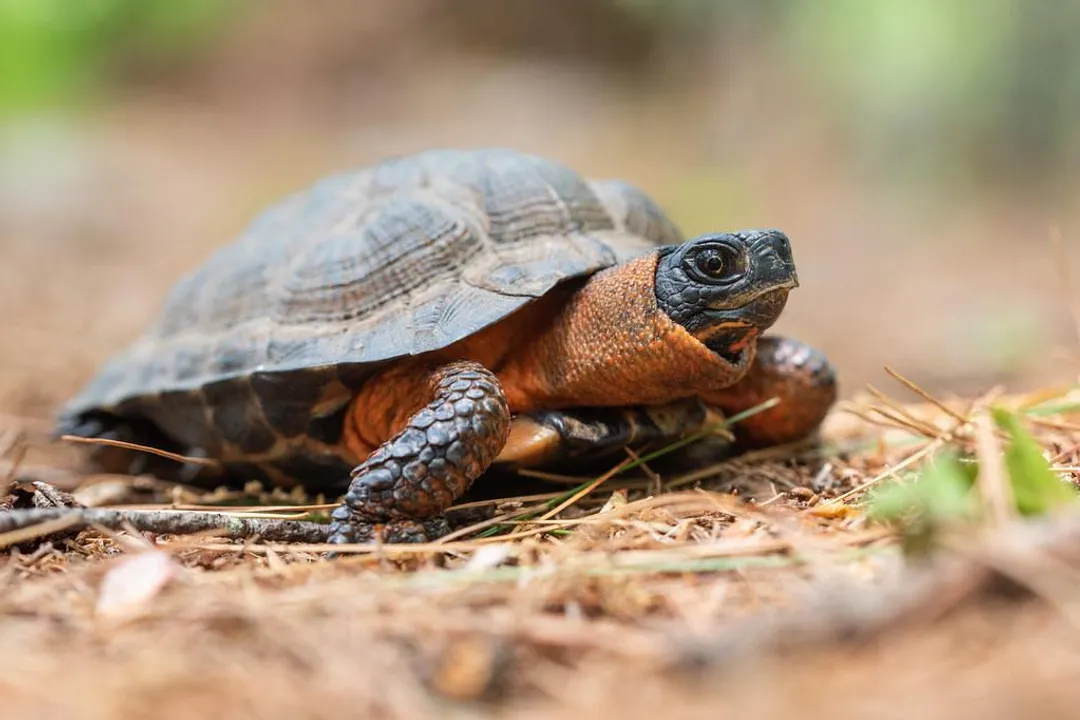
Observations in the natural habitat of the Wood Turtle provide direct evidence of their dietary preferences. A common indicator that mollusks, such as snails, form a significant portion of their intake involves examining the turtle itself. Specifically, the presence of fragments of snail shells adhering to the Wood Turtle’s beak serves as a clear physical sign that the turtle has recently consumed these shelled creatures, highlighting mollusks as a meaningful part of their animal protein intake.
Related Questions
What specialized foraging behavior do Wood Turtles use to draw out subterranean prey?How does the Wood Turtle's diet shift regarding animal protein as it matures?Which specific wild berry is mentioned as part of the Wood Turtle's diverse plant diet?Which dark, leafy green is recommended for inclusion in a captive Wood Turtle's vegetable component?What non-food item provides constant access to calcium within a Wood Turtle enclosure?What ratio of protein food to vegetables is suggested for an established adult Wood Turtle?Keepers must avoid offering captive Wood Turtles food items described as being too what?What evidence commonly points to mollusks being a significant food source for wild Wood Turtles?What is the recommended balanced ratio for Wood Turtle hatchlings under six months old?What example of carrion might a wild Wood Turtle consume as a source of animal protein?Which specific insect is listed as a suitable animal-based protein source for captive Wood Turtles?