What environmental pressures drive the diversification seen between mainland and Tasmanian Red-Necked Wallaby populations?
Answer
Temperature and the cooler environment of the island state
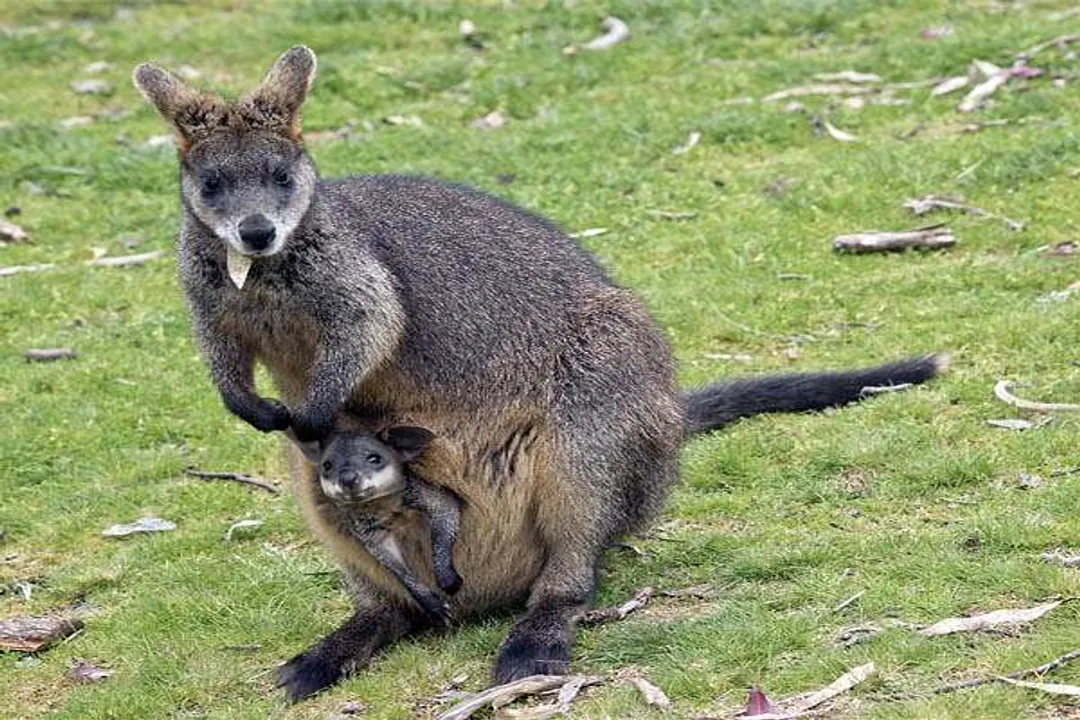
The existence of distinct subspecies within the Red-Necked Wallaby, such as the larger Tasmanian subspecies, serves as an observable example of ongoing evolutionary processes driven by local environmental selection pressures. The Tasmanian population has adapted specifically to the cooler temperatures characteristic of that island environment. These regional variations demonstrate how factors like climate, vegetation density, and local predation sculpt populations following their initial evolutionary divergence from ancestral forms, illustrating adaptive radiation in a microcosm.
Related Questions
What anatomical characteristics define wallabies as members of Macropodidae alongside kangaroos?What is the scientific genus of the Red-Necked Wallaby, Notamacropus rufogriseus?What does ongoing hybridization observed in rock wallabies imply about species formation models?What is the main driver for modern understanding of wallaby relationships versus skeletal features?How does the current definition of a "wallaby" function taxonomically within Macropodidae?What environmental pressures drive the diversification seen between mainland and Tasmanian Red-Necked Wallaby populations?What does the size spectrum of macropods suggest about the evolutionary trajectory of large kangaroos?What is the primary distribution area for the Agile Wallaby (*Notamacropus agilis*)?How does hybridization among rock wallabies complicate mapping the macropod family tree?What evolutionary event is hinted at by examining fossil relatives of ancient wallabies?