How does the current definition of a "wallaby" function taxonomically within Macropodidae?
Answer
As a convenient descriptor for medium-sized macropods rather than a strict taxonomic unit
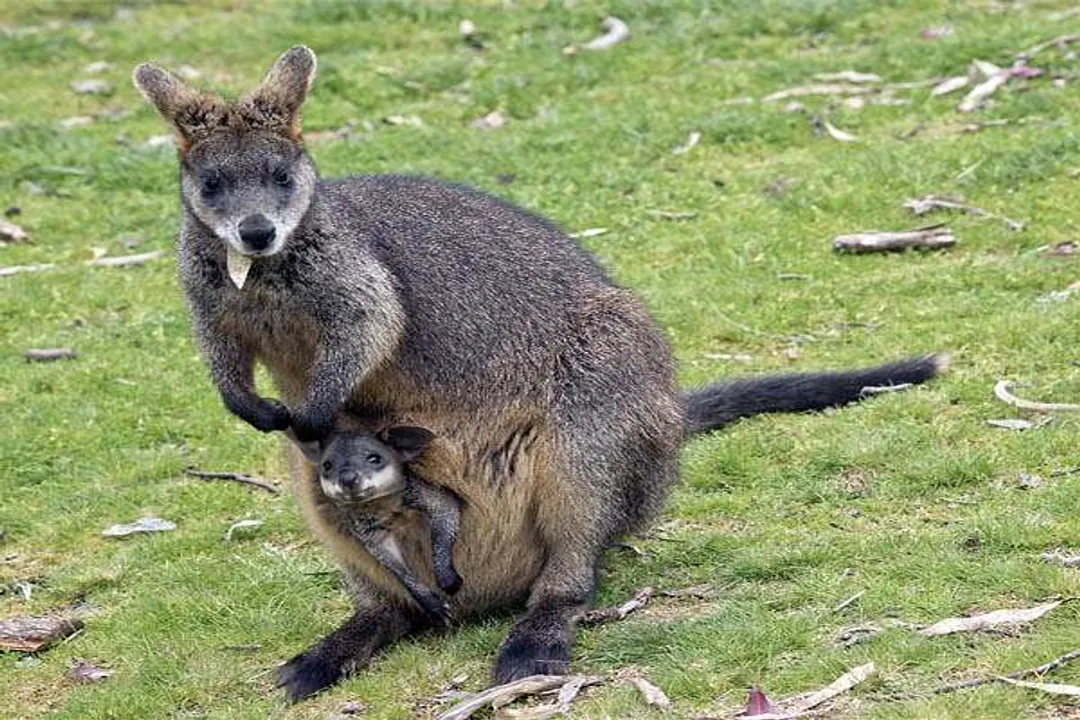
The term 'wallaby' does not represent a single, cohesive, monophyletic taxonomic unit within the large *Macropodidae* family, which also includes kangaroos, tree-kangaroos, and pademelons. Instead, the classification functions more practically as a general term used to describe macropods that fall into a medium size range, situated between the smaller relatives and the largest kangaroos. This grouping is heavily influenced by morphology and convenient size differentiation, rather than adhering strictly to a unified genetic lineage dictated only by shared ancestry.
Related Questions
What anatomical characteristics define wallabies as members of Macropodidae alongside kangaroos?What is the scientific genus of the Red-Necked Wallaby, Notamacropus rufogriseus?What does ongoing hybridization observed in rock wallabies imply about species formation models?What is the main driver for modern understanding of wallaby relationships versus skeletal features?How does the current definition of a "wallaby" function taxonomically within Macropodidae?What environmental pressures drive the diversification seen between mainland and Tasmanian Red-Necked Wallaby populations?What does the size spectrum of macropods suggest about the evolutionary trajectory of large kangaroos?What is the primary distribution area for the Agile Wallaby (*Notamacropus agilis*)?How does hybridization among rock wallabies complicate mapping the macropod family tree?What evolutionary event is hinted at by examining fossil relatives of ancient wallabies?