Wallaby Evolution
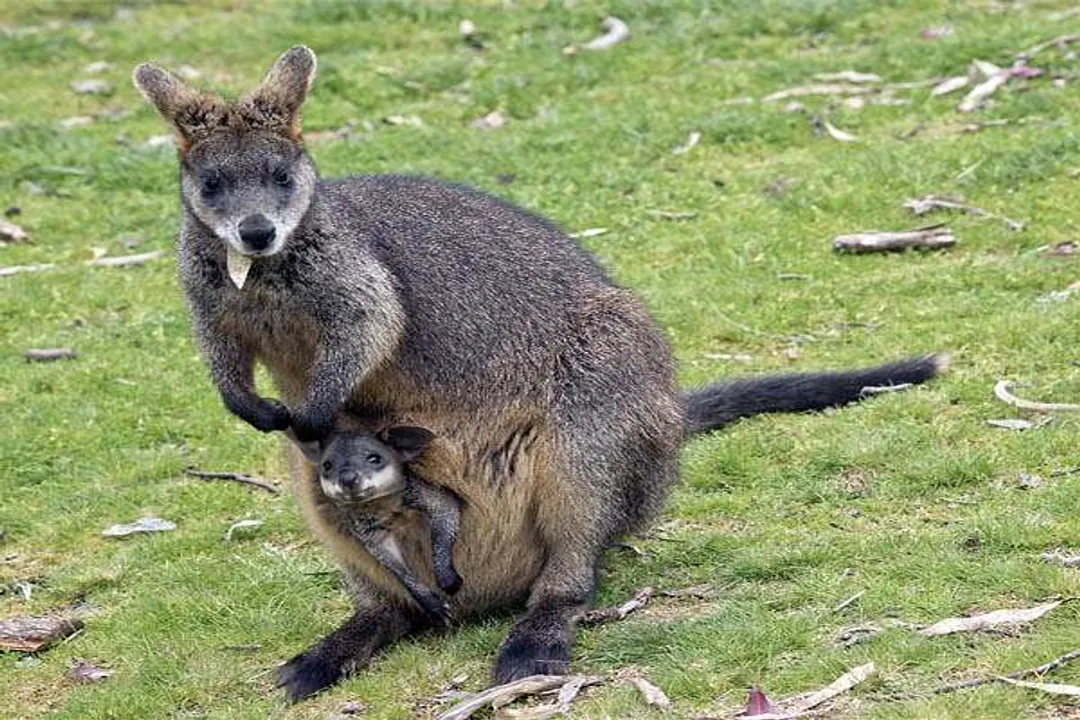
The story of the wallaby is deeply interwoven with the broader saga of Australian marsupials, representing a lineage that branched off early in the evolution of the kangaroo family, Macropodidae. [1] Generally defined as macropods smaller than a full-sized kangaroo, wallabies encompass a diverse array of species that share the characteristic large hind feet and hopping locomotion of their larger cousins. [1] These medium-sized marsupials are distributed across various habitats, from dense forests to rocky outcrops, showcasing remarkable evolutionary adaptation within the family. [1]
# Macropod Origins
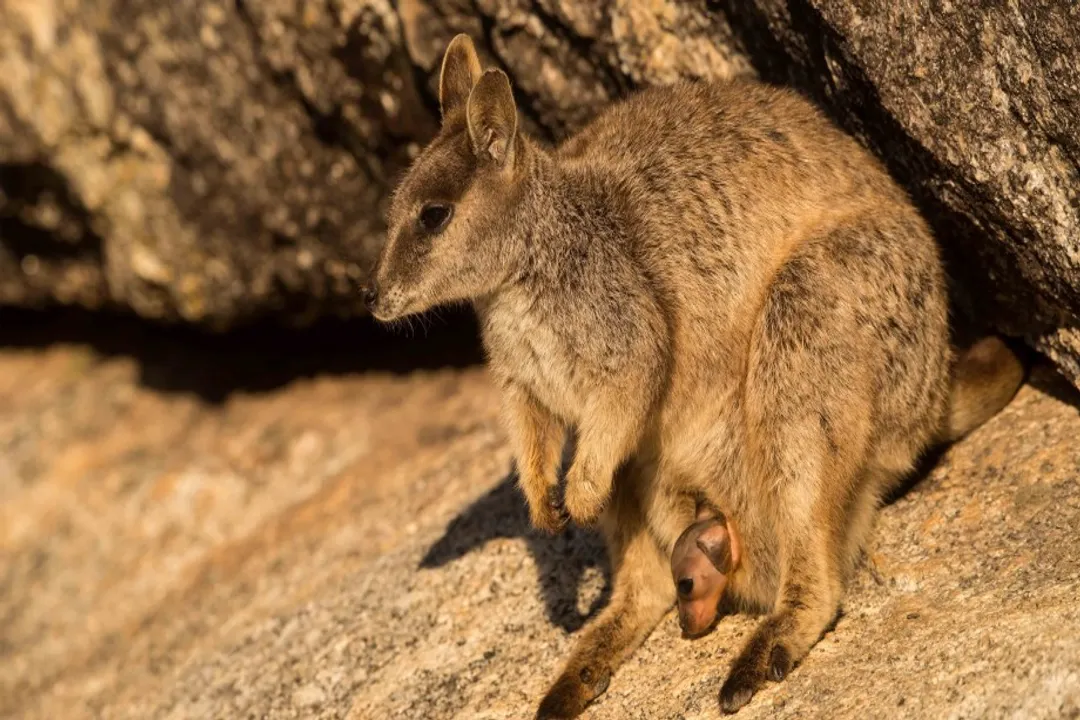
The evolutionary path leading to modern wallabies is ancient, tracing back to the time when marsupials first established dominance on the Australian continent. [6] Evidence from ancient fossil relatives reveals a significant evolutionary divergence point within this family. [6] One key piece of that history involves an ancient ancestor, a wallaby relative, whose remains illuminate an important evolutionary leap that occurred in the larger kangaroo lineage. [6] This suggests that the ancestral stock was perhaps more uniform than current classifications suggest, with size and specialized movement evolving later in distinct branches. [6]
The family Macropodidae is large, containing kangaroos, wallabies, tree-kangaroos, and pademelons. [1] Within this grouping, wallabies are not a single, neat taxonomic unit but rather a grouping based largely on size and morphology. [1] For instance, the Red-Necked Wallaby, scientifically known as Notamacropus rufogriseus, belongs to the genus Notamacropus. [4] Its taxonomy places it firmly within this group, illustrating the close genetic relationships despite external physical differences between various wallaby species. [4]
# Size Diversity
While the popular image often contrasts the wallaby's moderate size against the towering kangaroo, the reality is that the wallabies occupy a broad middle ground in the macropod size spectrum. [1] This size difference, while noticeable, is not the sole defining characteristic separating them from kangaroos when viewed through a deep evolutionary lens. [1] It is worth considering that the current definition of a "wallaby" often functions more as a convenient descriptor for medium-sized macropods than a strict monophyletic group dictated solely by genetics. [1] If we look at the evolutionary trajectory, many of the largest kangaroos represent later, specialized enlargements from a smaller ancestral template, a template that the modern wallabies still closely resemble. [6] This continuous spectrum of size suggests that adaptation to local environments—such as the need for greater bulk in open plains or agility in dense brush—drove the separation and diversification within the family. [1]
# Rock Wallaby Shifts
The evolution of specific groups, such as the rock wallabies, presents some of the most fascinating challenges to standard models of species formation. [8] Rock wallabies, adapted to harsh, rocky terrain, have shown surprising genetic fluidity. [8][10] Research on these specialized marsupials has indicated instances of interbreeding between closely related species, leading scientists to reconsider long-held assumptions about how new species arise. [8][10]
This finding, that hybridization—the mixing of genes between species that are supposed to be reproductively isolated—is occurring, forces an evolution re-think. [8][10] In many evolutionary scenarios, once species diverge significantly enough to be classified separately, gene flow should cease or be heavily restricted. [8] The evidence suggesting ongoing or relatively recent interbreeding among rock wallabies implies that speciation in these environments might be more gradual or porous than previously modeled. [10] If evolutionary boundaries are more easily crossed than once thought in these marsupials, it changes how we track divergence paths across the whole family, suggesting that some groupings once considered distinct might share a much more recent common ancestor than assumed. [8]
This hybridization phenomenon introduces a layer of complexity when mapping the family tree. It suggests that environmental pressures can maintain distinct morphological groups (like those adapted to rocky versus scrubland habitats) even when reproductive barriers are incomplete. [10] For those tracking macropod evolution, it means that genetic analysis must account for this potential mixing when determining the precise timing of splits between genera or species. [3]
# Genomic Underpinnings
Modern understanding of wallaby evolution is increasingly driven by molecular data rather than just skeletal morphology. [3][7] Comparing the DNA sequences of different macropods allows researchers to map their genetic relationships with higher resolution. [3] This genomic approach helps confirm the deep branching patterns seen in the fossil record and also clarifies relationships that morphology alone might obscure. [7]
For instance, studies aiming to map the entire macropod family tree have used vast amounts of genomic data to resolve ambiguities in how different genera relate to one another. [3] These molecular studies often corroborate the idea that the diversification happened over millions of years across the Australian landmass, coinciding with climatic shifts. [7] While the specific results might delve into the technicalities of chromosomal rearrangements or specific gene families, the takeaway for the general reader is that our confidence in the wallaby's evolutionary placement is cemented by its internal genetic code. [3][7]
# Modern Examples of Divergence
Examining specific, extant wallabies illustrates the result of this long evolutionary process. The Agile Wallaby (Notamacropus agilis) is found across northern Australia and parts of New Guinea, thriving in diverse habitats ranging from woodlands to grasslands. [2] Its success lies in its adaptability, a trait likely inherited and refined over eons of environmental pressure. [2]
Similarly, the Red-Necked Wallaby (N. rufogriseus) offers another case study. [4] This species shows distinct subspecies, such as the Tasmanian subspecies, which is often larger and has adapted to the cooler environment of the island state. [4] The existence of these regional variations underscores how environmental selection pressures—such as temperature, vegetation density, and predation—act upon wallaby populations following their initial evolutionary split from ancestral forms. [1]
One interesting point that arises when looking at these modern variations is the concept of adaptive radiation in microcosm. Consider the Red-Necked Wallaby subspecies: if a hypothetical island population, like those in Tasmania, were isolated for a long enough period, the subtle genetic shifts accumulated due to local climate could eventually solidify into full speciation, mirroring the pattern that created the diversity seen across the entire macropod family over geological timescales. [4] The differences between mainland and Tasmanian populations provide a living, observable laboratory for evolutionary processes that played out on a grander scale across the continent. [4]
# Rethinking Evolutionary Boundaries
The evidence from the rock wallabies, specifically regarding interbreeding, suggests a need for caution when applying rigid definitions to evolving life forms. [8][10] When we map the wallaby family tree, we look for clean breaks where one lineage stops contributing genes to another. [8] The findings challenge this clean model, suggesting that a "wallaby" might sometimes represent a mosaic of genetic exchange rather than a purely distinct branch. [10]
For general readers interested in evolution, this means that the process is often messier and more continuous than simplified diagrams suggest. It implies that environmental selection can powerfully shape appearance and behavior (leading to the classification as different species or wallabies) even if the underlying genetic isolation isn't absolute. [8] When comparing an ancient fossil ancestor that hinted at a major evolutionary leap [6] with modern genetic data showing current hybridization, [10] we see the dynamic nature of evolution in action—it involves both large, punctuated shifts and subtle, ongoing blending. [3]
The sheer breadth of niche occupation, from the arid zones to dense rainforests, is a testament to the ancient adaptability baked into the wallaby blueprint. [1] They remain a living library detailing the incredible success story of Australian marsupials following their continental separation. [6]
Related Questions
#Citations
Wallaby - Wikipedia
Agile Wallaby - The Australian Museum
Evolutionary history of novel genes on the tammar wallaby Y ...
Red-necked Wallaby (Notamacropus rufogriseus) Fact Sheet
Vullaby Pokédex: stats, moves, evolution & locations
Ancient wallaby ancestor reveals evolutionary leap for kangaroos
Limited Introgression between Rock-Wallabies with Extensive ...
Rock-wallaby interbreeding causes rethink on evolution - Phys.org
Evolution in Hawaii? | Scripture On Creatio
Rock-wallaby interbreeding causes rethink on evolution