What ecological service makes terrestrial isopods vital in forest environments?
Answer
Decomposers breaking down leaf litter and detritus
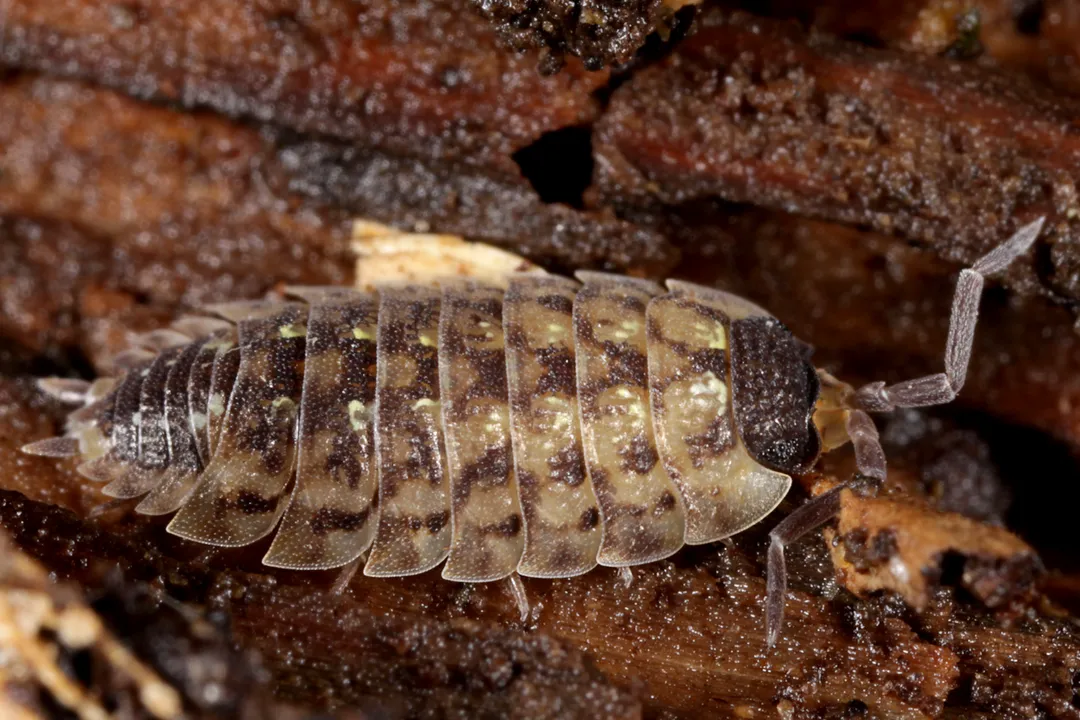
Terrestrial isopods play an ecologically vital role as decomposers, particularly within forest ecosystems. Their function involves fragmenting and consuming dead plant material, such as leaf litter and detritus, which accelerates the process of decomposition. By consuming this material, often after microbes have started the breakdown, they mechanically process organic matter and effectively cycle essential nutrients back into the soil structure. This process is critical for maintaining soil health and regulating the speed at which the forest floor breaks down.
Related Questions
What major taxonomic group do woodlice belong to, unlike insects?What two life-threatening hurdles did the move to dry land present?What is the suborder classification for terrestrial woodlice?What evolutionary term describes gills co-opted for terrestrial respiration?Which morphology describes sow bugs regarding their tail appendages (uropods)?What must remain wet for woodlice to breathe using pseudotracheae?What trait was already established in ancient sea woodlice before land colonization?What distinction separates Pill Bugs from Sow Bugs regarding their morphology?What ecological service makes terrestrial isopods vital in forest environments?What characteristic is shared by the pill millipedes and true woodlice?