What does a large population density of Yellow Bullhead potentially indicate about a pond's ecological status?
Answer
A system experiencing increasing nutrient loading, leading to eutrophication
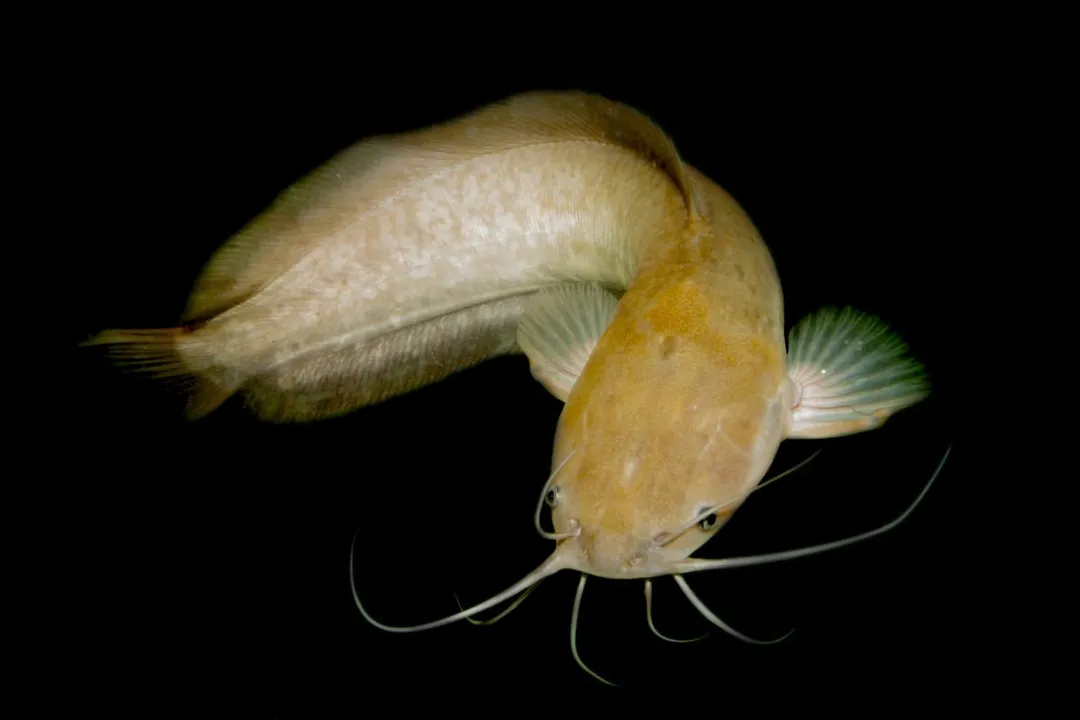
The presence and abundance of Yellow Bullheads can serve as an ecological marker reflecting changes within their aquatic environment. Because these fish flourish in nutrient-rich conditions that foster abundant invertebrate populations and high rates of organic matter breakdown—processes that naturally consume oxygen—a high density often suggests that the system is experiencing significant nutrient loading, which leads to eutrophication. While these conditions might drive out more delicate species, the resilient Yellow Bullhead often remains or actively flourishes in such established, or perhaps deteriorating, nutrient-rich environments.
Related Questions
What is the typical coloration of the Yellow Bullhead's belly region?How many sensory barbels surround the mouth of the Yellow Bullhead, aiding in dark environments?How does the tail fin morphology of the Yellow Bullhead generally compare to that of a Channel Catfish?What is the usual range of soft rays found in the long anal fin of the Yellow Bullhead?Yellow Bullheads thrive best in which specific type of water flow condition?What significant advantage regarding aquatic respiration does the Yellow Bullhead possess over many salmonids?What does a large population density of Yellow Bullhead potentially indicate about a pond's ecological status?How does the smaller average size of the Yellow Bullhead influence its utilization of habitat structure?What key dietary trait defines the feeding strategy of the omnivorous Yellow Bullhead?Why are strong scent profiles crucial for effective bait presentation when targeting Yellow Bullheads in murky water?