How big do yellow bullhead catfish get?
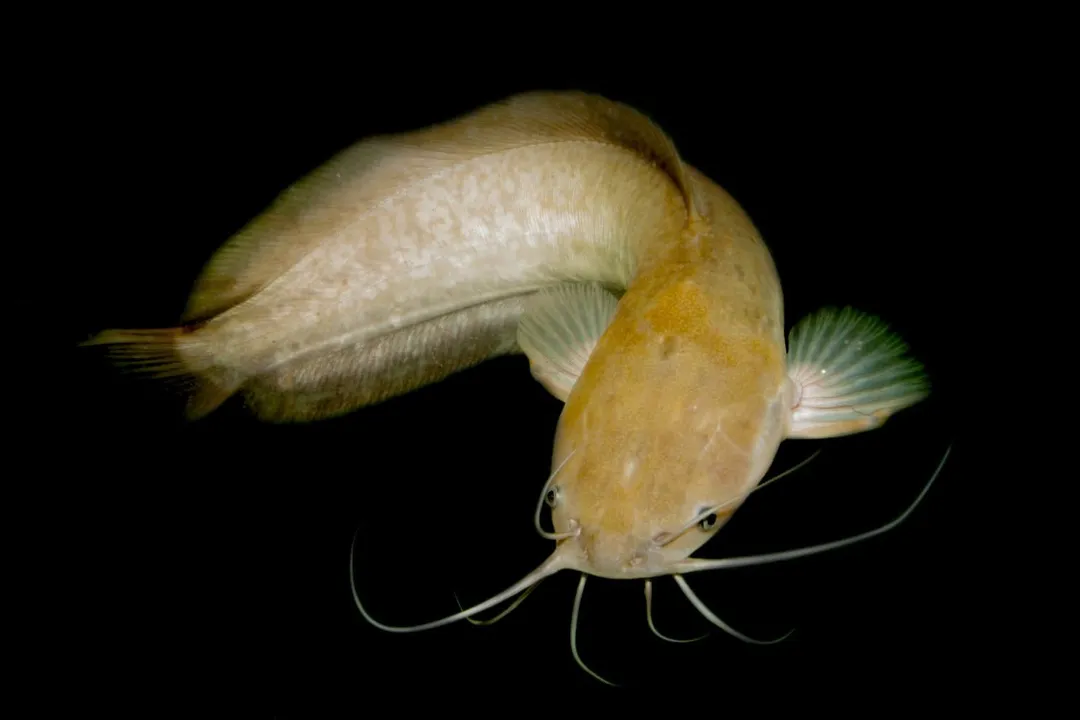
The size an Ameiurus natalis, or Yellow Bullhead Catfish, achieves is often less than what anglers hope for when they target them, leading to frequent discussion about catching "babies" rather than trophies. While they are widely considered a medium-sized catfish species, the difference between the typical specimen and a true giant can be quite significant based on where you are fishing and the conditions they live in. Most reports indicate that the Yellow Bullhead rarely exceeds 2 pounds in weight, with many specimens caught by anglers falling into this lower range.
# Typical Dimensions
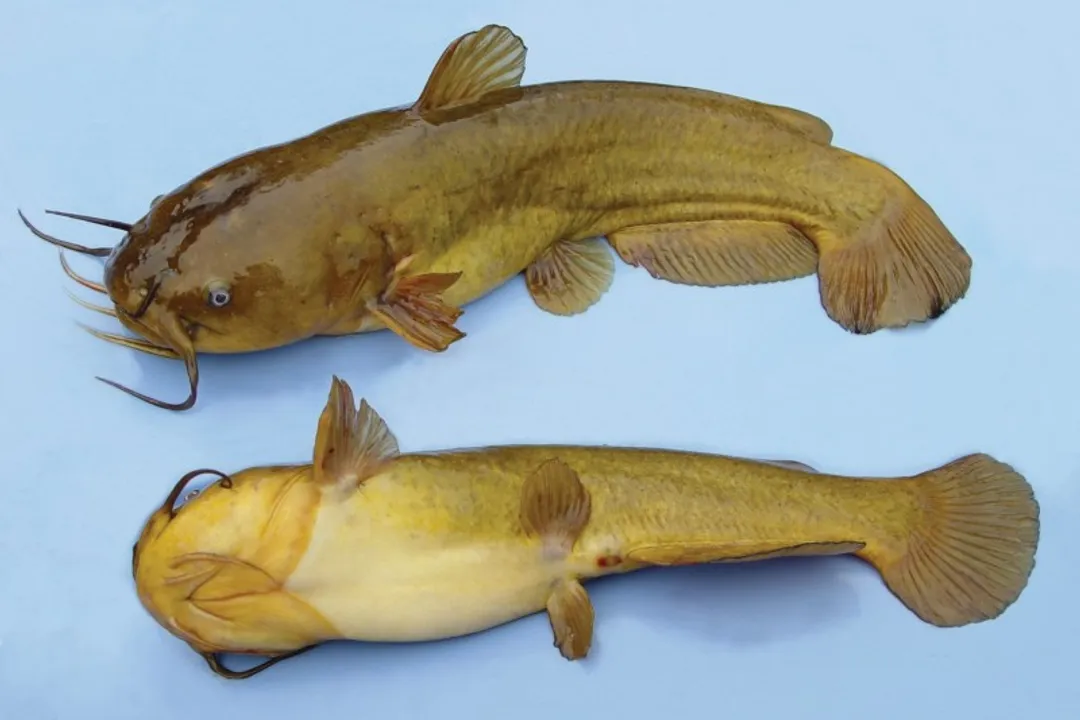
For most anglers across their wide distribution in the central and eastern US, the Yellow Bullhead is expected to be a relatively small catch. Common lengths generally range from 6 to 14 inches total length (TL). In many areas, the average adult size is often quoted in the $7$ to $12$ inch range. Missouri data suggests adults commonly measure between $7$ and $13.5$ inches, with a maximum weight near $2$ pounds. Even in Florida, where larger specimens are recorded, the "Big Catch" minimum is set at $14$ inches or . This suggests that an average catch often sits right around the $1$ to mark.
# Maximum Size Potential
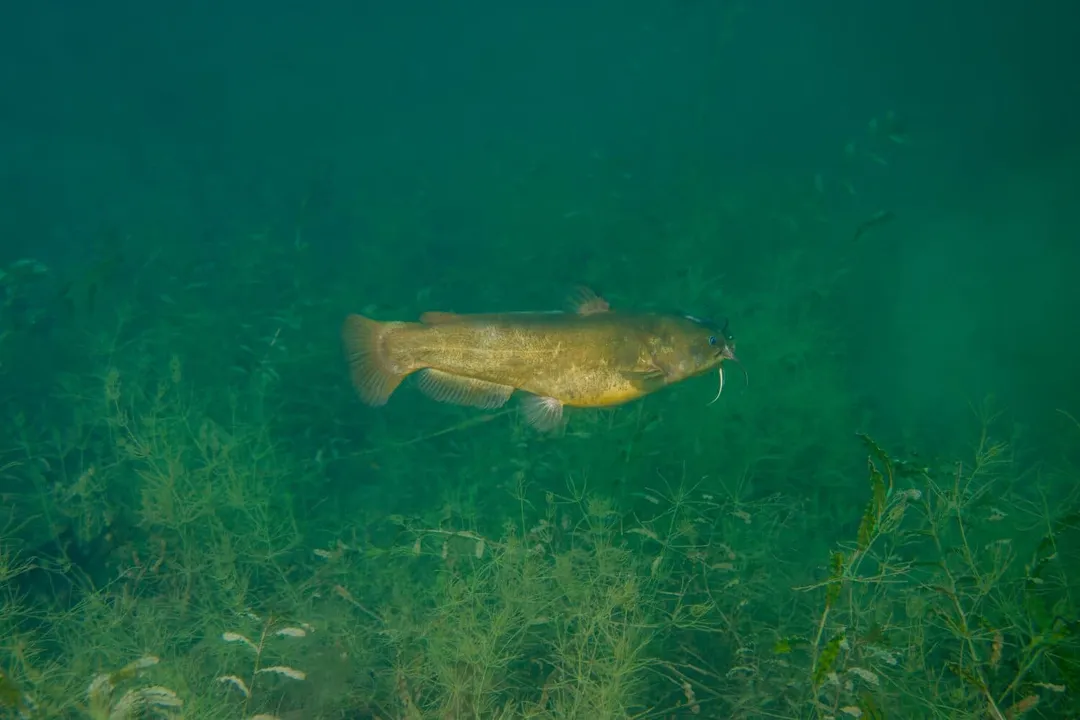
While the average catch is small, the species has a documented potential for growth that surprises many who dismiss them as exclusively panfish size. The maximum potential is where the sources show the most variation, suggesting size attainment is heavily dependent on local environment and genetics.
The absolute maximum length cited comes from general scientific reference, stating that Yellow Bullheads may grow to a maximum total length of 60 centimeters (24 inches). This $24$-inch potential is significantly larger than what is reported in specific state records, which offer a more grounded perspective on what is achievable.
When looking at maximum recorded weights, the upper limit appears to hover between $4$ and $6.5$ pounds:
- Kentucky fisheries note that adults grow to about 18 inches and .
- The Connecticut record points to a World Record of $4.3$ pounds.
- In Florida, the stated state record is $5.05$ pounds.
- Anecdotal, though sometimes cited, maximums suggest they can reach up to (approximately ).
It's fascinating to observe that in a state like Missouri, where they are noted to be the most common bullhead in certain regions, the maximum reported length is around $17$ inches and the maximum weight is around $2$ pounds. This suggests that while the species can hit $18$ inches or more elsewhere, the typical population structure in that particular region strongly favors smaller individuals. Considering that Missouri notes that yellow bullheads taken by anglers are on average larger than black bullheads, it implies that might be an achievable trophy size in some systems, even if the theoretical maximum is much higher.
# Comparing Species Size
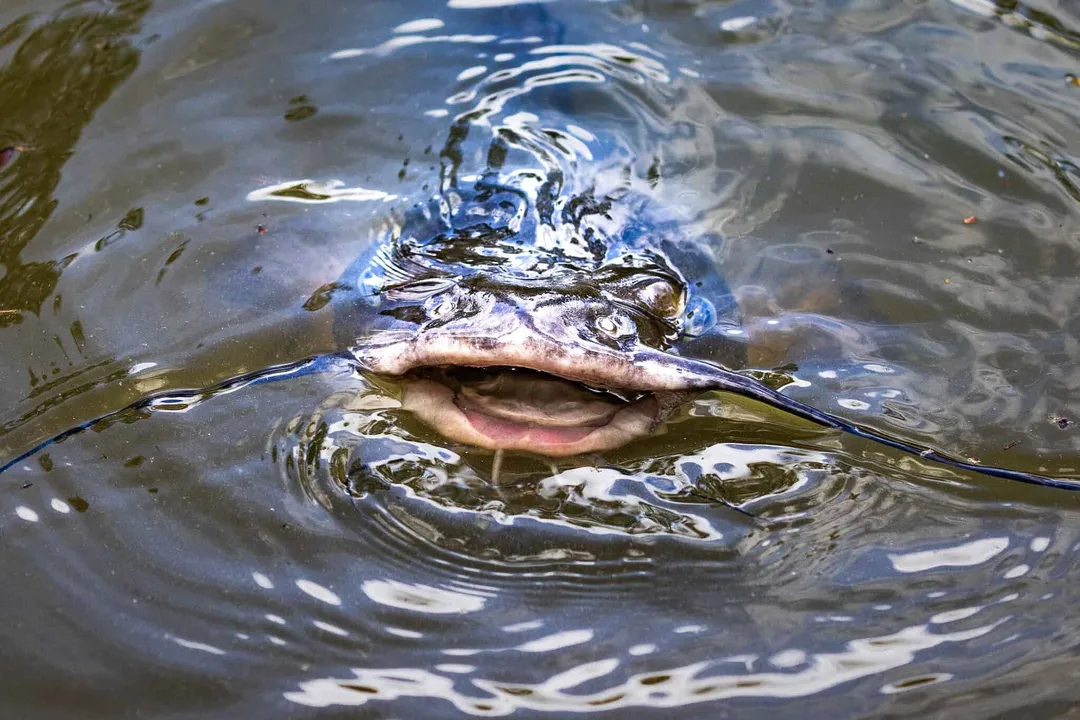
To fully grasp the size of the Yellow Bullhead, it helps to compare it to its close relatives, the Black Bullhead (A. melas) and the Brown Bullhead (A. nebulosus). Bullhead catfishes, as a group, are generally characterized as chubby catfish that rarely exceed 16 inches in length.
The Yellow Bullhead often holds a slight advantage in size over the Black Bullhead. While both species are widespread, Missouri notes that the Yellow Bullhead taken by fishers are, on average, larger than the black ones they catch. While specific maximums for the other two species aren't detailed here, the general statement that the Yellow Bullhead is the common bullhead in the Ozarks and Bootheel lowlands, while the Black Bullhead is better represented in the north and west, sets a geographical context for expected size variation. The Yellow Bullhead's tendency to prefer clearer water compared to the Black Bullhead might also correlate with better overall health and growth, assuming cleaner water supports a more robust food chain.
# Factors Influencing Growth
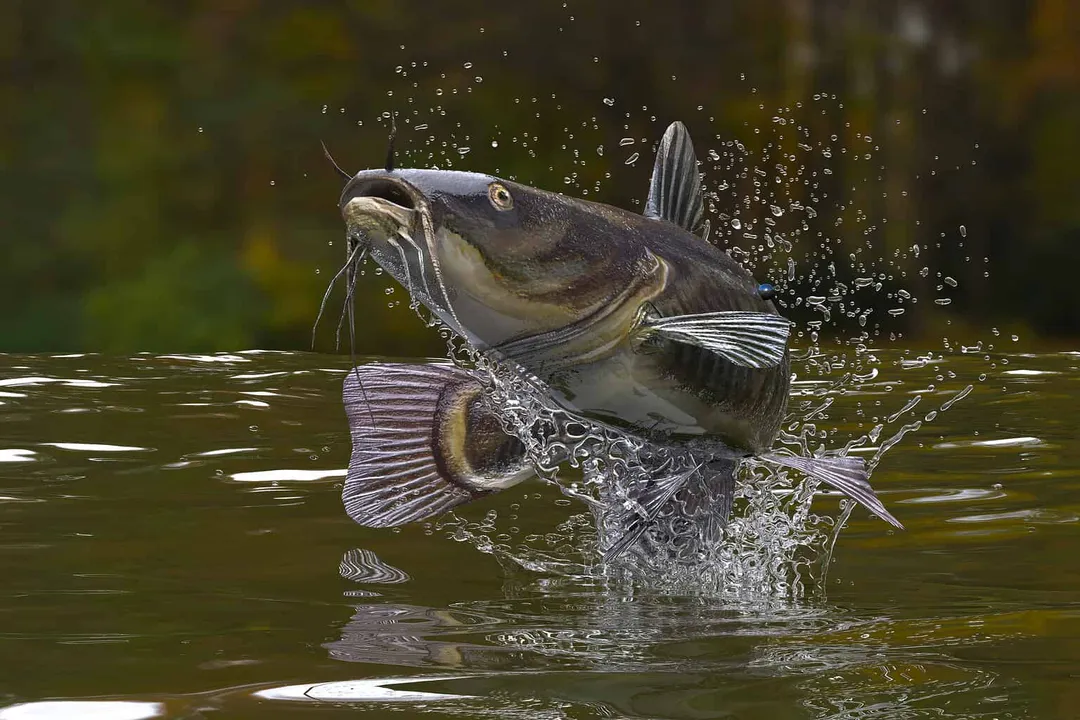
Why does one Yellow Bullhead reach $5$ pounds while another stays under $1$ pound? The sources point toward habitat quality and longevity as key determining factors. Yellow Bullheads are known for their adaptability, tolerating environments that stress other catfish, including areas with poor oxygenation or high siltation. This hardiness allows them to persist where other fish might not, but it may also limit maximum growth potential.
In Florida, a study on their life cycle noted individuals living up to 12 years. This longevity directly supports the potential for larger sizes. A fish that reaches $12$ years of age has had ample opportunity to accumulate mass, especially if food resources are high, which is likely why the Florida state record is so substantial at . Conversely, the Missouri observation that few individuals live more than about 5 years in the wild helps explain why their maximum reported size is lower at $17$ inches and . A shorter lifespan inherently caps the potential for reaching the species' physical limits, regardless of food availability.
It is an interesting ecological observation that while the Yellow Bullhead is an opportunistic omnivore, consuming worms, insects, snails, and minnows, they reportedly consume more aquatic vegetation compared to the Black and Brown Bullheads. This dietary difference could mean they are utilizing a different niche, which, in environments where aquatic plants are abundant, could lead to slower growth if invertebrates and small fish—their preferred prey—are scarcer, or it could simply mean they are better foragers in low-quality habitats.
# Angling Implications for Size
For anglers seeking to hook into one of these larger specimens, understanding their habits and common sizes is essential context. Since they are often caught when they are young and small, perhaps $8$ or $9$ inches long, targeting locations known for producing records is key. The fact that they are common in sluggish creeks and rivers with gravel bottoms, but also thrive in weedy, calm areas, means that the best spots for a $12$-inch fish might be different from where a $4$-pounder lives.
If you are fishing in waters where $18$-inch specimens have been documented, you should approach the fishing session with the mindset that you are targeting a genuinely rare fish. Keep in mind that the general advice for catching them—using cut bait, worms, crickets, or doughballs fished on the bottom at night—applies regardless of the size you are hoping for. The experience of hooking a Yellow Bullhead, even a smaller one, offers many hours of fishing pleasure in waters where other angling opportunities might be scarce. The key to potentially finding a true giant lies in finding waters where conditions allow for longevity, perhaps those with stable, cleaner environments that promote a longer life span over the highly tolerant, yet potentially shorter-lived, populations in polluted areas.
Related Questions
#Citations
Yellow bullhead - Wikipedia
Yellow Bullhead - Kentucky Department of Fish & Wildlife
How big can a yellow belly catfish get? We're tired of ... - Reddit
Yellow Bullhead - FWC
Yellow Bullhead: Adaptable American Catfish Fish Facts - A-Z Animals
Yellow Bullhead - CT.gov
Yellow Bullhead - Missouri Department of Conservation