What dietary shift defines the Yellowhammer’s ecological role during the breeding season for provisioning young?
Answer
They become generalist insectivores, consuming invertebrates like caterpillars and grasshoppers
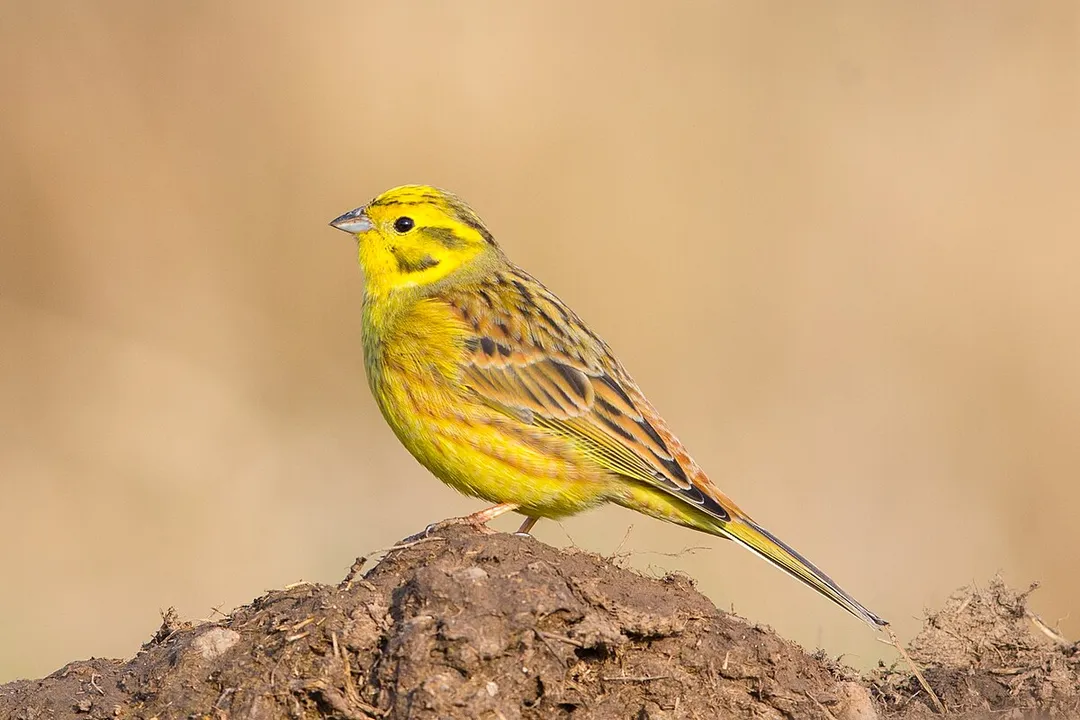
Although the Yellowhammer is strongly associated with a diet centered on seeds and grains, particularly cereals such as wheat and oats during the non-breeding winter months when they forage in flocks, their feeding behavior changes significantly during the breeding season. To provision their altricial chicks, the adults adopt the role of generalist insectivores. This crucial adaptation requires them to consume invertebrates, specifically mentioning prey items such as grasshoppers and caterpillars, ensuring the rapidly growing young receive necessary protein levels dictated by their taxonomic niche within the *Emberizidae* family.
Related Questions
What does the species epithet *citrinella* in *Emberiza citrinella* denote?In which publication and year did Carl Linnaeus assign the binomial name *Emberiza citrinella*?What Order classifies the Yellowhammer based on its specialized foot structure for gripping branches?Which taxonomic family groups the Yellowhammer with the Old World buntings?Which species is considered the Yellowhammer's closest relative within the genus *Emberiza*?What phenomenon occurs where the ranges of the Yellowhammer and Pine Bunting overlap?What is the conservation dichotomy observed for *Emberiza citrinella* between global and regional assessments?Which Yellowhammer subspecies is found across Ireland, the Isle of Man, and Great Britain, excluding the southeast?How do the males of the eastern subspecies *E. c. erythrogenys* generally differ from the nominate *E. c. citrinella* form?What dietary shift defines the Yellowhammer’s ecological role during the breeding season for provisioning young?