How do the males of the eastern subspecies *E. c. erythrogenys* generally differ from the nominate *E. c. citrinella* form?
Answer
They are paler, less heavily streaked, and have brighter yellow crowns and throats
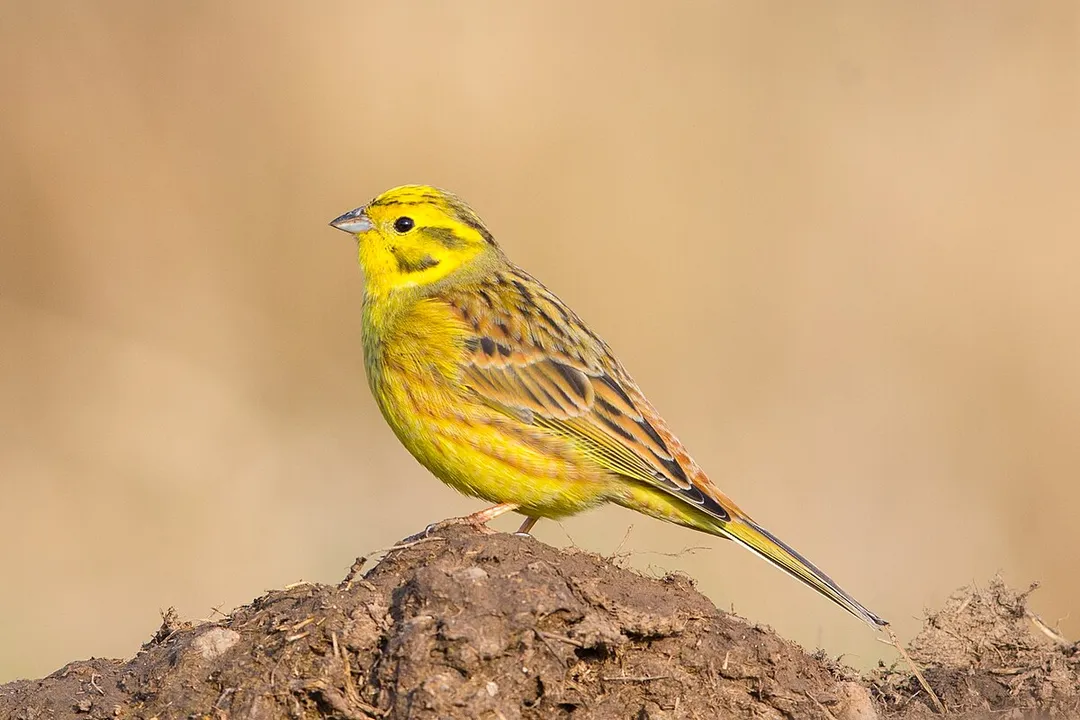
Males belonging to the eastern subspecies, *E. c. erythrogenys*, exhibit several distinctions when compared to the European nominate form, *E. c. citrinella*. The eastern males are characterized as being generally paler overall and possessing less heavy streaking on their plumage. Furthermore, their undertail and wing bars are typically whiter than those of the nominate subspecies, and perhaps most noticeably, their crowns and throats display a brighter yellow hue. This subspecies occupies the eastern range, stretching from Russia and central Ukraine into Siberia and northwestern Mongolia.
Related Questions
What does the species epithet *citrinella* in *Emberiza citrinella* denote?In which publication and year did Carl Linnaeus assign the binomial name *Emberiza citrinella*?What Order classifies the Yellowhammer based on its specialized foot structure for gripping branches?Which taxonomic family groups the Yellowhammer with the Old World buntings?Which species is considered the Yellowhammer's closest relative within the genus *Emberiza*?What phenomenon occurs where the ranges of the Yellowhammer and Pine Bunting overlap?What is the conservation dichotomy observed for *Emberiza citrinella* between global and regional assessments?Which Yellowhammer subspecies is found across Ireland, the Isle of Man, and Great Britain, excluding the southeast?How do the males of the eastern subspecies *E. c. erythrogenys* generally differ from the nominate *E. c. citrinella* form?What dietary shift defines the Yellowhammer’s ecological role during the breeding season for provisioning young?